
Fighting Glioblastoma through AI-driven precision medicine
Glioblastoma (GBM) is an aggressive type of brain tumour that affects around 350 people in Sweden every year. A SciLifeLab project combines longitudinal patient sampling, ex vivo characterization of living tumour tissue, and AI-driven models predicting tumour evolution and treatment response to develop a precision medicine approach.
Glioblastoma tumours almost always return after treatment. This happens because individual cancer cells spread into the surrounding brain tissue before surgery even begins. Because these invading cells are scattered, they cannot be reached by surgery or radiation.
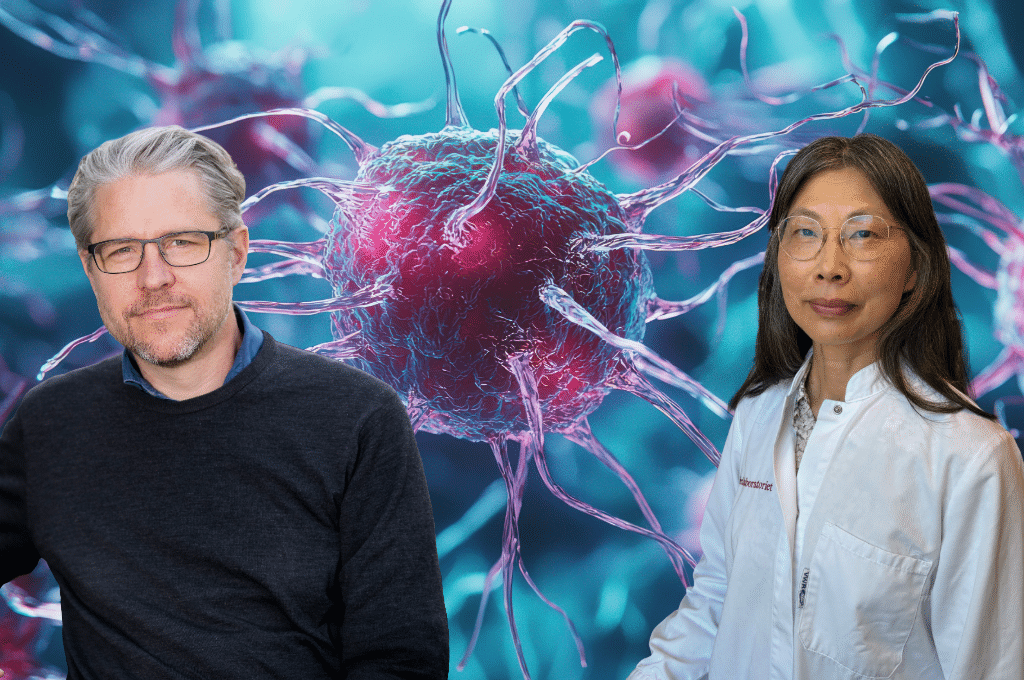
“The key strength of our approach is that we have integrated clinical sampling with cutting-edge technology to characterise and target precisely those cells” says Sven Nelander, SciLifeLab group leader and professor at the department of Immunology, Genetics and Pathology at Uppsala University.
The central idea is reprogramming the plasticity of the cells. A goal that has only recently become a possibility.
“With this technology we can put them to the test directly, including with treatments that instruct the cell to destroy itself, and which colleagues in the cluster are evaluating in preclinical models of recurrent disease,” says Lene Uhrbom, professor of Molecular brain tumour research at Uppsala University.
While many other cancers like breast, leukaemia or lung cancer use precision medicine, they work in a different way by identifying a mutation and matching it to a drug that blocks it. Glioblastoma’s central mutations are difficult to target, and its aggressiveness derives less from a single genetic fault than from the flexibility of its cells. Rather than looking at which mutation can be blocked, this project asks a different question: “which state are these cells in, and can we move them into a state that is easier to treat?”
“In practice this means using drugs to change how cells behave rather than to kill them outright, making them less invasive, more sensitive to radiotherapy, or susceptible to therapies that trigger the cell’s own destruction. Each state has characteristic vulnerabilities, and the aim is to move cells into a state where an effective treatment exists “, says Sven Nelander and continues: “Another important thing is timing. Most molecular tumour boards make a single decision from a single biopsy. Because we sample again at recurrence and update the model, the approach is designed to follow the tumour as it evolves rather than to describe it once at diagnosis.”