
Machine-learning approach wins international challenge to reveal protein dynamics
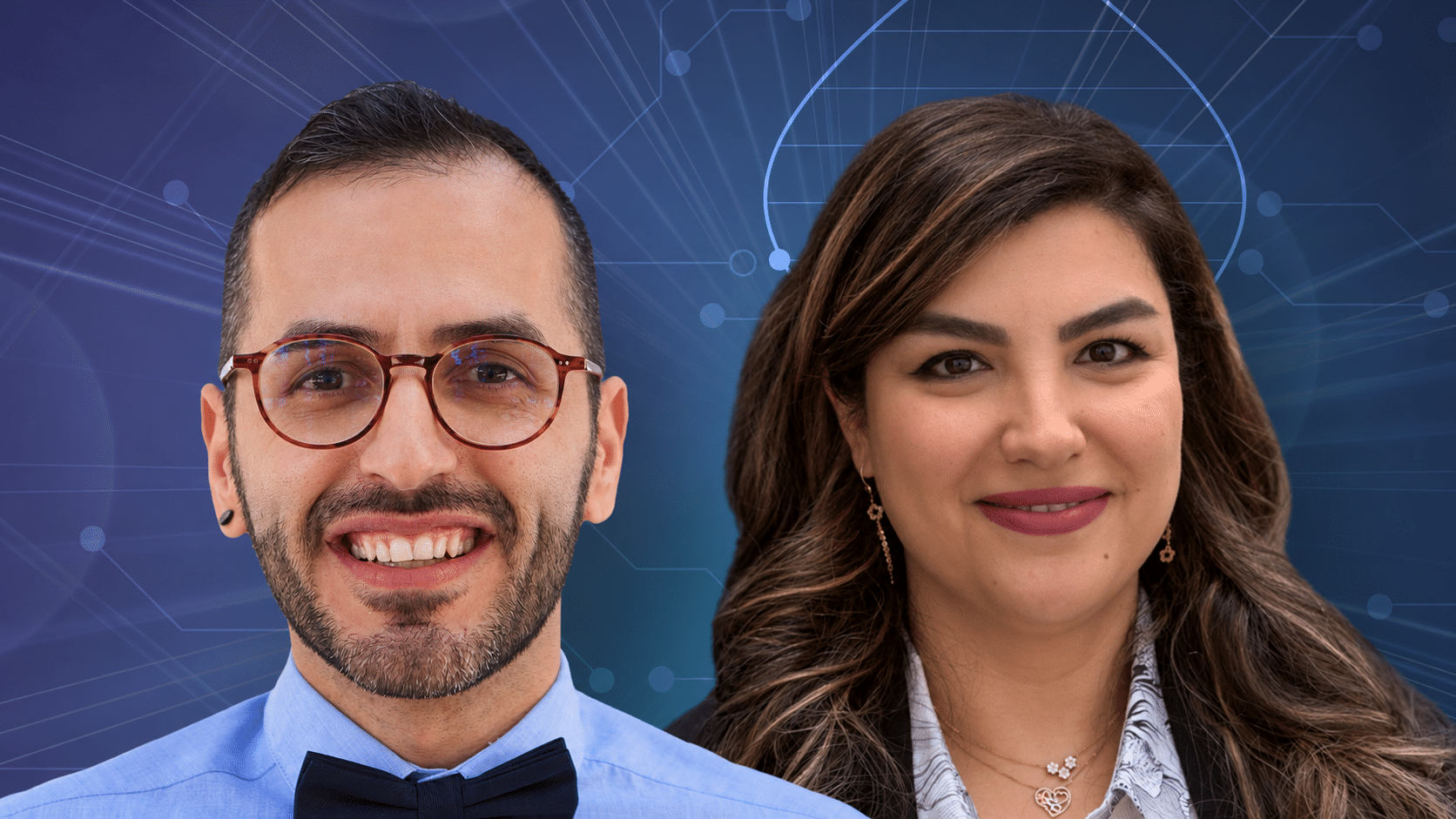
A new machine-learning workflow developed within the SciLifeLab and Wallenberg National Program for Data-Driven Life Science (DDLS) has won an international challenge in cryogenic electron microscopy (cryo-EM). The workflow was developed by Anna-Lena Fischer, a PhD student in the DDLS Research School, and postdoctoral researcher Gabriel Ducrocq, both in Sebastian Westenhoff’s group at Uppsala University.
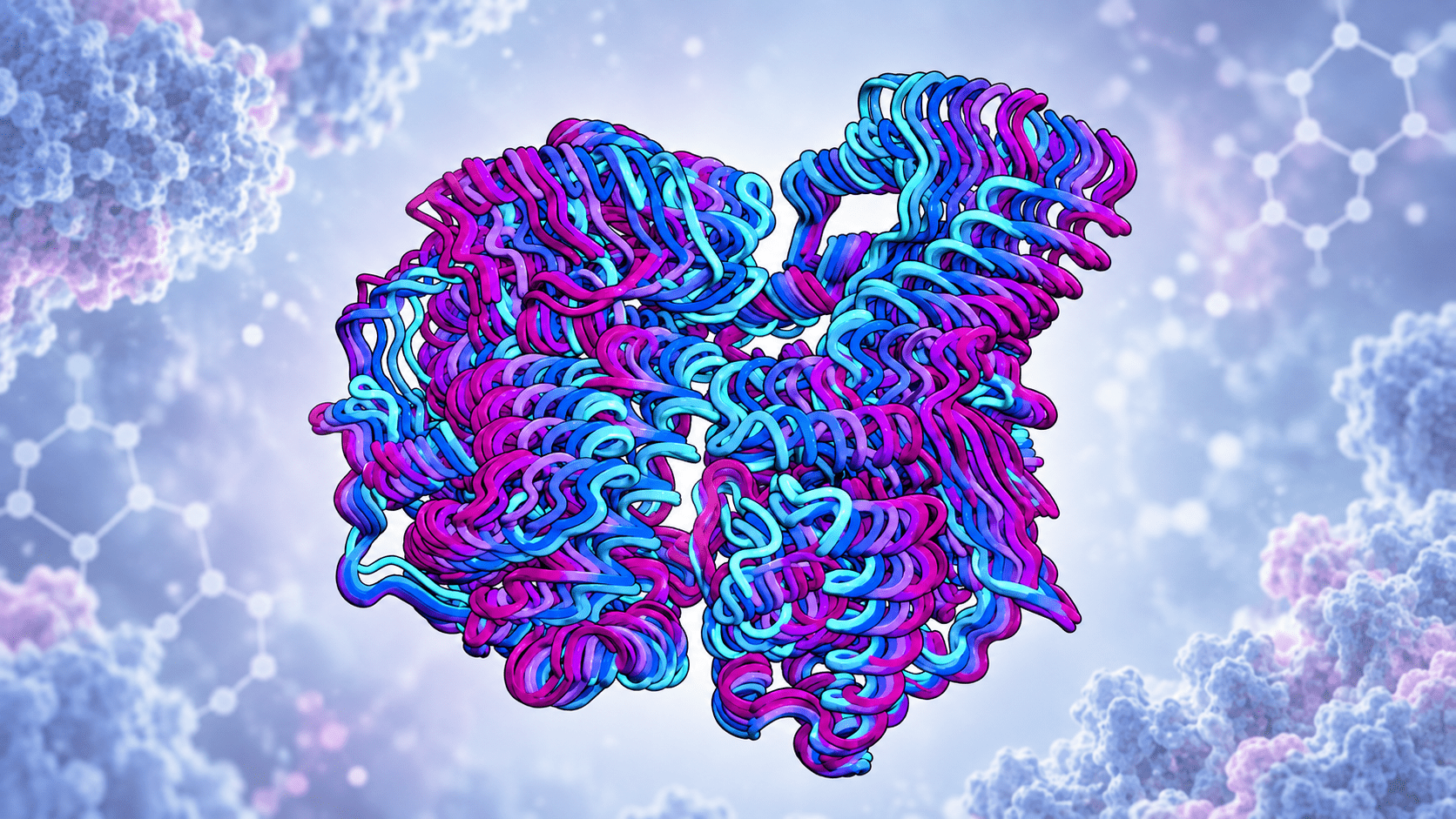
Proteins are dynamic molecules that can adopt a wide range of conformations, often closely linked to their function. Capturing this conformational heterogeneity experimentally, however, remains challenging.
Cryogenic electron microscopy (cryo-EM) enables high-resolution structural analysis from large numbers of two-dimensional particle images. Conventional reconstruction approaches typically combine information from many particles to generate three-dimensional structures, but this averaging can obscure continuous protein motion and highly flexible regions.
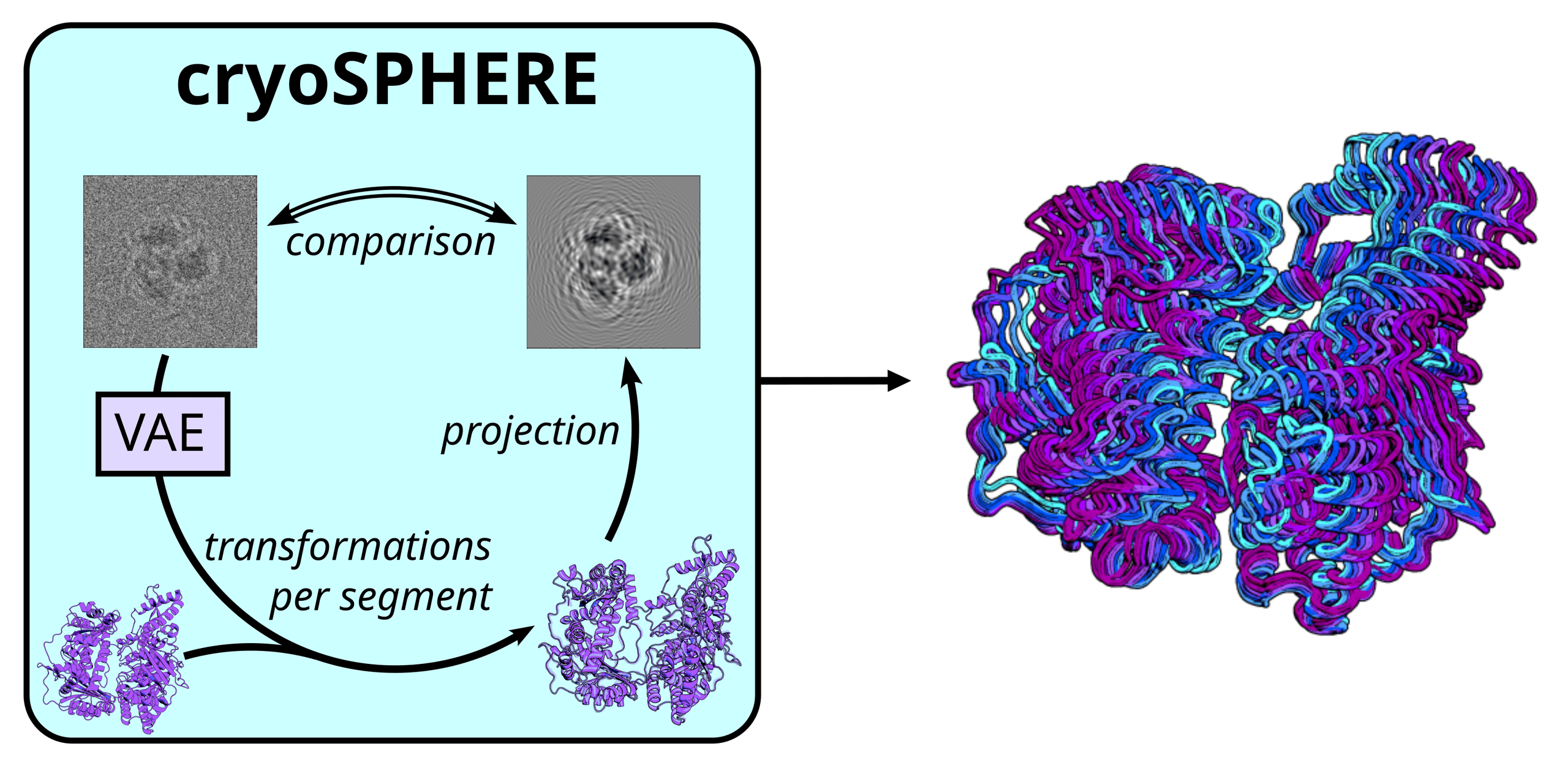
To address this problem, Fischer and Ducrocq developed a new workflow built around cryoSPHERE, a machine-learning method previously developed by Ducrocq together with Sebastian Westenhoff, Fredrik Lindsten and Lukas Grunewald. The workflow uses cryoSPHERE to generate large numbers of protein structures, which can then be further processed to capture the range of conformations represented in cryo-EM data.
Fischer and Ducrocq entered the workflow in the conformational heterogeneity challenge within the international Community-Wide Assessment of Cryo-EM Heterogeneous Reconstruction Algorithms (CAHRA). CAHRA benchmarks methods for reconstructing heterogeneous structures from cryo-EM data. In the challenge, teams analyzed a synthetic dataset and were evaluated on how accurately they could recover the known protein structures and their full range of motion. Fischer and Ducrocq’s workflow achieved the top result.
“We were excited to try our entirely new workflow against competing teams. We are so happy it performed better than the traditional workflows used in the field!” says Gabriel Ducrocq.
Anna-Lena Fischer adds:
“We just wanted to test our method and see how it compares in the field. That we won this challenge is extraordinary!” she says.
The research spans two DDLS initiatives. cryoSPHERE was developed through the joint WASP-DDLS project Novel AI Methods for Experimentally Constrained Protein Structure Prediction, led by Fredrik Lindsten at Linköping University and Sebastian Westenhoff. Fischer’s PhD work is part of Westenhoff’s DDLS Research School project Novel, integrative AI methods for single-particle analysis of cryo electron microscopy data.
“What makes this result particularly exciting is that CAHRA provides an independent benchmark where the underlying conformational dynamics are known. Gabriel and Anna-Lena have combined machine learning with a deep understanding of structural biology, and their result gives us strong confidence that we can use this approach to reveal protein motions that have previously been very difficult to access,” says Sebastian Westenhoff, Professor at the Department of Chemistry for Life Sciences at Uppsala University.
By combining cryo-EM data with machine learning, the workflow provides a way to recover conformational information that can be difficult to access with conventional reconstruction approaches, potentially enabling a more detailed view of the relationship between protein structure, dynamics and function.
CAHRA: Conformational Heterogeneity