
Matchmaking event sparks new DDLS industry collaborations
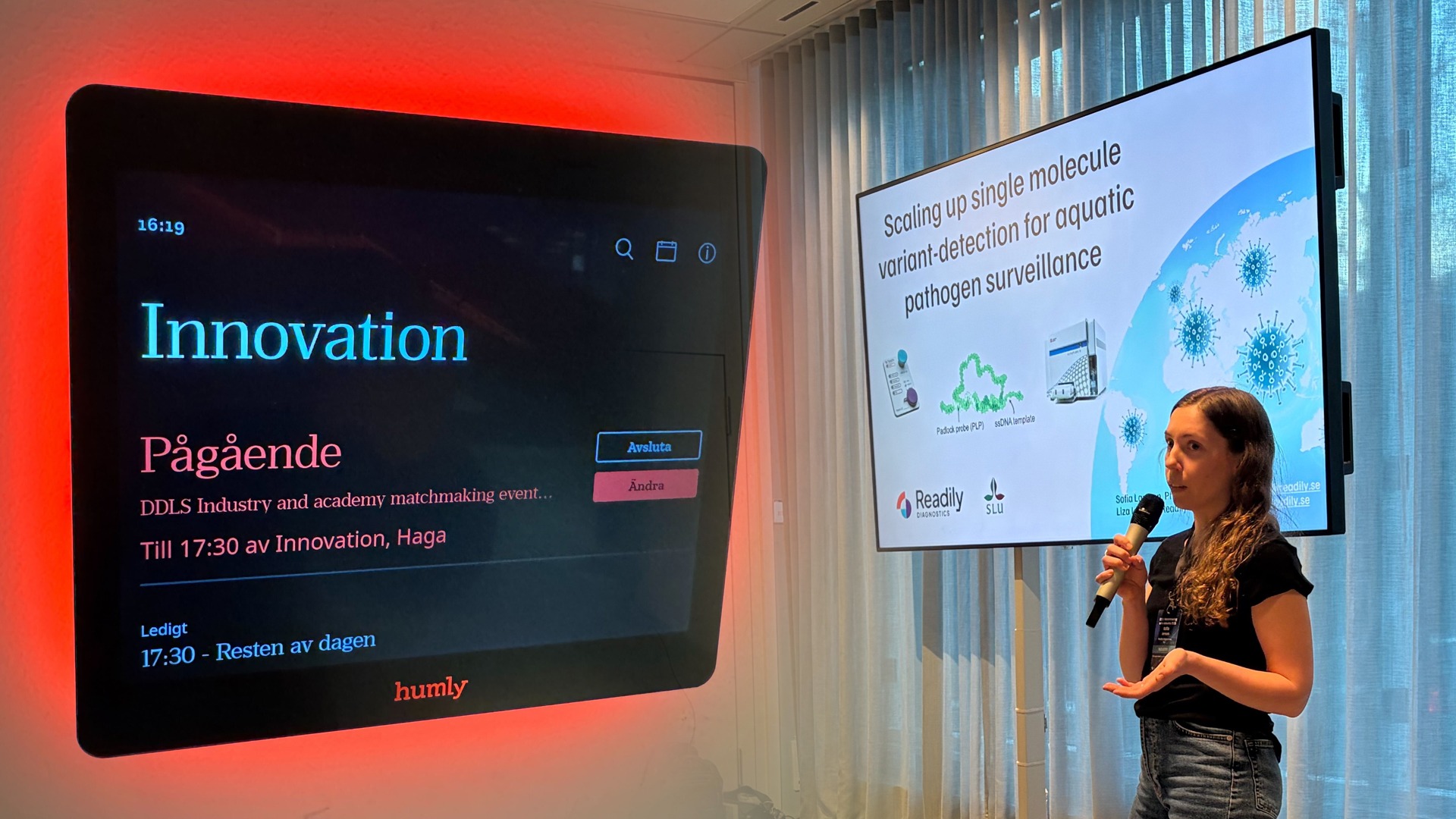
As part of the SciLifeLab and Wallenberg National Program for Data-Driven Life Science (DDLS) and within the framework of its Research School, researchers, industry representatives, and students gathered on February 12 at Life City in Stockholm for the Industry and Academy Matchmaking for Joint DDLS Projects 2026. Jointly organized by SwedenBIO and the DDLS Research School, the after-work event aimed to foster new collaborations ahead of upcoming DDLS PhD and postdoc project calls.
The program included brief presentations, short pitches from ongoing joint projects, and informal discussions designed to connect academic and industry partners at an early stage.
Aligning academic research with industry needs
“I attended the event to better understand how my lab can interface with industry and to find potential collaborators for the upcoming calls,” says Avlant Nilsson (KI), DDLS Fellow. “From the elevator pitches (and subsequent discussions during the mingle) I learned that many companies have data that they know they may not be using to the fullest, there are also many companies eager to explore new biological targets.”
He also highlights an important consideration for joint projects.
“From this perspective, I think that the most important question is how the work can result in publications, when much of the data used is proprietary.”
Training researchers at the industry interface
Industry-linked projects are also central to the DDLS Research School’s training model. Lukas Käll (KTH), Director of the DDLS Postdoc Program, emphasizes how these collaborations shape researcher development.
“Industry-linked DDLS projects combine academic depth with real-world application. While traditional postdocs often focus on publications and methodological advances, the industry track anchors research in concrete challenges from the outset.”
He also highlights how this influences the next generation of researchers.
“Industry collaboration will shape postdocs who are technically strong and impact-aware, with a clear understanding of the full lifecycle of data-driven research. Alongside expertise in computational biology and machine learning, they learn to navigate intellectual property, regulatory frameworks, and real-world constraints.”
Opportunities and barriers for small companies
For qPharmetra, the event resulted in a new contact with a potential PhD student intern, as well as early conversations about a possible postdoc collaboration.
Lars Lindbom, COO/CIO at qPharmetra, says that collaboration can also present challenges for smaller companies.
“Since qPharmetra is a consulting firm that analyzes clients’ data (and doesn’t own it), the biggest hurdle for us is access to data since that typically makes projects easier to staff and has potential for more interesting results.”
Strengthening Sweden’s life science ecosystem
For SwedenBIO, collaboration between academia and industry is central to Sweden’s long-term competitiveness.
Marjo Puumalainen from SwedenBIO underscores the national perspective.
“Sweden has world-class research and strong innovative companies, but to stay competitive globally we need to connect them effectively. Collaboration ensures that scientific discoveries are translated into real-world solutions, new companies, and commercially viable products. It strengthens Sweden’s position as a leading life science nation.”
Looking ahead, she stresses the importance of follow-up.
“What is important now is that academia and industry forms innovative, cutting edge projects and applies for the upcoming DDLS calls. SwedenBIO will continue to be an active partner at the DDLS research school and is planning a career workshop during the spring and is pushing more internships opportunities at companies.”
From dialogue to collaboration
The event also brought together researchers working directly at the industry interface.
Konstantinos Kalaitzidis, industrial PhD student at Merck, reflects on the value of cross-sector interaction.
“From the Industrial PhD Student perspective, it was very useful to interact with representatives from other companies and learn more about their work, as well as to meet other PIs with whom I had the opportunity to discuss and receive plenty of advice.”
As new DDLS calls approach, the long-term impact of the matchmaking event will depend on how these initial conversations develop into sustained collaborations.
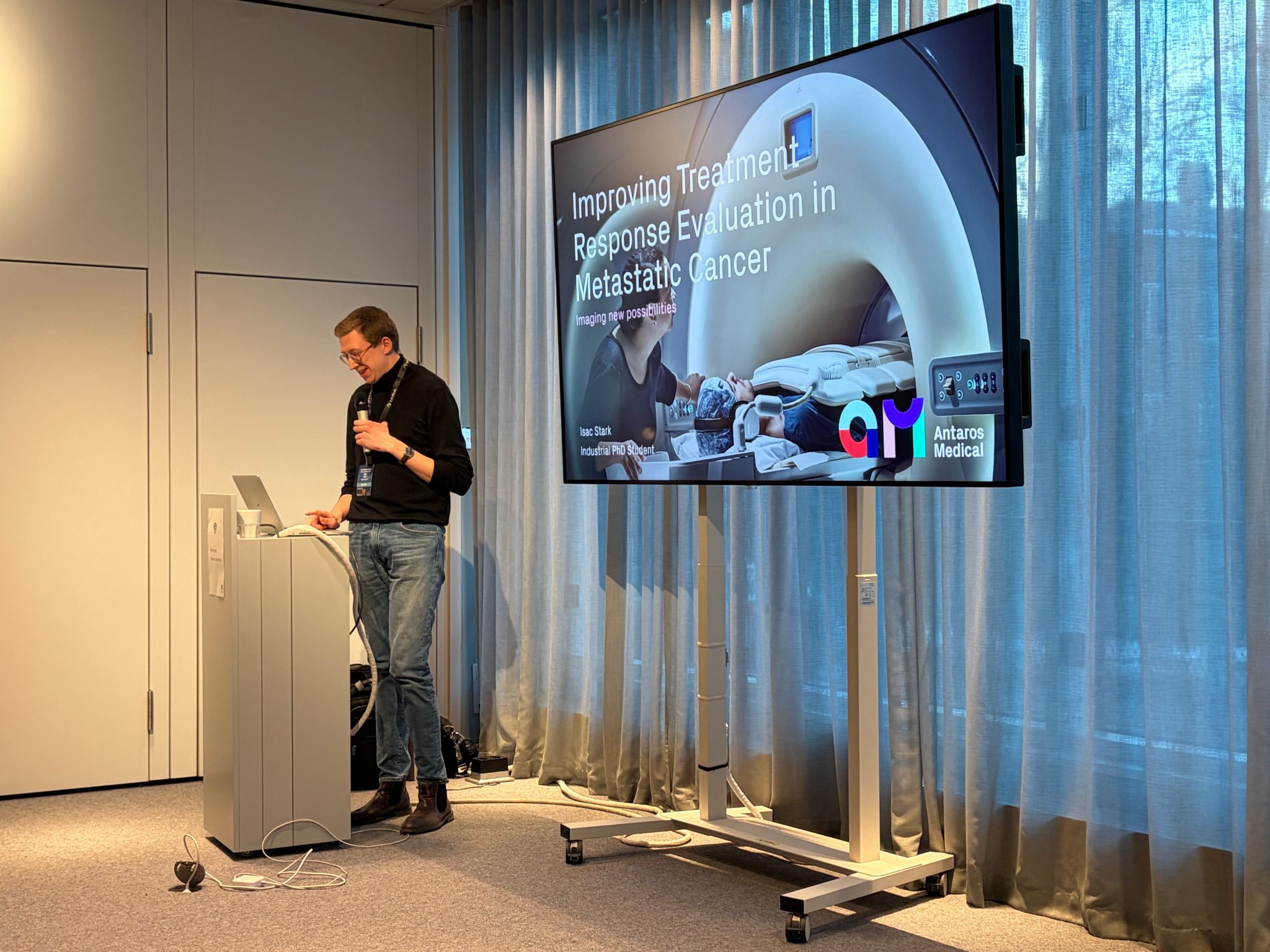
Isac Stark, Antaros Medical