From Ancient Mammoth RNA to modern RNA-seq
March 27, 2026 @ 13:00 – 14:30 CET
Ancient RNA expression profiles from the extinct woolly mammoth
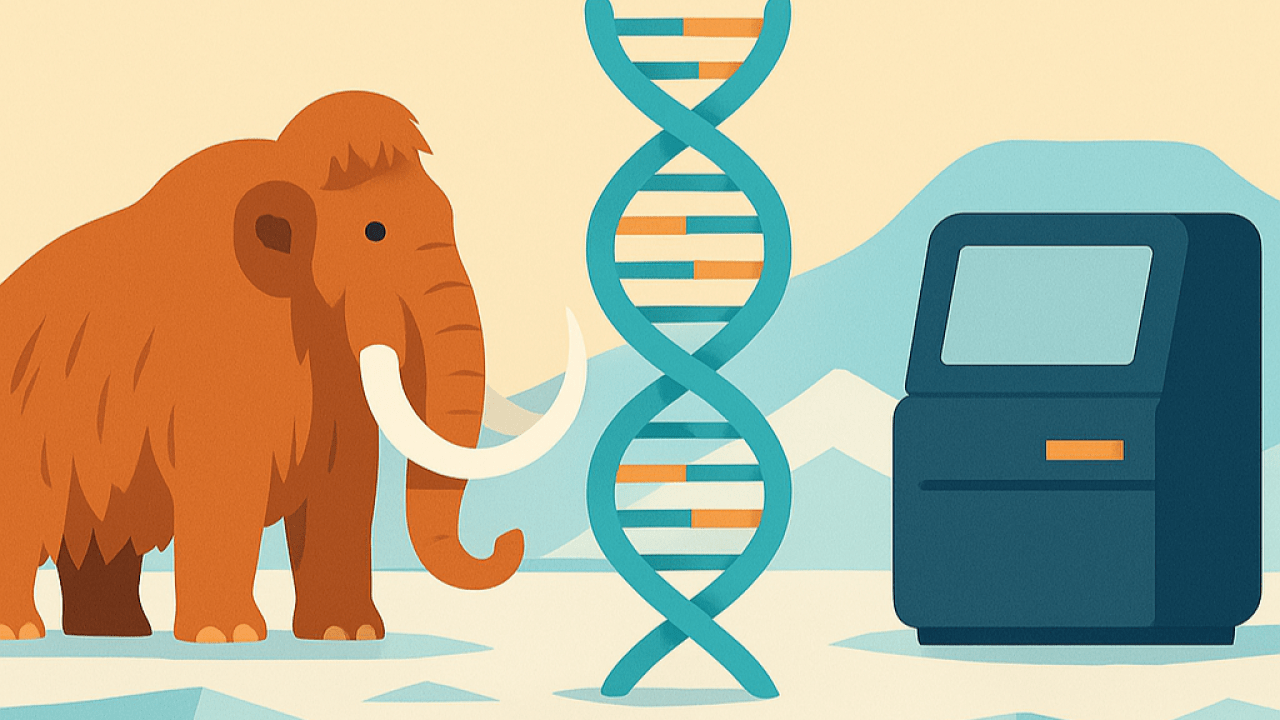
Ancient DNA has revolutionized our understanding of extinct and extant organisms, enabling the reconstruction of lost ecosystems and their long-gone inhabitants. However, our knowledge of ancient biology has been largely constrained to information derived from short DNA fragments or low-resolution protein sequences. While these have yielded remarkable insights, DNA primarily captures the static genetic code, and proteins merely provide a partial view of the coding fraction of the genome. Trapped in between lies RNA, a molecular intermediate long dismissed as too transient and unstable to survive far beyond cell death.
In this seminar, I describe our work extracting, sequencing and characterizing RNA expression profiles from 10 woolly mammoths dating to the Late Pleistocene. One of these, dated to ~39,000 YBP, yielded sufficient detail to recover tissue-specific biological functions essential for skeletal muscle and skin metabolism. Our findings represent the oldest ancient RNA sequences recorded to date, enabling the reconstruction of transcriptional signatures in the extinct woolly mammoth.
With these results, I will showcase the potential to study ancient RNA molecules decoding preserved transcriptomes from deep time, and propose future directions and perspectives on the unrealized potential of RNA to illuminate developmental biology, infectious disease history, and the dynamic regulatory landscapes of ancient life.
About the main speaker:
Dr. Emilio Mármol Sánchez is a research fellow in the Center for Evolutionary Hologenomics at the University of Copenhagen. Trained as a veterinarian and bioinformatician, he began his research career in Barcelona by studying gene regulatory networks and RNA biology in domestic animals. After completing his PhD in 2020, he transitioned into the emerging field of ancient transcriptomics, where during his postdoctoral work in Stockholm he developed novel laboratory and computational approaches for the isolation, sequencing, and computational analysis of ancient and historical RNA from extinct species.
Now based in Copenhagen, his research is focused on a multi-omics approach to develop novel methods applied to historical and ancient animal specimens, spanning short- and long-read DNA sequencing, RNA profiling, chromatin reconstruction, epigenetic inference, and spatial deconvolution. Through such integrative framework, his work aims to reconstruct the functional biology of the past using molecular technologies of the present.
About the event:
The event is organized by BioNordika AB. Marc Friedländer (SU) will introduce the event and Klaus Tangsgaard (New England Biolabs) will talk about emerging RNA-seq approaches after the ancient RNA seminar.
 Google Calendar