Mechanistic Modelling in Pharmacology, Physiology, and Neuroscience
November 26, 2026 @ 08:30 – 17:00 CET
Understanding complex biological systems requires more than data, it demands mechanistic insight. This conference highlights how mechanistic models can integrate clinical and experimental data with computational approaches.
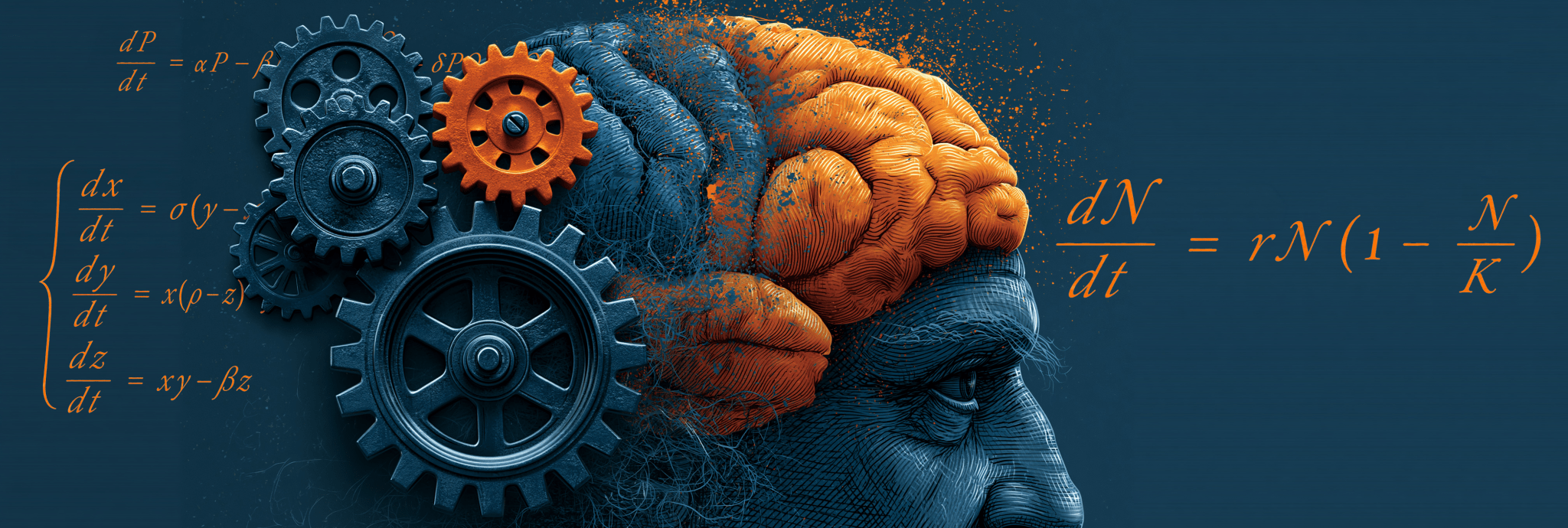
The volume and complexity of life science data are growing at an unprecedented pace. While computational tools are increasingly used to structure and analyze these data, there remains a critical gap in our ability to understand the data in a mechanistic and physically realistic way. Bridging this gap is essential for uncovering the fundamental principles that govern the function of molecules, cells, organs, and entire organisms.
Mechanistic models play a central role in this effort and are key to advancing applications such as the development of new pharmaceuticals and improved clinical interventions. However, progress is often hindered by the lack of a shared language between experimental scientists, clinicians, and computational researchers.
This conference will bring together experts from these fields to explore state-of-the-art tools and methodologies, discuss how they can be effectively applied, and foster stronger integration across disciplines. By promoting collaboration and mutual understanding, the meeting aims to accelerate progress in pharmacology, physiology, and neuroscience.
Registration deadline October 25
Program
8:30 Registration opens
9:00-12:15 Morning session: Molecules and Cells
Opening – Fredrik Elinder
Jan Ellenberg – Imaging the molecular processes of cell division across scales
Professor, Director of SciLifeLab
The rapid development of new imaging technologies allows unprecedented insights into the molecular machinery inside living cells and organisms. For the first time, light and electron microscopy have molecular sensitivity and resolving power in situ, and, if used together, can connect structural detail with molecular dynamics of the whole cell. Aided by machine learning driven image analysis powered by open sharing of image data, this provides unprecedented opportunities for new insights into the molecular mechanisms that drive life’s core functions at the scale of the cell.
I will present the progress we have made to study one of life’s most fundamental functions, cell division, by mapping the dynamic protein network, assembly of individual protein complexes and genome re-folding that drive it. Our work has studied cell division in human cancer cells and early mammalian embryos using advanced cross-scale imaging methods, including light-sheet, quantitative fluorescence correlation spectroscopy (FCS)-calibrated, super-resolution and correlative light and electron microscopy. The quantitative integrated molecular data that these new technologies deliver, allow us to better understand how the molecular machinery functions in space and time to ensure faithful cell division and prevent the errors that underlie congenital disease, infertility and cancer.
Lucie Delemotte – Title TBA
SciLifeLab fellow, KTH Royal Institute of Technology
Focus TBA
Björn Forsberg – Direct estimation of cryo-EM fields to control estimation of biological function
DDLS Fellow, Linköping University
Learning molecular variability from cryo-EM data relies on strict manual control of correlated variables, or the use of general ML frameworks that have to learn the correlative variation in addition to estimating it. This presents a complexity trade-off that is prone to bias in either modality, preventing maximal use of current datasets. Here we present an approach that seeks to parameterize 3D cryo-EM reconstructions in maximally interpretable ways, based on general causative mechanisms, that can then be recast to provide explicit learning objectives through an explicit model. This seeks to minimize the bias incurred by specifying ad-hoc mechanistic models, and efficiently regularize general learning frameworks.
10:15-10:45 Coffee
Erik Lindahl – Title TBA
Professor Stockholm University, Linköping University and KTH Royal Institute of Technology, Director of National Academic Infrastructure for Supercomputing in Sweden (NAISS)
Focus TBA
Fredrik Heintz – From Language to Knowledge and Back Again
Professor, Linköping University, WASP Graduate School Director
Focus TBA
Juliette Griffie – From Black Box to Biological Insight: Generative AI for Life Science and Microscopy
DDLS fellow, The Computational Microscopy for Cell Biology (CMCB) laboratory, Stockholm University
The life sciences are entering a transformative era, with generative AI emerging as a powerful engine for discovery. This talk will explore how these technologies can move beyond prediction towards interpretability, while being tailored to the realities of biological research, where datasets are often small and models must be designed to answer very specific biological questions.
Panel Debate
Moderator – Per Petersson
12:15-13:30 Lunch
13:30-16:45 Afternoon Session – System Biology
Petra Ritter – Trustworthy Digital Brain Twins
Professor, Charité University Medicine Berlin
This talk explores the integration of mechanistic modeling, multiscale physiological data, and artificial intelligence to construct personalized “Digital Brain Twins” for neuroscientific research and clinical applications. It addresses the computational, methodological, and ethical challenges in ensuring these virtual replicas remain dynamic, precise, and robustly validated across spatial and temporal scales. Ultimately, the presentation highlights frameworks for building trustworthy in silico models capable of predicting disease progression, evaluating targeted pharmacological interventions, and advancing personalized medicine in neurology and neuroscience.
Gunnar Cedersund – M4-HEALTH – hybrid mechanistic and machine learning digital twin models as a basis for a new ecosystem for health
Associate Professor, Linköping University
Focus TBA
Henrik Jörntell – How brain circuitry operation emerges from nested closed loop interactions through the body
Professor, Lund University
One of the hottest scientific topics today is how does the brain actually work and, in the era of artificial intelligence perhaps even more, what is ‘intelligence’ really? Here we will address these questions to illustrate the path towards arriving at a general conceptualization of the brain circuitry operation that emerges from the fundamental dynamics of neuron interactions, i.e. from neurophysiological observations. In this ambition, there is also a need to explain the resulting roles fulfilled by the different structural subsystems of the nervous system. Fundamental differences with current AI systems is one outcome. Consequences relative to the wider literature are; (i) the function of any one neuron alter depending on context; (ii) in this mode of operation predictive neural activity emerges as a trivial by-product without any assumptions of architectural specializations. This underscores the need for integrated neurophysiological work, as the broader field is still far away from understanding the physiological infrastructure that underlies the emerging computational architecture of the brain.
14:30-15:00 Coffee
Morten Grunnet – Neuroscience Drug discovery and AI – Opportunities and limitations
Vice President and Head of Neuroscience at Lundbeck & Affiliate Professor at University of Copenhagen
How AI and data-driven approaches are currently being integrated into neuroscience drug discovery, and how these approaches can be combined with mechanistic understanding across different biological scales – from molecular and cellular mechanisms to circuits, systems and ultimately clinical phenotypes. A perspective on where the main opportunities, but also the current limitations, of AI and mechanistic modeling in pharmaceutical research.
Eduard Kerkhoven – From pathway maps to predictive models: Human-GEM and human metabolism
Senior Researcher, Chalmers University of Technology
Metabolic pathway maps are familiar, but they cannot tell you what happens when a gene is lost or a nutrient runs short. Genome-scale metabolic models turn the same biochemistry into something computable and testable against real perturbations. I will introduce Human-GEM, the community model of human metabolism, show a few applications across tissues, organs and disease, and suggest that models of this kind become more valuable as omics data accumulate, by giving those measurements a mechanistic structure to be interpreted against.
Jeanette Hellgren-Kotaleski – Simulating the Basal Ganglia in Health and Disease using a Biophysically Detailed Approach
Professor, KTH Royal Institute of Technology
To understand any part of the brain, it is necessary to integrate data from the molecular level up to the systems level. For this effort, data-driven and mechanistic modelling provides an important tool for synthesizing the diverse experimental data into in silico models. Simulation experiments can then generate new predictions which give rise to novel questions. In our lab, the microcircuit level is one important starting point when bridging biological scales. Our biophysically detailed neuron and network modelling pipeline integrates data on cellular morphologies, electrophysiology, synaptic properties, and also takes transcriptomics data on e.g. ion channels into account. In my talk I will exemplify insights gained when we apply our modelling pipeline to investigate the structural and functional alterations seen in the diseased striatal microcircuit.
Panel Debate
Moderator: Johan Wessberg
Concluding Remarks – Per Petersson & Johan Wessberg
Confirmed Panelists
Siv Andersson, Professor, Uppsala University, Knut and Alice Wallenberg Foundation
Gunnar Schulte, Professor, Karolinska Institutet, The Swedish Research Council
Partners
SciLifeLab & the National Committee for Pharmacology, Physiology and Neuroscience of the Royal Academy of Sciences
Organizing committee
Fredrik Elinder, Professor of Molecular Neurobiology, Electrophysiologist, Linköping University
Johan Wessberg, Professor and Principal Investigator Department of Physiology / Neurophysiology, Gothenburg University
Per Petersson, Professor in the field of Neurophysiology, Umeå University
 Google Calendar
  iCalendar