New DDLS Fellow: Jacob Vogel
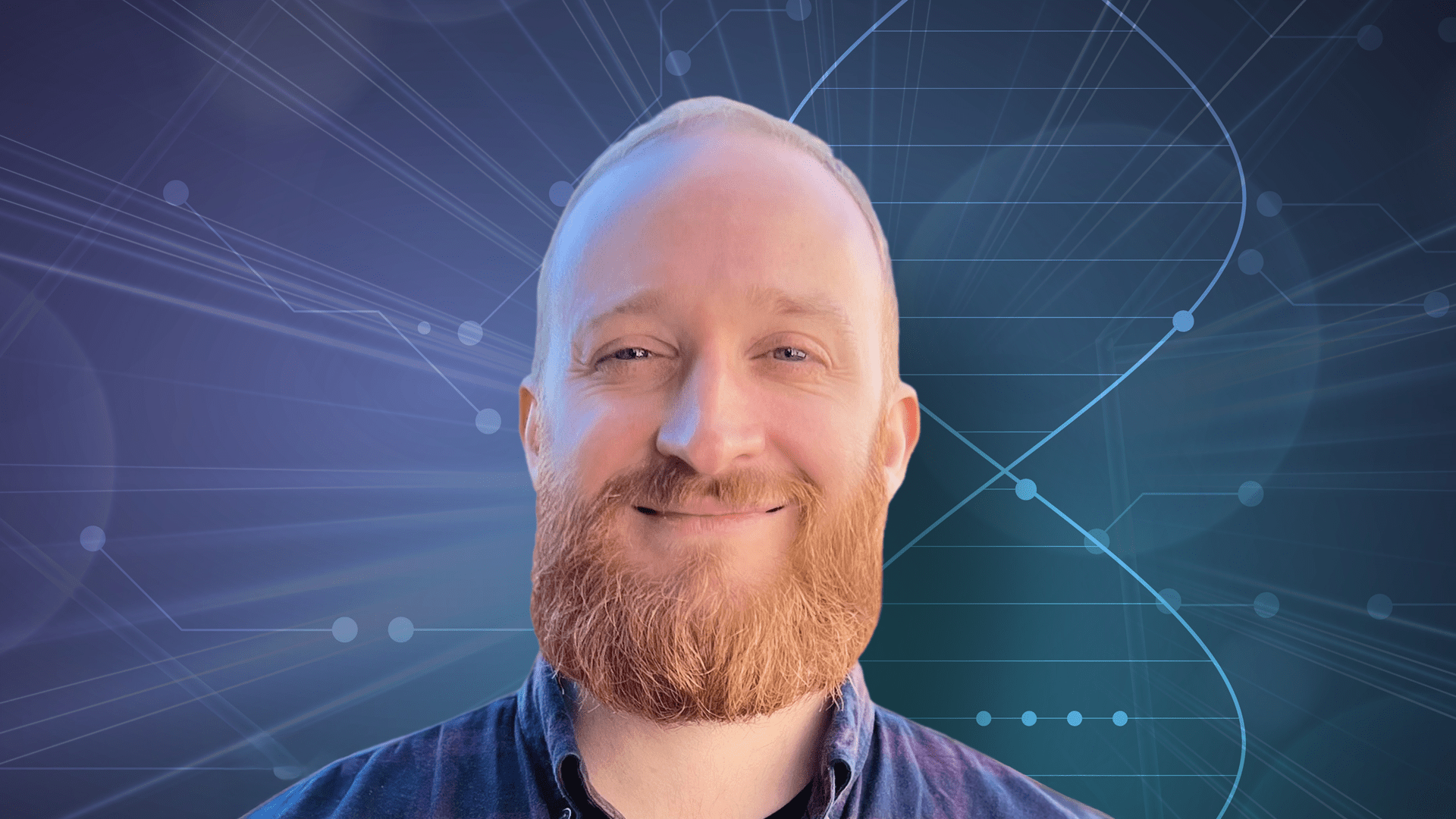
The SciLifeLab & Wallenberg National Program for Data-Driven Life Science (DDLS) continues to recruit outstanding early career scientists. In this Q&A, we highlight one of the program’s first Fellows, Jacob Vogel (LU). Jacob develops computational approaches to study brain change across the lifespan using MRI and PET neuroimaging, machine learning, and multi-omic data. He shares how these tools can help characterize the spatial spread of tau pathology in vivo and improve our understanding of neurodegeneration. Jacob belongs to the DDLS Precision medicine and diagnostics research area.
Jacob initially trained as a research assistant in Prof. William Jagust’s lab at the University of California, Berkeley, where he led and supported research investigating subtle brain and cognitive changes in healthy elderly people with evidence of clinically silent Alzheimer’s disease pathology. There, he was trained in processing and analyzing a range of MRI and PET neuroimaging modalities. Building on this toolset, Jacob began his PhD at McGill University with Prof. Alan Evans, supported by a Vanier Canada Graduate Fellowship. His doctoral work focused on imaging the in vivo spatial distribution of the tau protein in the human brain using PET, with a particular emphasis on modeling variation in the progressive spatiotemporal spread of tau.
As a T32-funded postdoc at the University of Pennsylvania, he continued to refine his training in the processing and analysis of neuroimaging and multi-omic data under the mentorship of Prof. Theodore Satterthwaite. In this role, Jacob used neuroimaging, machine learning, genomics, and imaging-transcriptomics across datasets spanning the human lifespan to identify links between brain development, brain aging, and neurodegeneration.
How do you think your expertise can contribute to the program?
My main expertise involves wrangling and analyzing large clinical datasets using AI and other sophisticated modeling techniques. My lab has a special focus in deriving novel biological insights into neurodegenerative diseases from clinical data. We are also invested in building toolsets that provide legitimate value in real-life clinical contexts. I believe these foci fit well into the purview of the Precision Medicine and Diagnostics branch of DDLS. Additionally, I believe I am the only fellow doing brain research, so it is nice to add some diversity to DDLS in that manner.
Shortly describe your research in an easy to understand way.
My lab studies neurodegenerative diseases, with a special focus on how these diseases initiate and how they progress. We are interested in both learning more about the underlying biology of the diseases, while at the same time building diagnostic and prognostic tools that can be realistically applied in current clinical contexts. What makes our approach unique is that, rather than focusing on cell and animal models, we conduct most of our studies on data sourced from humans living with (or having died from) these diseases. These data are can be rather complex, including three or four dimensional images of the brain, or complex assays of thousands of circulating proteins in fluid. In addition, we often source these data from large clinical cohort studies or population studies, with sample sizes ranging from the hundreds to tens of thousands. This size and complexity of this data demands that we operate effectively as a data science lab. Complex informatics, statistical modeling and AI are at the center of everything we do. This also means that the composition of the lab requires considerable diversity in skill set and domain knowledge among its members, ranging from biologists, to engineers, to clinical scientists. Our work is at the intersection of these domains, and we funnel this knowledge and skill base into unique explorations of neurodegenerative disease biology.
How do you think the program and interactions with the other DDLS-Fellows will benefit you? Data science is a constantly evolving field and it is being pushed by young researchers. DDLS has done a great job of recruiting early career researchers at the forefront of data science for biology, and I expect that our many interactions will allow for cross-pollination of new techniques, ideas and datasets. There is great value to having a cohort of scientists at a similar career stage who can not only serve as potential collaborators, but also as colleagues who can expand my perspective and stimulate new solutions to problems we are interested in.
Name one thing that people generally do not know about you.
I’m in a rock band called Horse Doctor: https://open.spotify.com/artist/1FmSvsZpRUO4QNmvQuBk1A
Where do you see yourself in five years regarding the DDLS aspect?
The goal of the lab over the next five years is to build ourselves into a sustainable engine of scientific discovery and output, but working hard to stick to our principles of prioritizing rigorous and meaningful work. This means growing our network of collaborators, innovating on concepts and methods in our field, and publishing our products as openly as possible. Given the current speed of innovation, it is hard to predict what the science we do will look like In five years. But we will work hard over the next five years to ensure that work remains innovative, high quality and collaborative. Five years from now, I will also look forward to lab’s first alumni blossoming into inspired and independent young researchers.
In one word, describe how you feel about becoming a DDLS-Fellow.
Inspired