New DDLS Fellow: Lisandro Milocco
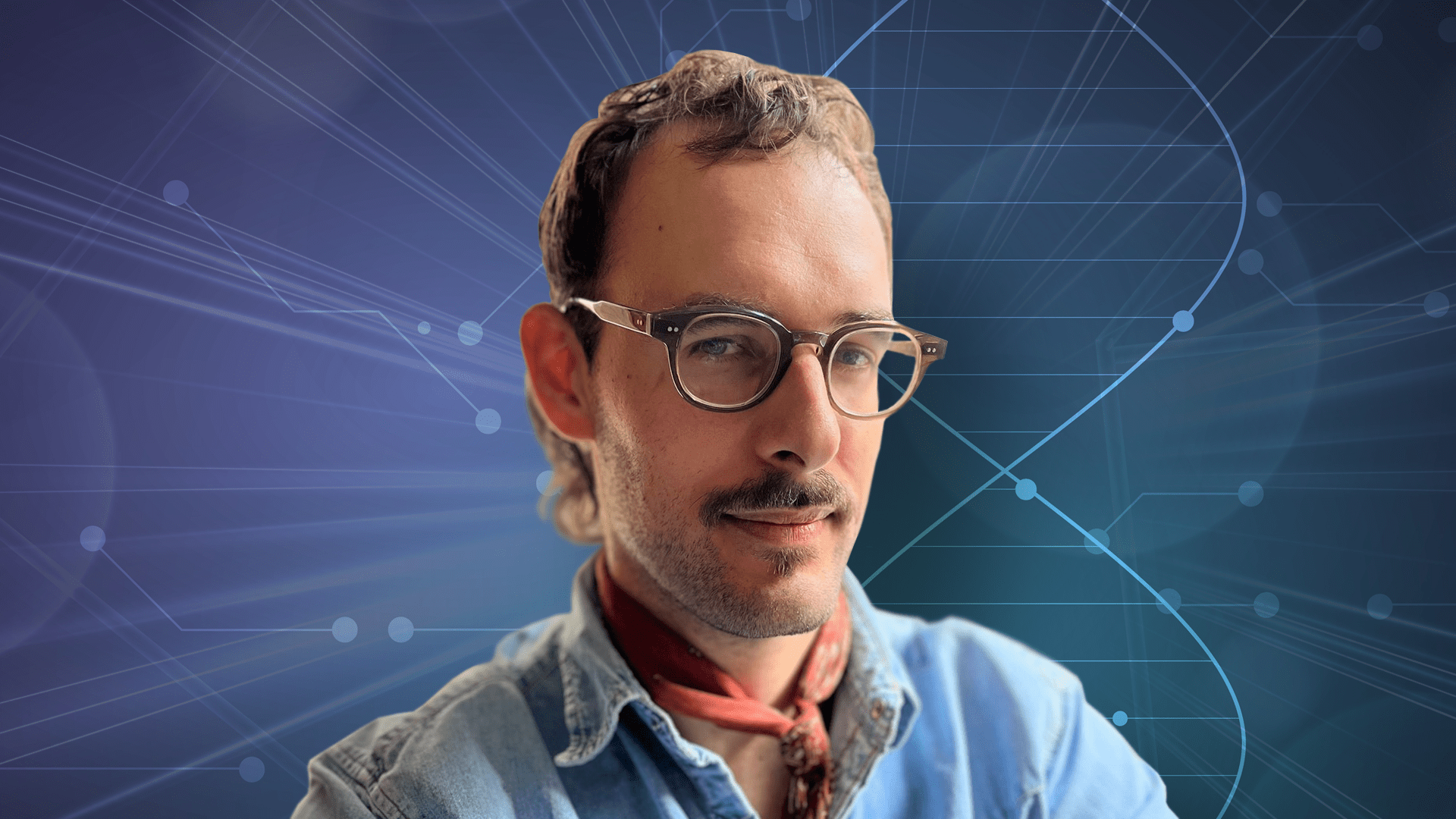
The SciLifeLab & Wallenberg National Program for Data-Driven Life Science (DDLS) continues to recruit outstanding early career scientists. Our latest Fellow, Lisandro Milocco (SU), explores the principles that shape evolvability, the ability of organisms to generate variation that evolution can act upon. In our latest Q&A-style article, he talks about how combining biology with mathematics and computational approaches can help uncover how evolution can be better understood, predicted, and even guided. Lisandro will be joining the DDLS Evolution and Biodiversity research area.
Lisandro is originally from the Patagonia region in Argentina. He studied Biotechnology and Mathematics at the National University of La Plata in Argentina, because from early on he was fascinated by the idea of using math to describe and understand the beauty and complexity of biology. That passion led him to Finland, where he completed his PhD at the University of Helsinki, working on the possibilities and limitations of evolutionary prediction. Afterwards, he joined Lund University as a postdoctoral researcher, continuing to explore how evolution can be predicted and what factors constrain or facilitate evolutionary trajectories. In 2025, Lisandro moved to Stockholm University and SciLifeLab as a DDLS Fellow and Assistant Professor.
How do you think your expertise can contribute to the program?
I’ve always found myself standing at intersections—between biology and mathematics, between evolution and development, between models and data. I believe that’s where the most exciting discoveries happen, because intersections encourage us to see problems in new ways. I think what I bring to the program is this perspective: by combining diverse approaches, I aim to spark creativity and tackle questions in ways that might not be apparent from a single disciplinary viewpoint.
Shortly describe your research in an easy to understand way.
Why does life look the way it does? Evolution has produced an incredible diversity of organisms—but why this diversity, and not something else entirely? The answer to this fundamental question lies in evolvability—the ability of organisms to generate variation that evolution can work with. I’m interested in what shapes evolvability, and whether understanding it can help us predict—or even guide—evolutionary outcomes. By combining biology with math and computational tools from dynamical systems theory, machine learning, and control theory, I try to uncover the principles that govern evolvability and shape the paths evolution can take.
How do you think the program and interactions with the other DDLS-Fellows will benefit you?
Within the Evolution and Biodiversity section of DDLS, I see a lot of complementary expertise among the fellows. For example, there is great potential to apply genomic tools—an area of expertise for some fellows—to study questions related to evolvability and evolutionary prediction. More broadly, I’m eager to connect with fellows working on other dynamic systems, like epidemics or cancer evolution. Even though the systems differ, we all study processes that change over time, and I think these shared challenges will create great opportunities to exchange ideas and methods across disciplines. I’m confident that these interactions will inspire fresh ways of thinking about my own research and foster creative collaborations.
Name one thing that people generally do not know about you.
I’m a big fan of 80s horror movies.
Where do you see yourself in five years regarding the DDLS aspect?
In five years, I hope to lead a group that values creative thinking, diversity, and collaboration. I envision our team advancing the understanding of evolution by integrating data-driven tools into the evolutionary biology toolkit, overcoming current limitations and improving our ability to predict how biological systems change over time.
In one word, describe how you feel about becoming a DDLS-Fellow.
Inspired