
SciLifeLab publishes new AI Strategy to support researchers nationwide
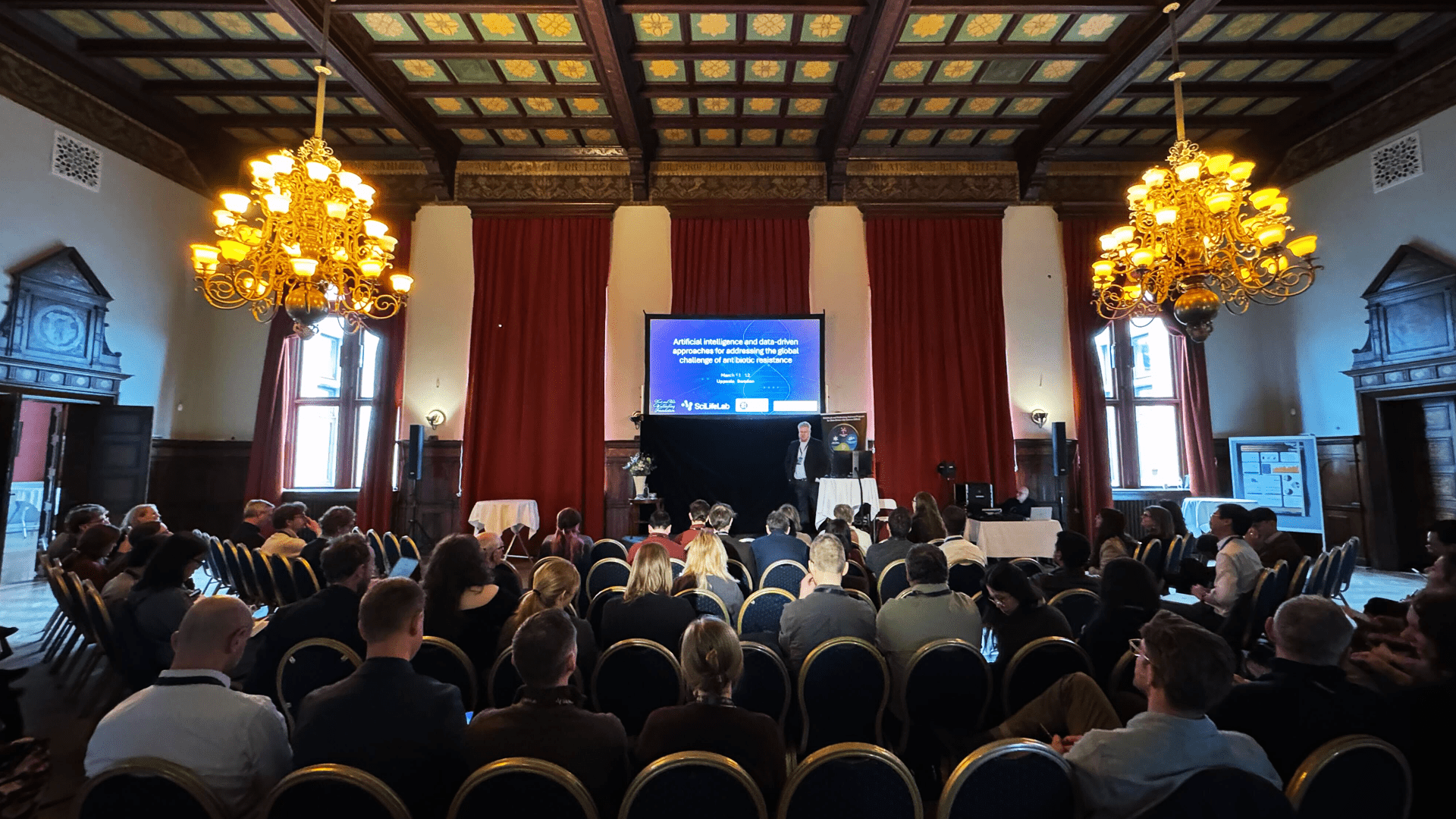
SciLifeLab’s AI Lead Ola Spjuth (Uppsala University) has led the development of SciLifeLab’s new AI Strategy together with the AI Strategy group. The work was presented to the community during a public AI hearing on 26 September 2025, where Spjuth and SciLifeLab Director Jan Ellenberg gathered feedback from researchers and stakeholders. The strategy has now been approved by the SciLifeLab Board in version 1.0 (12 February 2026) and is ready for publication.
SciLifeLab is strengthening a coordinated effort to integrate artificial intelligence across its research infrastructure, data ecosystems, compute resources and skills development. With more than 20 petabytes of data generated annually across areas such as genomics, proteomics, imaging and chemical biology, and major national resources including the Human Protein Atlas, SciLifeLab has a strong foundation to help researchers translate AI methods into practical, everyday research capabilities. SciLifeLab’s national data science community includes nearly 200 specialists, and the Data-Driven Life Science (DDLS) program includes more than 30 AI-oriented junior group leaders. At the core of the strategy is the idea that progress depends on strong foundations: data that is findable, accessible, interoperable and reusable (FAIR), and infrastructure that makes advanced computation and secure analysis available where it is needed.
The AI Strategy identifies five strategic pillars:
- AI-Ready Data Ecosystem – Ensure SciLifeLab delivers FAIR, standardized, annotated and interoperable datasets directly available for machine learning, supported by initiatives such as Integrated Data Services (IDS).
- AI-Ready Compute Infrastructure – Provide reliable access to scalable compute and storage for life science AI development and application, including secure environments for sensitive data and hybrid solutions that integrate with external and industrial platforms.
- AI-in-the-loop Research Infrastructure – Use AI to support and automate parts of platform-based data production, identify data gaps and drive new technology development.
- AI Tools & Technology Watch – Deliver user-friendly AI tools such as foundation models, agents, and MLOps, while continuously monitoring global AI developments and translating them into life science tools.
- Talent Development & Training – Expand AI training across roles and skill levels, recruit international expertise, and foster a connected and collaborative AI community within SciLifeLab.
Implementation will be driven through coordinated national collaboration and ongoing initiatives, including DDLS and collaborations with WASP, linking advanced AI methods with SciLifeLab’s life science data generation capacity. Flagship efforts such as AlphaCell are expected to integrate multi-omics, imaging and AI to build predictive, dynamic models of cellular systems. Throughout, the strategy emphasizes responsible and ethical AI aligned with GDPR and the EU AI Act, and guided by commitments to open science, transparency, explainability, and long-term sustainability. Through strong collaboration with academia, healthcare, industry, and international infrastructures, SciLifeLab aims to maximize the impact of responsible AI for life sciences and healthcare in Sweden. The AI Strategy is intended as a living document, anchored in community feedback and designed to evolve as both research needs and AI technologies develop.