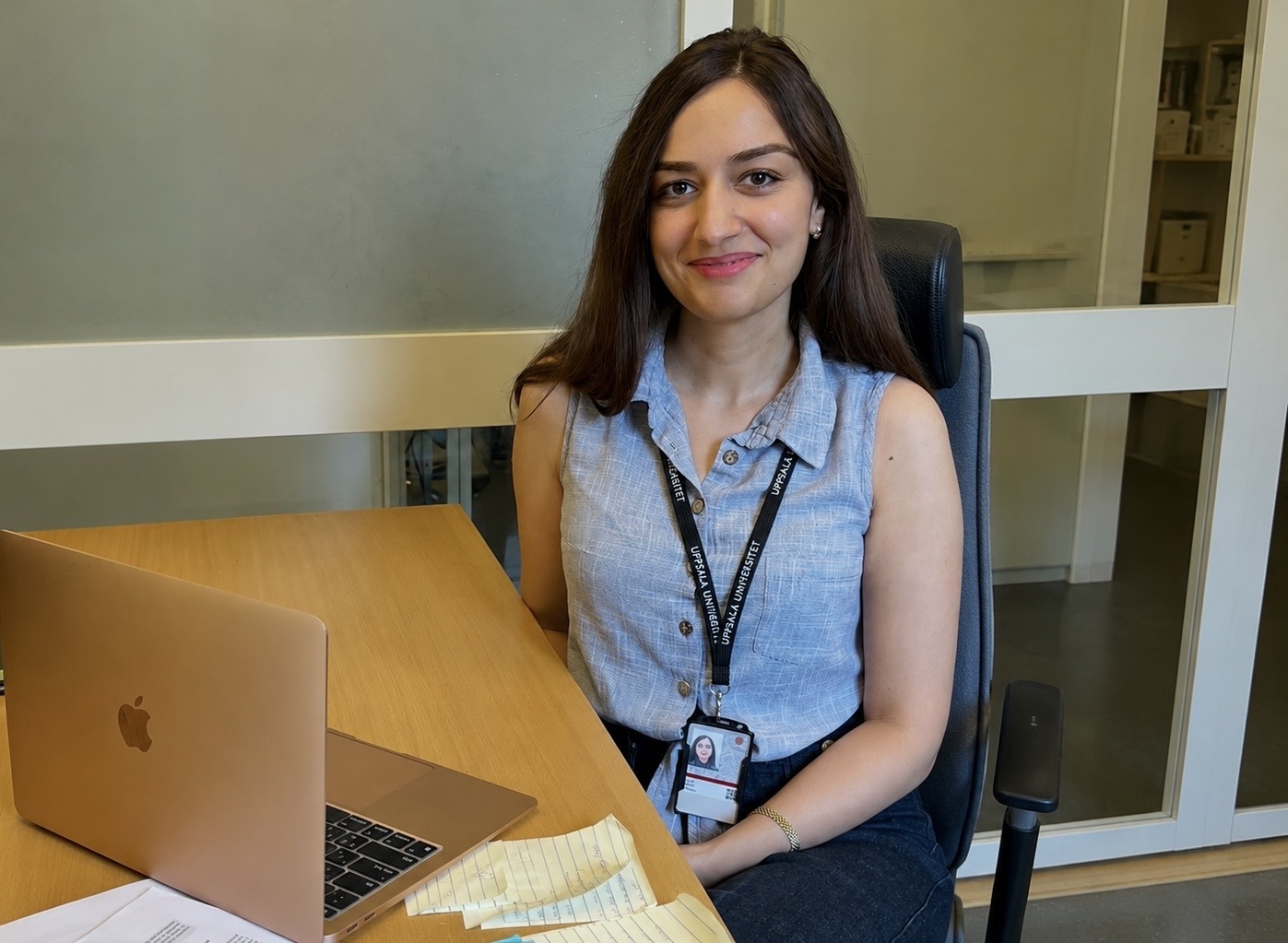

SciLifeLab Voices: Sahar Balkhi
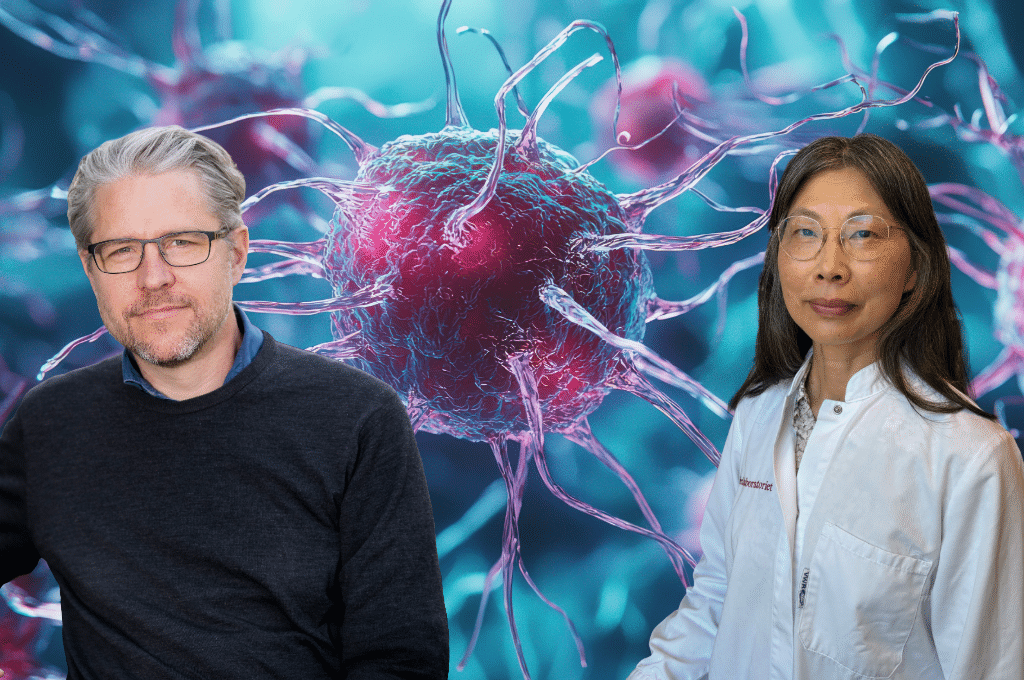
This time in SciLifeLab Voices, we meet Sahar Balkhi, a PULSE Marie Skłodowska-Curie Postdoctoral Fellow at SciLifeLab and Uppsala University. Sahar is developing next-generation molecular technologies to improve the detection and monitoring of leukemia, with the long-term goal of enabling more precise, personalized treatment for patients.
Could you briefly introduce yourself and your research?
My name is Sahar Balkhi, and I am a PULSE Marie Skłodowska-Curie Postdoctoral Fellow at SciLifeLab and Uppsala University. I joined the Department of Immunology, Genetics and Pathology in October 2025 after completing my first postdoctoral fellowship in Italy, where I worked in cancer research.
My research focuses on developing next-generation molecular technologies for the detection and characterization of leukemia at the single-cell level. Specifically, I am working to improve the detection of leukemia-associated fusion proteins and minimal residual disease (MRD) the small number of cancer cells that can persist after treatment and ultimately drive disease relapse. By integrating proximity ligation assays with advanced flow cytometry, my goal is to generate a more comprehensive picture of leukemic cells than is possible with conventional diagnostic approaches, enabling more precise disease monitoring and supporting the development of personalized treatment strategies.
What motivates me most is the opportunity to bridge fundamental science and clinical application. I am fascinated by how advances in molecular technologies can be translated into diagnostic tools that improve clinical decision-making and, ultimately, have a meaningful impact on the lives of patients with leukemia.
What attracted you to the PULSE programme, and what made you choose SciLifeLab for your postdoctoral research?
When I first read about the PULSE programme, I felt it was designed for the type of scientist I hope to become.
Science today is rarely confined to a single discipline. The most exciting discoveries often happen where different fields meet, and PULSE encourages exactly that kind of thinking. The programme combines excellent research, international collaboration, career development, and exposure to both academia and industry.
SciLifeLab stood out because of its unique environment. It brings together researchers, clinicians, engineers, computational scientists, and technology experts who all contribute different perspectives to solving biomedical challenges.
For someone developing new diagnostic technologies, it is difficult to imagine a more inspiring place to work.
How would you explain your research to someone outside your field?
Imagine a patient who has completed treatment for leukemia and appears to be cancer-free. Unfortunately, a very small number of cancer cells can sometimes remain hidden in the body. These cells are often too rare to be detected by conventional methods but may eventually lead to relapse.
My research aims to develop highly sensitive technologies that can find these “needle-in-a-haystack” cells. Rather than looking only at the genetic instructions inside the cells, we focus on the proteins that actually drive the disease. In particular, we detect leukemia-associated fusion proteins unique molecular fingerprints that allow us to identify cancer cells one cell at a time.
By developing a technology that can identify these cells with high sensitivity while also revealing their biological characteristics, we hope to give clinicians a clearer picture of the disease. In the future, this could help doctors monitor treatment more precisely, detect relapse earlier, and choose therapies that are better tailored to each individual patient.
Can you share a challenge you have encountered during your scientific journey and what you learned from it?
Moving internationally to start a new research project taught me that science is not only about experiments, it is also about resilience.
When we read scientific papers, discoveries often look like a straight line from idea to result. In reality, research is full of uncertainty, unexpected obstacles, and moments when things do not go according to plan.
One lesson I have learned is that progress often comes from persistence rather than perfection. Sometimes growth happens when experiments fail, when plans change, or when you are forced to step outside your comfort zone.
Relocating to a new country, building new collaborations, and starting a completely new chapter of my career reminded me that resilience is one of the most important skills a scientist can develop.
Looking ahead, what are your aspirations for the next stage of your career?
My long-term goal is to become an independent researcher working at the interface of molecular diagnostics, cancer biology, and translational medicine.
I hope to continue developing innovative technologies for sensitive cancer detection and monitoring, while building collaborations that connect basic research with clinical applications. I am particularly interested in creating tools that can help personalize treatment decisions and improve outcomes for patients with hematological malignancies. Beyond scientific achievements, I also aspire to mentor young researchers and contribute to an inclusive and collaborative research culture where curiosity, creativity, and teamwork can thrive.