Strategic partnership to accelerate cancer immunotherapy
CREATE Health and SciLifeLab DDD collaborate to advance antibody and cell therapy development. A new collaboration between CREATE Health, a translational cancer research center at Lund University, and the SciLifeLab Drug Discovery and Development (DDD) platform aims to fast-track the development of next-generation cancer immunotherapies.
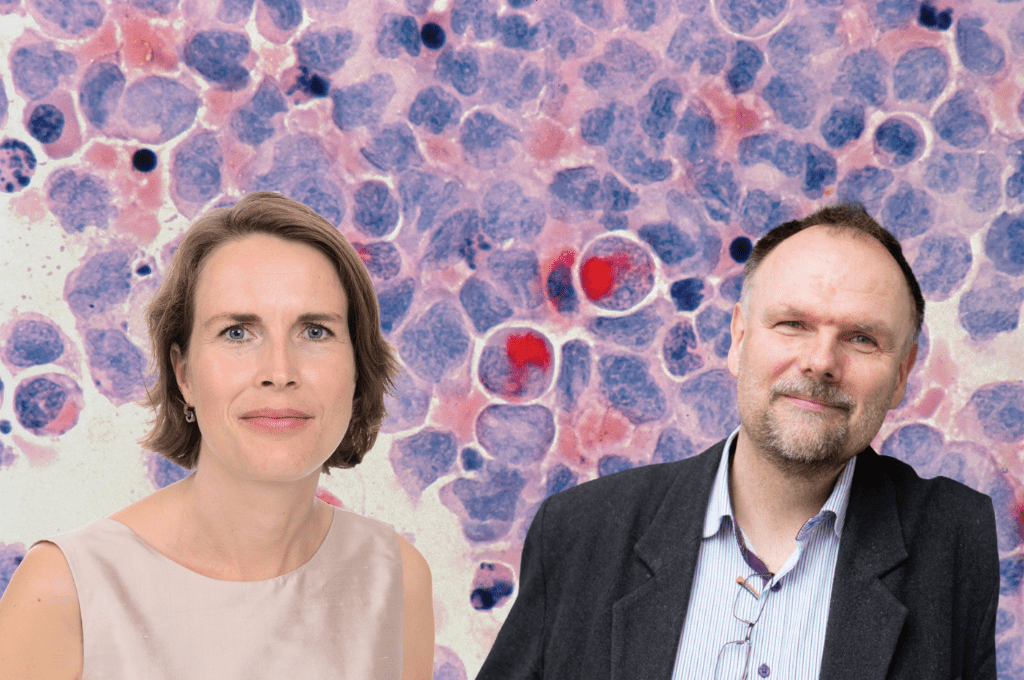
“Our department already hosts the Display and Selection Technologies unit within DDD, so the idea to work more closely together was natural,” says Sara Ek, Professor at the Department of Immunotechnology, LTH, and Center Director at CREATE Health. “Rather than duplicating efforts, we saw a clear synergy in using the antibody libraries and technologies already available within DDD.”
Complementary strengths
Through this partnership, researchers within the L2 Cancer Bridge program, supported by a major donation from the Mrs Berta Kamprad’s Cancer Foundation, gain access to DDD’s advanced antibody libraries and screening technologies.
The initiative will support projects that develop antibody binders and CAR T-cell therapy components, enabling proof-of-concept studies that tentatively can later transition into DDD’s full drug discovery pipeline.
“In practical terms, this collaboration allows us to move much faster. Instead of spending months or years setting up parallel systems, we can focus directly on advancing the science”, Sara Ek says.
Driving innovation in antibody and cell-based therapies
The projects emerging from L2 Cancer Bridge are still in early stages, but the research scope is broad, ranging from bispecific antibodies to novel binders for cell-based therapies. These areas are expected to grow rapidly, particularly within the area of advanced therapy medicinal products (ATMPs).
“It’s about making the best possible use of Sweden’s research resources,” says Kristian Sandberg, DDD Platform Co-Director. “By connecting the academic strengths at Lund University with national infrastructures like DDD, we can be more resource-efficient and stay competitive internationally.”
Strengthening Swedish cancer research
Ek believes that collaborations like this one give Swedish cancer research a clear edge.
“When advanced infrastructures and excellence-driven research programs come together, we can move faster and stay ahead in identifying new antigens for antibody and cell therapies. That’s crucial if we want to remain on the international frontline,” she says.
She also highlights the importance of long-term funding, such as the Mrs Berta Kamprad’s Cancer Foundation’s support to CREATE Health for the L2 Cancer Bridge program, which enables projects that take greater scientific risks.
“Large, stable funding allows us to explore new directions that might not fit within traditional grant frameworks,” she explains. “That freedom is essential for breakthrough discoveries.”
Further reading and links:
Learn more about L2 Cancer Bridge: https://www.immun.lth.se/research/principal-investigators/carl-borrebaeck/research/l2-cancer-bridge/
Learn more about CREATE Health: https://www.createhealth.lth.se/about
Visit the DDD website: https://www.scilifelab.se/units/ddd-platform/