
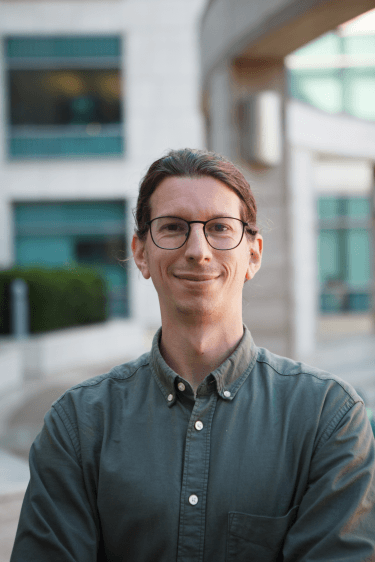
Andrea Fossati
Much like human cells, bacteria are vulnerable to viral infections. The viruses that infect bacteria, known as bacteriophages or simply phages, are attracting increasing attention as potential alternatives to antibiotics in the fight against drug-resistant infections. Yet, despite their enormous diversity and therapeutic potential, we still know remarkably little about how phages interact with their bacterial hosts at the molecular level.
Phage infection is much more than a virus entering a bacterium, replicating and killing its host. It involves a complex molecular battle in which bacteria deploy defense mechanisms to resist infection, while phages have evolved sophisticated strategies to overcome these defenses and take control of essential cellular machinery. Thousands of phage proteins remain functionally uncharacterized, representing a largely unexplored reservoir of molecular tools capable of manipulating bacterial biology.
Our lab aims to uncover the molecular mechanisms that determine the outcome of these interactions. By combining cutting-edge proteomics, functional genomics and machine learning, we investigate how phages reprogram bacterial cells, which cellular processes they target and how genetic diversity on both sides shapes infection success. We focus particularly on mycobacteria, using their extraordinary phage diversity to uncover fundamental principles of viral infection.
Ultimately, we want to translate this knowledge into new antimicrobial strategies. By understanding how phages exploit bacterial vulnerabilities, we aim to move beyond discovering naturally occurring phages towards designing more effective, predictable and programmable phage-based therapeutics.
Group members
Andrea Fossati (PI)
Doyeon Kim (Postdoc)
Heba Khateb (Postdoc)
David Parker (Postdoc)
Andrea García Navarro (PhD)
Grisna Isabel Prensa (PhD)