
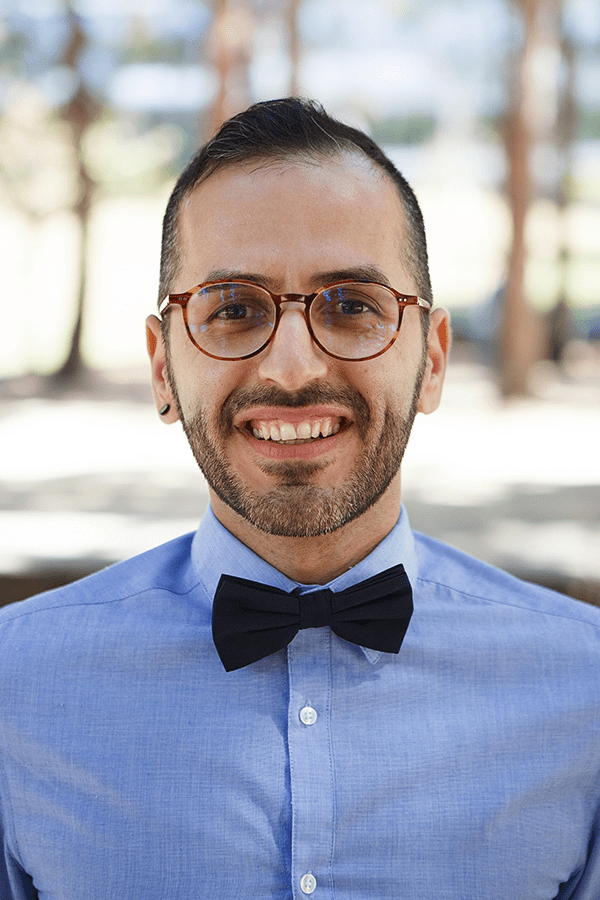
Arian Lundberg

Key Publications

Chesner LN, Polesso F, Graff JN, Hawley JE, Smith A, Lundberg A et al.
Androgen receptor inhibition increases MHC Class I expression and improves immune response in prostate cancer.
Cancer Discovery Volume 15 (3), pages 481–494 (2025)

Seed G*, Beije N*, Bertan C, Goodall J, Lundberg A et al.
Elucidating acquired PARP inhibitor resistance in advanced prostate cancer.
Cancer Cell (December 09, 2024).

Calì B, Troiani M, Bressan S, Attanasio G, Merler S, Moscarda V, Mosole S, Ricci E, Guo C, Yuan W, Gallagher L, Lundberg A et al.
Coagulation factor X promotes resistance to androgen-deprivation therapy in prostate cancer.
Cancer Cell (September 19, 2024).

Zhu X, Farsh T, Vis D, Yu I, Li H, Liu T, Sjöström M, Shrestha R, Kneppers J, Severson T, Zhang M, Lundberg A et al.
Genomic and transcriptomic features of androgen receptor signaling inhibitor resistance in metastatic castration-resistant prostate cancer.
J Clinical Investigation
(2024) 134(19): e178604

Westaby D, Jiménez-Vacas JM, Figueiredo I, Rekowski J, Pettinger C, Gurel B, Lundberg A et al.
BCL2 expression is enriched in advanced prostate cancer with features of lineage plasticity.
J Clinical Investigation
(2024) 134(18): e179998.

Shrestha R, Chesner LN, Zhang M, Zhou S, Foye A, Lundberg A et al.
An Atlas of Accessible Chromatin in Advanced Prostate Cancer Reveals the Epigenetic Evolution during Tumor Progression.
Cancer Research (2024) 84 (18): 3086–3100

Zhang M, Sjöström M, Cui X, Foye A, Farh K, Shrestha R, Lundberg A et al.
Integrative analysis of ultra-deep RNA-seq reveals alternative promoter usage as a mechanism of activating oncogenic programmes during prostate cancer progression.
Nature Cell Biology. Volume 26, pages 1176–1186 (2024)

Zhao SG, Bootsma M, Zhou S, Shrestha R, Moreno-Rodriguez T, Lundberg A et al.
Integrated analyses highlight interactions between the three-dimensional genome and DNA, RNA and epigenomic alterations in metastatic prostate cancer.
Nature Genetics. Volume 56, pages 1689–1700 (2024)

Lundberg A, Zhang M, Aggarwal R et al.
The Genomic and Epigenomic Landscape of Double-Negative Metastatic Prostate Cancer.
Cancer Research. Volume 83, Issue 16 (2023)

Feng E, Rydzewski NR, Zhang M, Lundberg A et al.
Intrinsic Molecular Subtypes of Metastatic Castration-Resistant Prostate Cancer.
Clinical Cancer Research (2022) 28 (24): 5396–5404.

Sjöström M*, Zhao SG*, Levy S*, Zhang M*, Ning Y, Shrestha R, Lundberg A et al.
The 5-Hydroxymethylcytosine Landscape of Prostate Cancer.
Cancer Research, 82(21): 3888–3902 (2022)

Lundberg A, Li B, Li R. B cell-related gene signature and cancer immunotherapy response.
British Journal of Cancer, volume 126, pages 899–906 (2022)

Lundberg A, Yi JJ, Lindström LS, Tobin NP.
Reclassifying tumour cell cycle activity in terms of its tissue of origin.
npj Precision Oncology
. Volume 6, Article number: 59 (2022)

Lundberg A, Lindström LS, Parker JS, Löverli E, Perou CM, Bergh J, Tobin NP.
A pan-cancer analysis of the frequency of DNA alterations across cell cycle activity levels.
Oncogene, volume 39, pages 5430–5440 (2020)

A. Lundberg Lab

Mapping inflammation-mediated tumor plasticity and therapy resistance with multi-omics and multi-modal AI

The A. Lundberg Lab investigates how inflammation-driven signals, immune–metabolic rewiring, and tumor–microenvironment interactions shape tumor evolution, lineage plasticity, and therapy resistance in aggressive cancers, with a primary focus on metastatic prostate,  and complementary studies in breast and head & neck cancer and brain tumors.
We integrate multi-omicsAI and machine learning, and clinically anchored translational analysis to identify prognostic mechanisms, predictive biomarkers, and therapeutically actionable vulnerabilities.

Profile

The lab is led by Assistant Professor Arian Lundberg (PhD, MSc), a Knut and Alice Wallenberg & SciLifelab, Data-Driven Life Science (DDLS) Fellow in Precision Medicine and Diagnostics,  whose background spans Karolinska Institutet (Sweden), Stanford University, University of California San Francisco (USA) and the Institute of Cancer Research/Royal Marsden Hospital (UK).
Our research combines computational modeling, mechanistic inference, and large-scale clinical cohort analysis to uncover how inflammatory, metabolic, and microenvironmental pressures drive cancer progression.
Research Focus

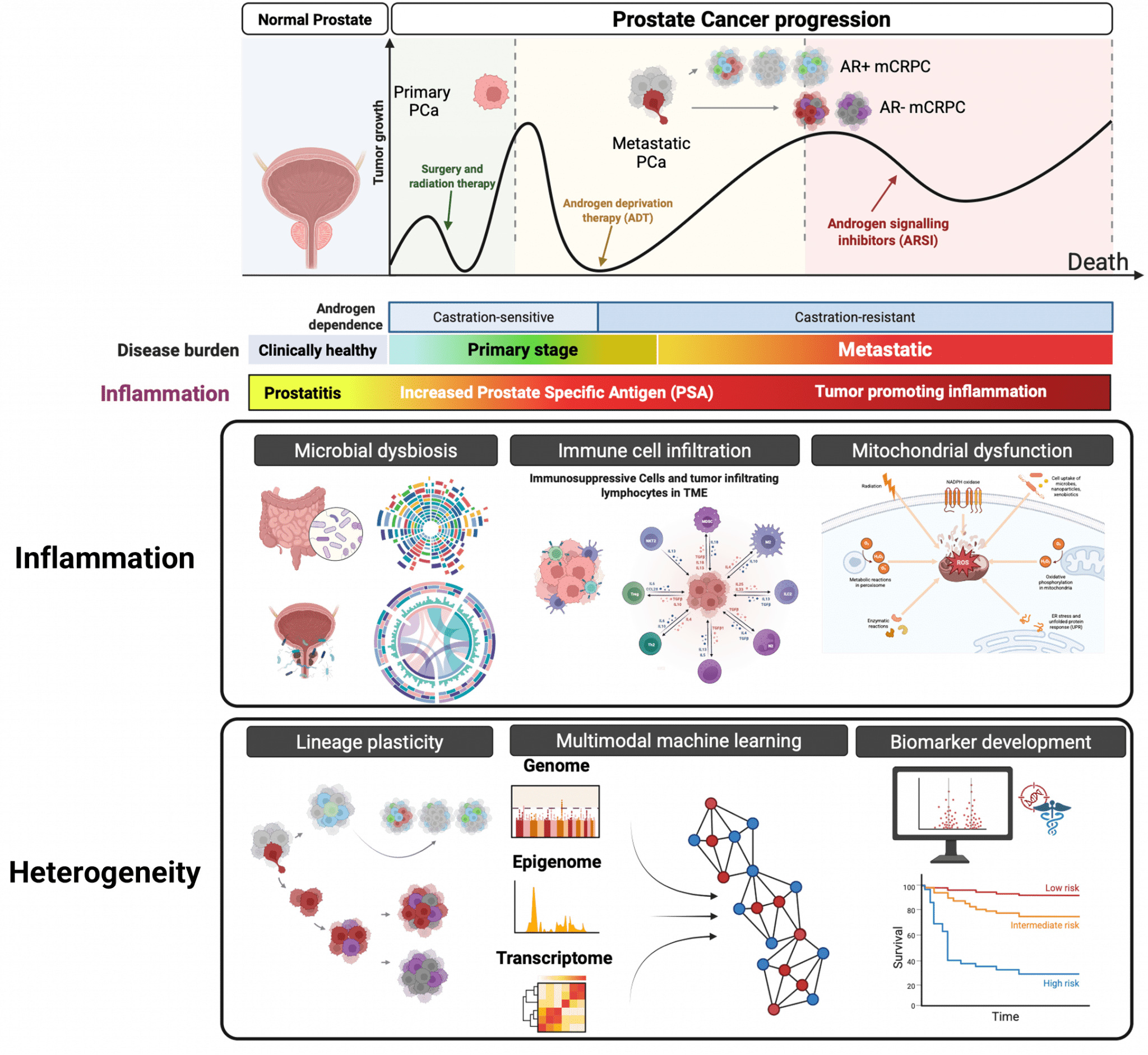
1. Inflammation-driven tumor evolution in metastatic prostate cancer

We dissect transcriptional, regulatory, and metabolic programs that enable therapy escape, lineage plasticity, and metastatic progression.

2. AI- and ML-powered multi-omics biomarkers

We develop prognostic and predictive models for survival, treatment response, immune infiltration, mitochondrial activity, and aggressive tumor states across prostate, breast, and head & neck cancers.

3. Immune–metabolic and microenvironmental rewiring

Using integrative omics and deep learning, we map how inflammatory signals reshape cellular phenotypes during treatment and disease progression.

4. Microbiome–tumor–immune interactions

We investigate microbial–host inflammatory interactions and their contribution to tumor aggressiveness.
The lab leads one of the largest Swedish and international efforts to characterize the tumor-associated microbiome using harmonized pipelines across major clinical cohorts.

Vision

Our mission is to build an AI-driven, mechanistically informed framework to predict and target inflammation-driven tumor evolution, accelerating precision oncology for the most lethal cancer phenotypes.

Group Members

Alexandra Rafeletou, MSc (PhD student)
Tatjana Kiseļova, MSc (PhD student)
Selma Bozorgpana (Visiting PhD student) 

Last updated: 2025-11-18

Content Responsible: Hampus Pehrsson Ternström(hampus.persson@scilifelab.uu.se)