

Pål Stenmark

Stockholm university

Key Publications

Krč A, Košenina SP, Nowakowska MB, Masuyer G, Stenmark P.
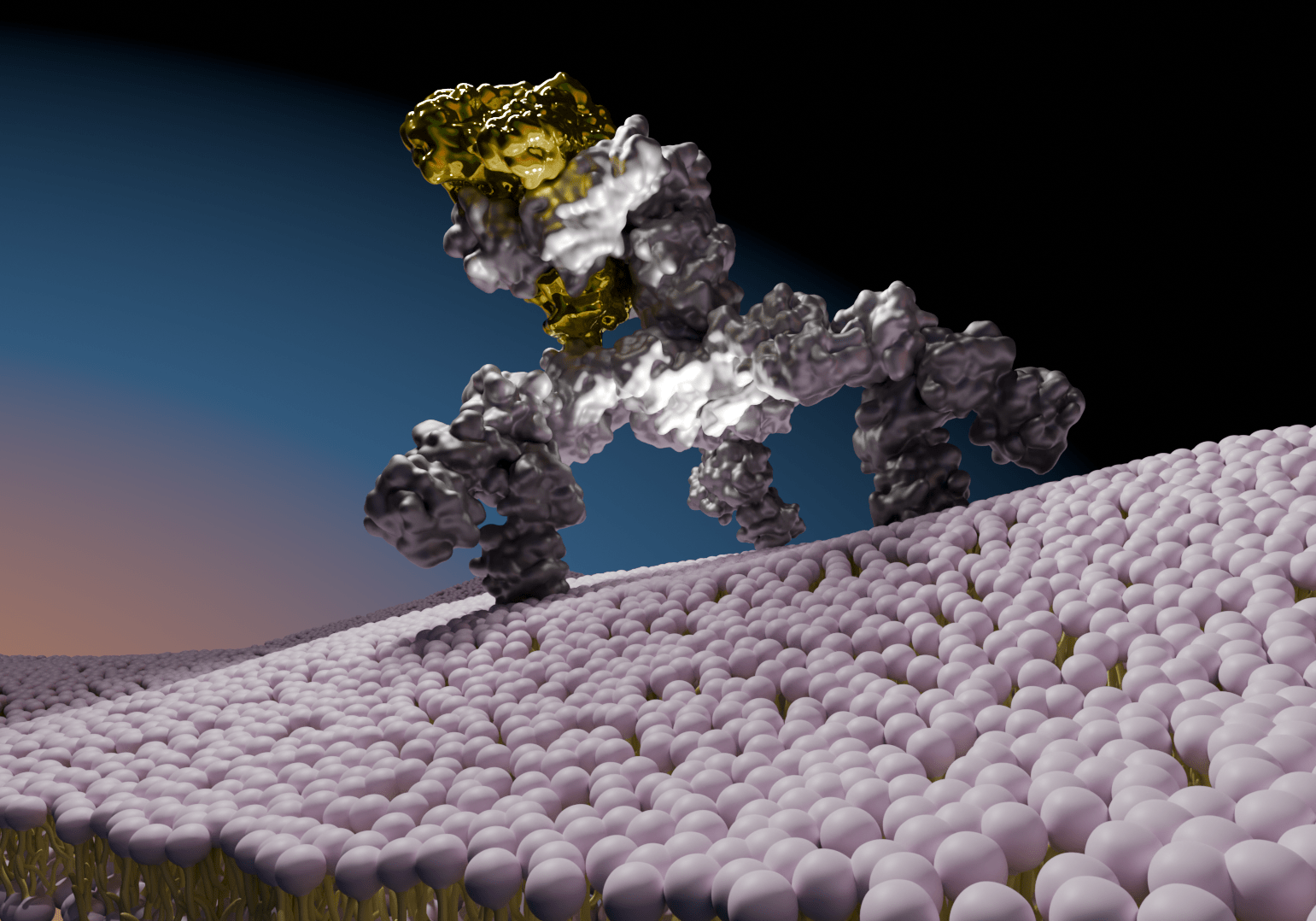
Structure of the complete 14-subunit botulinum neurotoxin B complex reveals a unique anchoring through the narrow central pore of HA70.
Science Advances. 2025 Aug 29;11(35):eadx5058.
doi: 10.1126/sciadv.adx5058. PMID: 40864696

Zhang S, Masuyer G, Zhang J, Shen Y, Lundin D, Henriksson L, Miyashita SI, Martínez-Carranza M, Dong M, Stenmark P.
Identification and characterization of a novel botulinum neurotoxin.
Nature Communications. 2017 Aug 3;8:14130.
doi: 10.1038/ncomms14130. PMID: 28770820

Berntsson RP, Peng L, Dong M, Stenmark P.
Structure of dual receptor binding to botulinum neurotoxin B.
Nature Communications. 2013;4:2058.
doi: 10.1038/ncomms3058. PMID: 23807078

Rozman Grinberg I, Martínez-Carranza M, Bimai O, Nouaïria G, Shahid S, Lundin D, Logan DT, Sjöberg BM, Stenmark P.
A nucleotide-sensing oligomerization mechanism that controls NrdR-dependent transcription of ribonucleotide reductases.
Nature Communications. 2022 May 16;13(1):2700.
doi: 10.1038/s41467-022-30328-1.PMID: 35577776

Carter M, Jemth AS, Hagenkort A, Page BD, Gustafsson R, Griese JJ, Gad H, Valerie NC, Desroses M, Boström J, Warpman Berglund U, Helleday T, Stenmark P.
Crystal structure, biochemical and cellular activities demonstrate separate functions of MTH1 and MTH2.
Nature Communications. 2015 Aug 4;6:7871.
doi: 10.1038/ncomms8871. PMID: 26238318

Gustafsson R, Jemth AS, Gustafsson NM, Färnegårdh K, Loseva O, Wiita E, Bonagas N, Dahllund L, Llona-Minguez S, Häggblad M, Henriksson M, Andersson Y, Homan E, Helleday T, Stenmark P.
Crystal Structure of the Emerging Cancer Target MTHFD2 in Complex with a Substrate-Based Inhibitor.
Cancer Research. 2017 Feb 15;77(4):937-948.
doi: 10.1158/0008-5472.CAN-16-1476.PMID:27899380.

Our research focuses on fundamental questions related to human health, integrating structural biology, biochemistry, molecular biology, and biophysics.

We currently concentrate on two major areas with strong medical relevance:

  1. Botulinum neurotoxins –deadly toxins with great medical potential
  2. Novel cancer targets in nucleotide metabolism and DNA repair

We investigate the fundamental principles, interactions, and mechanisms of Botulinum neurotoxins, as well as enzymes involved in nucleotide metabolism and DNA repair. We work to translate our basic science discoveries into applications that will ultimately benefit patients.

Our research, together with several close collaborators, has led to the development of molecules that are now in clinical trials, both within our cancer projects and our Botulinum neurotoxin programs.

Group Members

Emma Hutchinson
Geoffrey Masuyer
Sara Kosenina
Ajda Krc
Julian Marius Ludäscher
Ellen Walse
Annica Saaret
Maria Nowakowska
Last updated: 2025-12-05

Content Responsible: Hampus Pehrsson Ternström(hampus.persson@scilifelab.uu.se)