

Cycling of nitrogen – Functional microbial ecology
Microorganisms are at the center of all major biogeochemical processes on Earth, providing valuable ecosystem services such as nutrient cycling, climate regulation and degradation of organic matter. Proper stewardship of these services requires a scientific understanding of the ecological processes that govern the diversity and functioning of microbial communities.
Nitrogen (N) is a primary nutrient for all living organisms, and the cycling of N is critical for sustaining life on Earth. However, the anthropogenic discharge of reactive N into the biosphere has led to an imbalance in the global N cycle, causing eutrophication and emission of the greenhouse gas nitrous oxide (N2O). Microbial communities that mediate different N-cycle processes ultimately determine whether N is gained or lost in an ecosystem and in which form. Understanding how abiotic or biotic factors shape the diversity, structure, and functioning of these communities is critical for predicting the fate of N in Earth’s ecosystems. We can apply this knowledge to address major challenges like sustainable management of soil systems and mitigation of climate change and eutrophication.
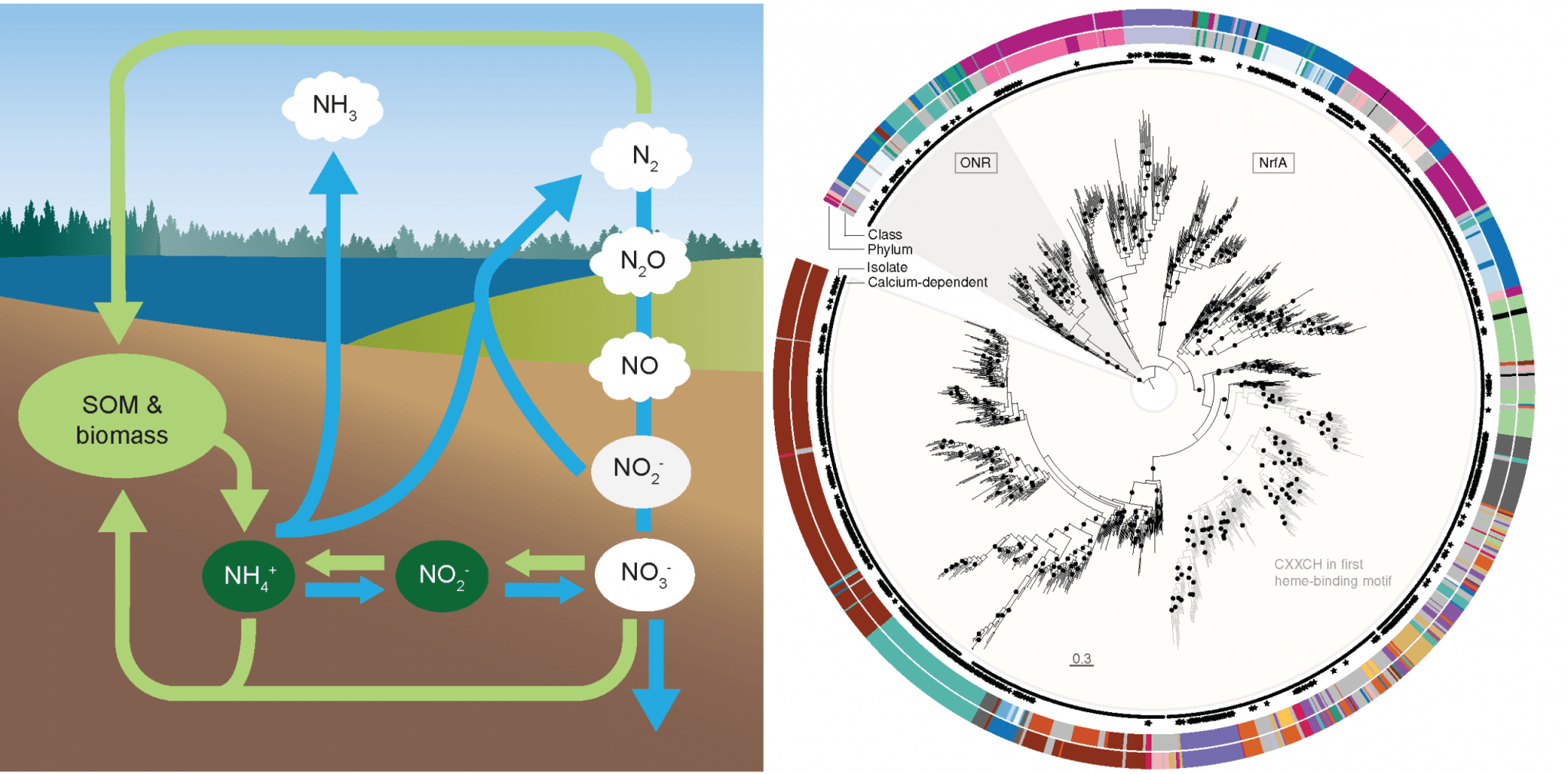
In the Soil Microbiology Group, we have implemented a functional ecology framework, where microbial communities are defined by the functions they perform. We study all functional guilds in the N cycle, aiming to link microbial community dynamics and ecosystem processes, as well as identifying key organisms and factors that control N-transformation processes. We mainly work with samples from the environment, either from sampling campaigns or from field experiments, but also do microcosm and greenhouse experiments. We combine various molecular tools, bioinformatics, activity measurements and computational approaches to study microbial functional guilds that drive N cycle processes.