
Spatial biology among the stars – meet Stefania Giacomello
From plants to spaceflight, Stefania Giacomello’s research is multidisciplinary, unified by the goal of understanding how organisms adapt to changing environments. With spatial transcriptomics as her guiding tool and technology as her compass, she maps gene activity in precise locations – on Earth and beyond.
“I came in contact with biotechnology early on in my studies, and I was immediately hooked,” says Stefania Giacomello, Group Leader at SciLifeLab. To her, the heart of science is in progress, often linked to technology. “I like all of the aspects of developing new technologies and methods, from planning to troubleshooting.”
This interest led her into the emerging field of spatial transcriptomics – a way of mapping where different genes are active in a tissue. “It’s like creating a map of gene activity in 2D. Instead of just knowing what genes are turned on, we can also tell exactly where in the body, a single organ or even in a single cell it’s happening,” Giacomello explains.
From forest genomes to space omics
As a PhD student in Italy, Giacomello joined the international effort to sequence the genome of spruce trees, work that was led by Umeå Plant Science Centre in northern Sweden. “The spruce genome is huge, and they needed my expertise on transposable elements for this project,” she says.
After finishing her PhD, she was eager to continue her research abroad. From contacts through the spruce project, she got a postdoc position at Joakim Lundberg’s lab at SciLifeLab in Stockholm. “At the time, spatial transcriptomics was still in the making,” she says. “SciLifeLab was at the forefront of the spatial transcriptomics field and one of the few places where spatial technology development was done – it was the perfect match.”
Despite her growing expertise, the path from postdoc to group leader was far from straightforward. “It took several years before I could get the funding I needed, and I don’t want to sugarcoat it – I struggled for several years.”
While applying for grants, Giacomello was grateful to work as a computational data analyst at WABI, now known as NBIS, where she could build up both her computational skills and publications. “I’ve learnt that things might not go the straight path, but you have to be determined and keep pushing, not giving up on your dreams.”
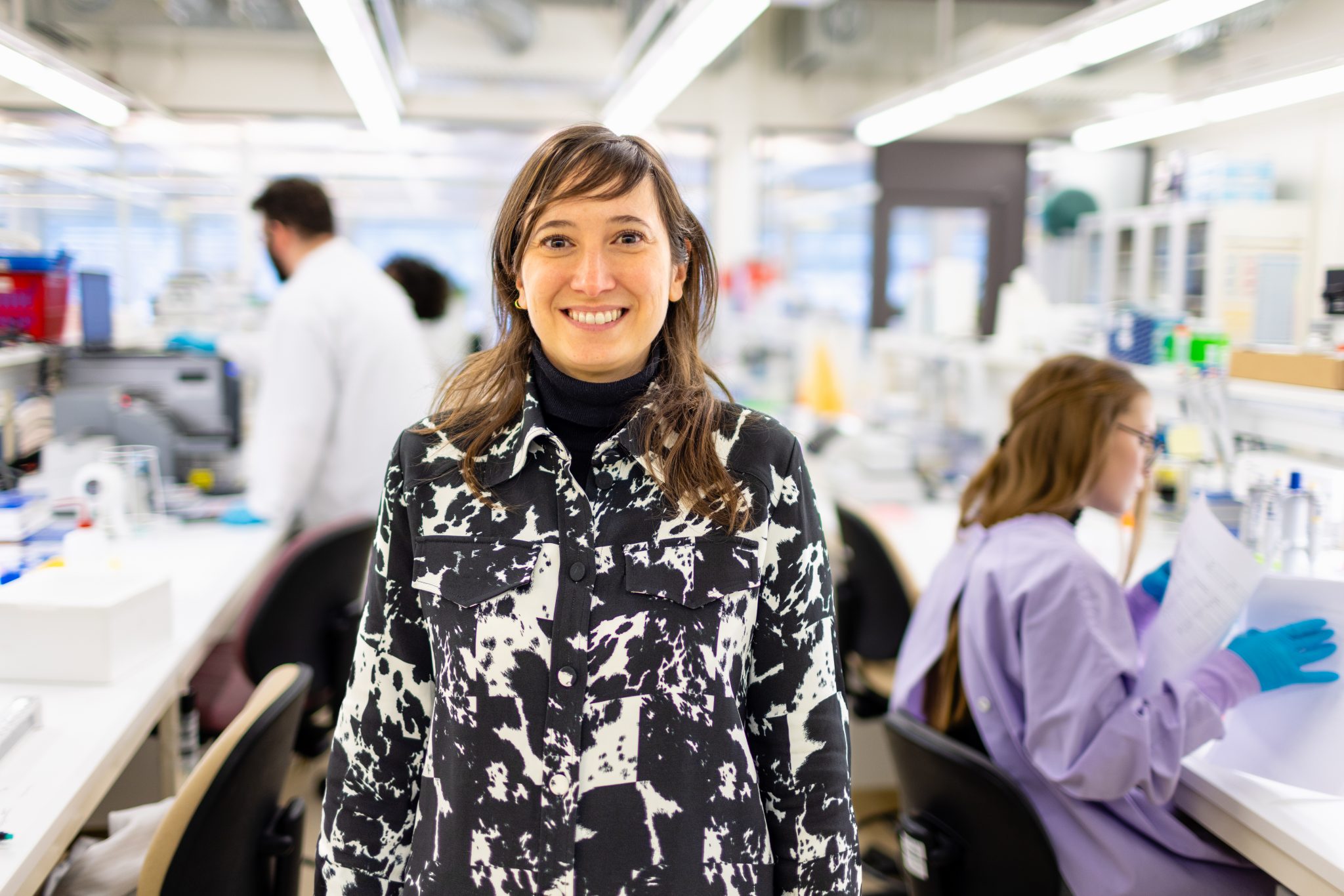
Her perseverance paid off when she secured her first grant from Formas, and there was no question about where she would start her lab. “SciLifeLab is perfect for spatial biology and multiomics. Here, I not only get access to great technologies, but I’m also in a very fruitful environment to progress my research.”
Sometimes, scientific careers pivot on small, unexpected moments. Just as she was starting her lab, she was invited to present her research in California. Among the audience were researchers from NASA’s GeneLab – a platform that collects, shares, and analyzes data from spaceflight to understand how space affects biology.
“They came up to me during the coffee break, and invited me to give a talk at their site. It was a once-in-a-lifetime opportunity,” she says. Ever since, Stefania has been collaborating with the NASA GeneLab, which brought her into the world of space omics: the study of how spaceflight affects biology, using omics tools like genomics, metabolomics and proteomics.
“We are all, in some way or another, fascinated with space, but I never thought that I as a biologist could work with it” she says.
A new frontier for omics
Though most of her work at SciLifeLab focuses on host-microbiome interactions, which is financed by ERC Synergy Grant, space omics now take up more and more of her research time. With support from the Swedish National Space Agency and the Swedish Research Council, she hopes to expand it further.
“Space is both a diverse and an extreme environment, and it allows us to study the plasticity of the body,” she says. “Understanding how the body adapts to space helps us understand how it adapts to change in general.” “
“With space travel becoming more common, and with Mars at the frontiers, we need to know how the body will handle the extreme space environment, and how to study these effects.”
She is particularly interested in brain plasticity and is currently analyzing over 30 brain samples from space-exposed mice. “We have observed molecular changes in the hippocampus region, some that seem to share some similarities with neurodegenerative diseases here on Earth,” she says, adding “Of course, we need more data to support those findings.”
But data is sparse by nature, as space omics comes with its own set of challenges. “Space samples are tricky. We’re working with low numbers, and the samples are handled and collected by astronauts, who get training, but it’s not the same as done by a specialized researcher.” With the risks of the data quality being lower, and with fewer samples, she and her colleagues have to make sure they utilize them in the best possible ways.
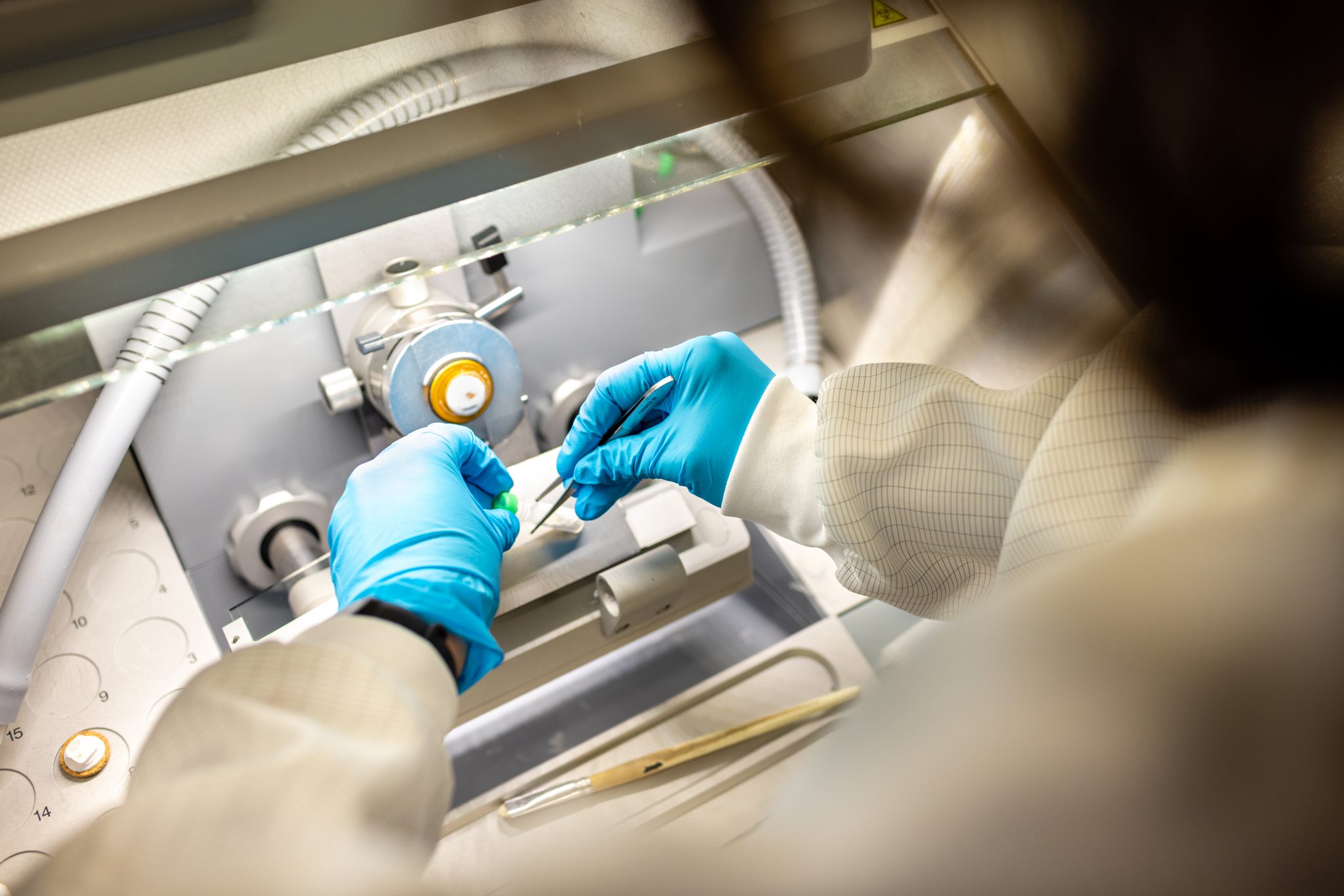
As scientific chair of the International Standards for Space Omics Processing (ISSOP), Giacomello works together with NASA, JAXA and several European labs to create protocols and standardization for spaceflight research. “With space travel becoming more common, and with Mars at the frontiers, we need to know how the body will handle the extreme space environment, and how to study these effects,” she says. As part of that endeavor, Giacomello plans to analyze heart, bone, muscle, and retina samples from space missions.
Living on the island of Stora Essingen in Stockholm, Giacomello enjoys long walks with her dog, yoga, volleyball, and spending time with friends and family. “Especially during those tough years when I struggled with funding, staying active and keeping in touch with loved ones really helped,” she says.
And she’s found joy in leading her own lab. “Through my students I get to delve into new topics and see them grow into researchers. It’s extremely rewarding,” she says. “Science tends to be individual, but the process of sharing and learning from each other is what I enjoy the most.”
Four quick questions to Stefania:
> Tea or coffee? – Tea!
> Early bird or night owl? – Was a night owl, but learning to be an early bird!
> Audiobooks or paperbacks? – Paperbacks!
> Lab or computer work? – Tricky one! Have to go with the lab, as it can be more rewarding when you finally solve something.
Want to learn more about Stefania Giamocello’s involvement with space omics and the ISSOP? Read the interview with her from 2020.