

SciLifeLab researchers awarded Swedish Research Council starting grants in medicine and health
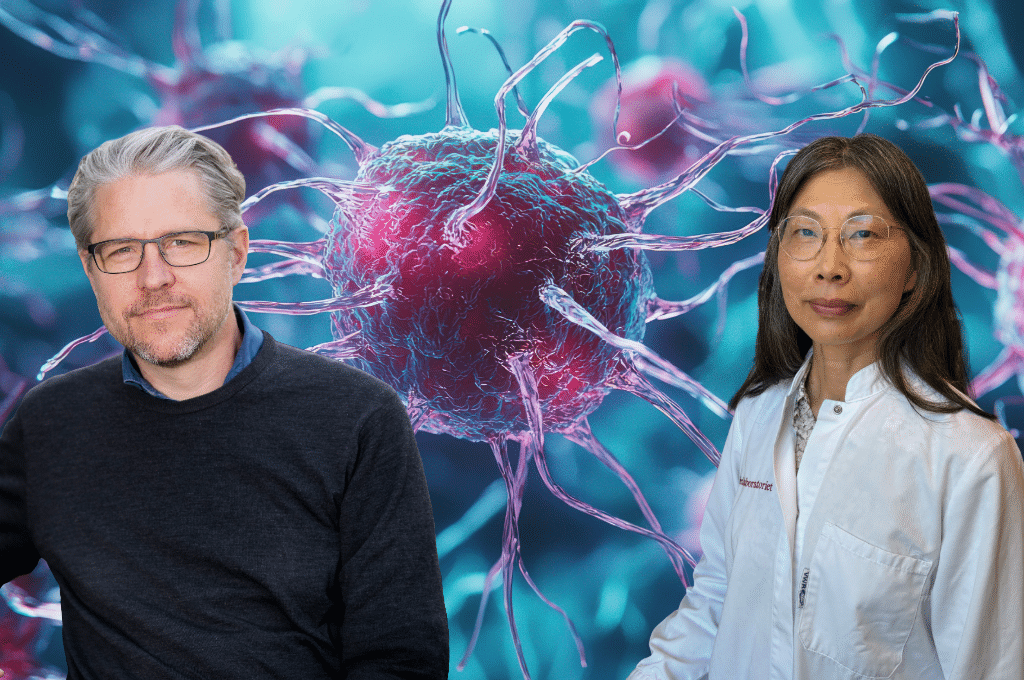
DDLS Fellows Antonio Lentini (Linköping University) and Arian Lundberg (KTH Royal Institute of Technology) have both been awarded Swedish Research Council starting grants in medicine and health. The highly competitive grants, announced last week, support promising early-career researchers in establishing independent research groups and advancing innovative medical research in Sweden.
This year, the Swedish Research Council allocated over 1.2 billion SEK for research in medicine and health for the period 2025–2031. Within the starting grant category, 31 out of 262 applications were funded, corresponding to a success rate of 12 percent.
Both Antonio and Arian conduct research within the DDLS research area of precision medicine and diagnostics, with a focus on understanding the mechanisms that drive cancer development and progression.
Tracing cancer evolution across time and space
Antonio Lentini investigates how cancer evolves across time and space. His team combines large-scale single-cell sequencing technologies with advanced computational approaches to uncover how clonal heterogeneity emerges and drives tumour growth and resistance to treatment. The project aims to identify vulnerabilities in cancer’s evolutionary trajectories that could be targeted for new precision therapies.
“This starting grant enables us to expand the foundational research essential for uncovering the mechanisms that drive cancer progression. It also strengthens the translational research ecosystem at Linköping University and SciLifeLab, helping bridge the gap between scientific discovery and clinical impact. We are now actively recruiting motivated researchers to join our team and contribute to this exciting phase of growth,” says Antonio Lentini.
Understanding lethal forms of metastatic prostate cancer
Arian Lundberg focuses on prostate cancer disease, particularly the aggressive forms at the metastatic stage. His research integrates large-scale multi-omics data and multi-modal machine learning models combined with functional studies to uncover the molecular mechanisms underlying tumour progression and treatment resistance. Through the Vetenskapsrådet Starting Grant, his project aims to identify new therapeutic targets for patients with the most lethal forms of prostate cancer.
“This grant provides us with an important opportunity to build upon our recent discoveries and deepen our understanding of the most lethal forms of prostate cancer. It also represents a significant step toward establishing a strong research environment in precision oncology at KTH and SciLifeLab,” says Arian Lundberg.