
SciLifeLab Voices: Kristen Schroeder
This time in our SciLifeLab Voices series, we meet Kristen Schroeder, Scientific Training Officer at SciLifeLab. She shares her path from bench science to training, and her work within the PULSE programme, along with a few lesser-known aspects of her career.
Can you tell us about your background and what led you to SciLifeLab?
So our story begins in Canada in 2008, during the third year of my undergraduate degree, when I started working part-time helping run microbiology lab classes as a teaching assistant. I really liked teaching and being in the lab, so I continued at the university, doing an MSc and then working as a lab technician for several years. I got to work on studies of how penguins swim, how cartilage is formed, what heavy metals do to developing fish embryos, until eventually I decided to do a PhD. I joined SciLifeLab for this in 2017, back when the Gamma building had empty space and our logo was in a serif font. I found exploring the organization of bacterial proteins under the microscope really cool (you can still see the bacteria I drew on the microscopy suite sign on Gamma 5!), but one of my favourite parts of my PhD was sharing this experience through teaching a lab course for Masters’ students each year.
After my PhD I moved across the street to BioClinicum for a postdoc, and was lucky to be able to participate in KI’s internship program for postdocs. Working at scientifyRESEARCH for two months as a digital storyteller was so much fun, and the experience solidified my decision to do something new. At this point I’d been at the bench for almost 15 years, working on projects from sequencing genomes of beer spoilage bacteria to electron transport chain function in brain tumours, but one of the things I enjoyed the most was teaching and sharing skills and knowledge with others. So in 2023 I became one of SciLifeLab’s Scientific Training Officers!
What is the role of training within the SciLifeLab PULSE programme?
Training in PULSE is aimed at giving our amazing cohort of postdocs regular and focused time, information, and opportunities to develop and apply transversal skills that will equip them for future leadership. In her book Research Project Management and Leadership: A handbook for everyone, Alison Paprica interviews a group of research leaders, and one of the themes that emerges from these interviews is that skills in networking, collaboration, and team-building are crucial in order to achieve a vision bigger than what one person can do alone.
So my part in the PULSE Training and Career Development Committee is creating the space, providing curated information, and facilitating group discussion and practice in things like creating inclusive research culture, negotiating on behalf of a government agency, ethical decision-making, talking with skeptic audiences, and so on. It’s still very early in the program, but my hope is the postdocs will look back on this as a valuable learning experience.
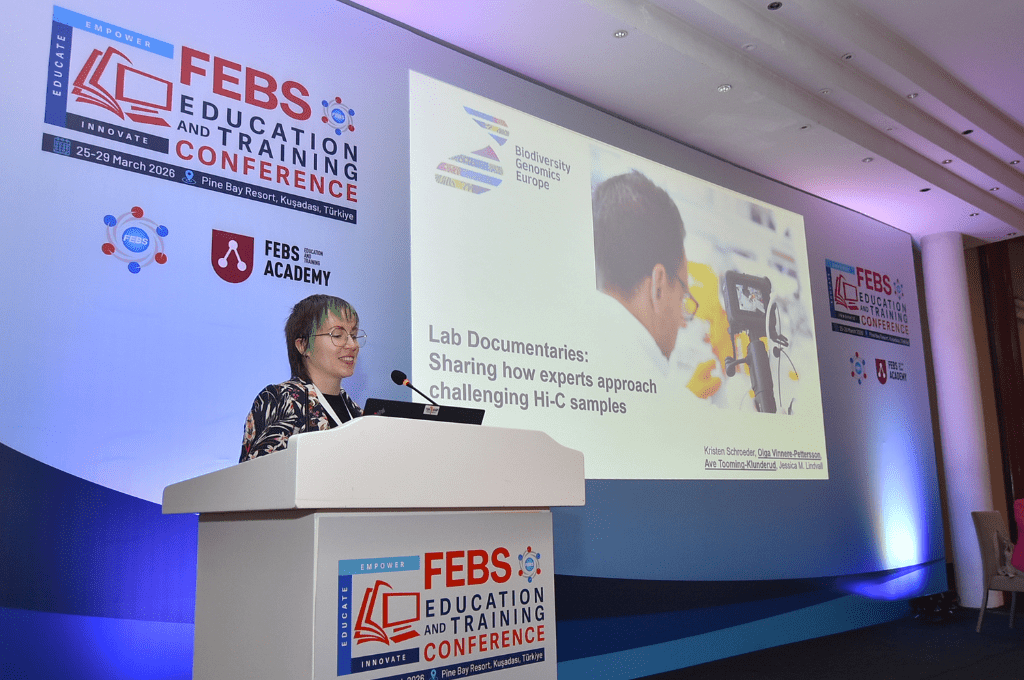
What stood out to you from the recent FEBS workshop you attended on education and training?
Definitely the community. I had an amazing time sharing SciLifeLab training initiatives with professors, training officers, and researchers from other countries, and learning about what innovations they’re making in teaching. I especially enjoyed the invited lecture from Knut Teigen from the University of Bergen, who gave a talk on designing a team-based learning program for elite ski instructors in Norway, and how they have applied the same technique in medical education.
What skills are becoming more important for early-career researchers today?
The closing lecture at the FEBS conference explored the idea that from a historical perspective, conditions are right for the University to undergo another transformation, and presented different forms the University might take in the future. In chaotic or transitional times, I think being able to observe, discuss, and shape understanding of the world, as well as knowing how to systematically pave a road into unknown terrain, are valuable skills.
On a more concrete note, I think tackling big issues like climate change, the AI boom, and rising antibiotic resistance requires the combined expertise of different fields, and having the ability to create shared vocabulary, cooperation, and understanding across domains is a huge asset in being able to do this work. Anabella Aguilera (our SciLifeLab Lund site coordinator!) writes a SciArt newsletter that everyone should go subscribe to immediately, where she highlights science projects that collaborate with artistic disciplines. They really demonstrate how impact can multiply through interdisciplinary work.
And since there is a wealth of literature showing the risk of burnout in researcher populations, I think another needed skill is some form of mindfulness practice—both for career sustainability as well as creating more healthy and inclusive research environments for everyone.
What is something people might not know about you?
I wrote a novella that was longlisted for a British Science Fiction Award and made the Locus Recommended Reading list. I’m also an amateur circus performer 🙂
All training Open training material related to the PULSE program is available here >>