
New units presentation: NanoSIMS Sweden
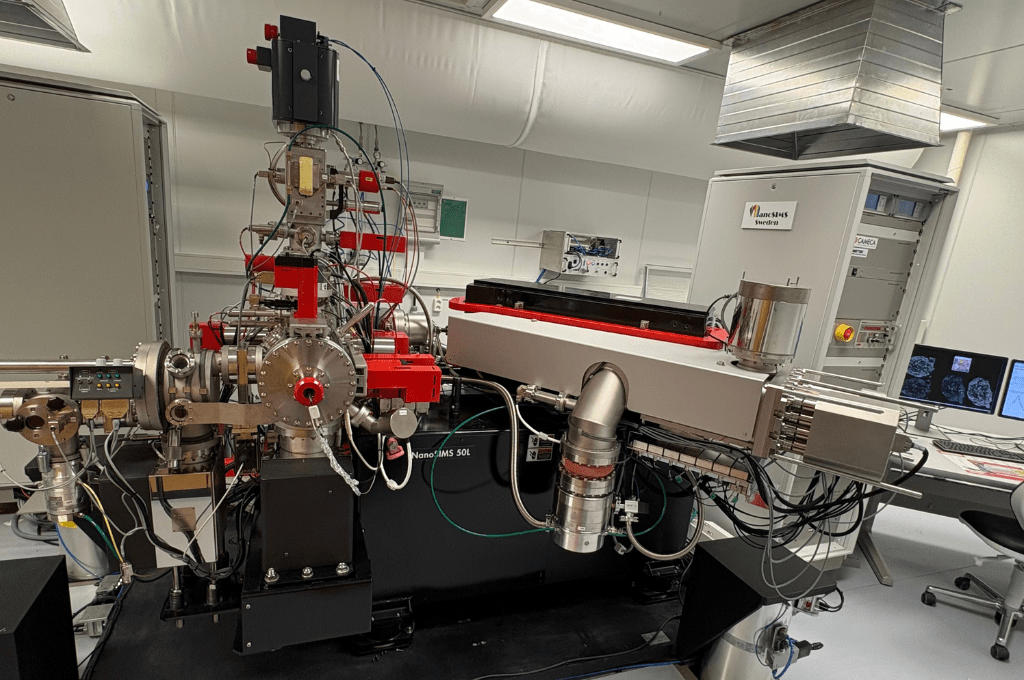
NanoSIMS Sweden, based at the University of Gothenburg, is now part of SciLifeLab through the Cell and Molecular Imaging (CMI) platform. The facility provides access to nanoscale mass spectrometry imaging, enabling researchers to study the chemical composition of biological, environmental, and material samples at very high spatial resolution.
Established in 2015 at the Department of Chemistry and Molecular Biology, NanoSIMS Sweden was created to make this specialized technology available to researchers nationally. It has since grown into a resource serving users across the Nordic region. As the only facility of its kind in the region, it supports studies that require detailed insight into how molecules and elements are distributed within complex systems.
What NanoSIMS Sweden offers
The core capability of NanoSIMS Sweden is imaging the spatial distribution of elements, isotopes, and molecules at nanometer scale. This allows researchers to address questions that are difficult to approach with other techniques, for example in cell biology, environmental science, materials research, and drug development. The facility supports the full workflow, including experimental design, sample preparation, data acquisition, and analysis, and also offers training for independent use.
Users come from a wide range of disciplines. Both academic and industry researchers can access the facility, particularly those working with questions that require spatially resolved chemical information. The unit also collaborates with other SciLifeLab infrastructures to connect complementary methods when needed.
Method development is an active part of the work. Recent efforts include new approaches for studying drug uptake and intracellular processes, as well as correlative imaging strategies that combine NanoSIMS with other microscopy techniques to provide more comprehensive views of biological systems.
As part of SciLifeLab, NanoSIMS Sweden aims to continue expanding access to nanoscale imaging while maintaining close links to both academic research and industry. A key focus moving forward is to scale capacity to meet growing demand, while continuing to develop new methods and applications.