
Mapping the cells behind bone growth
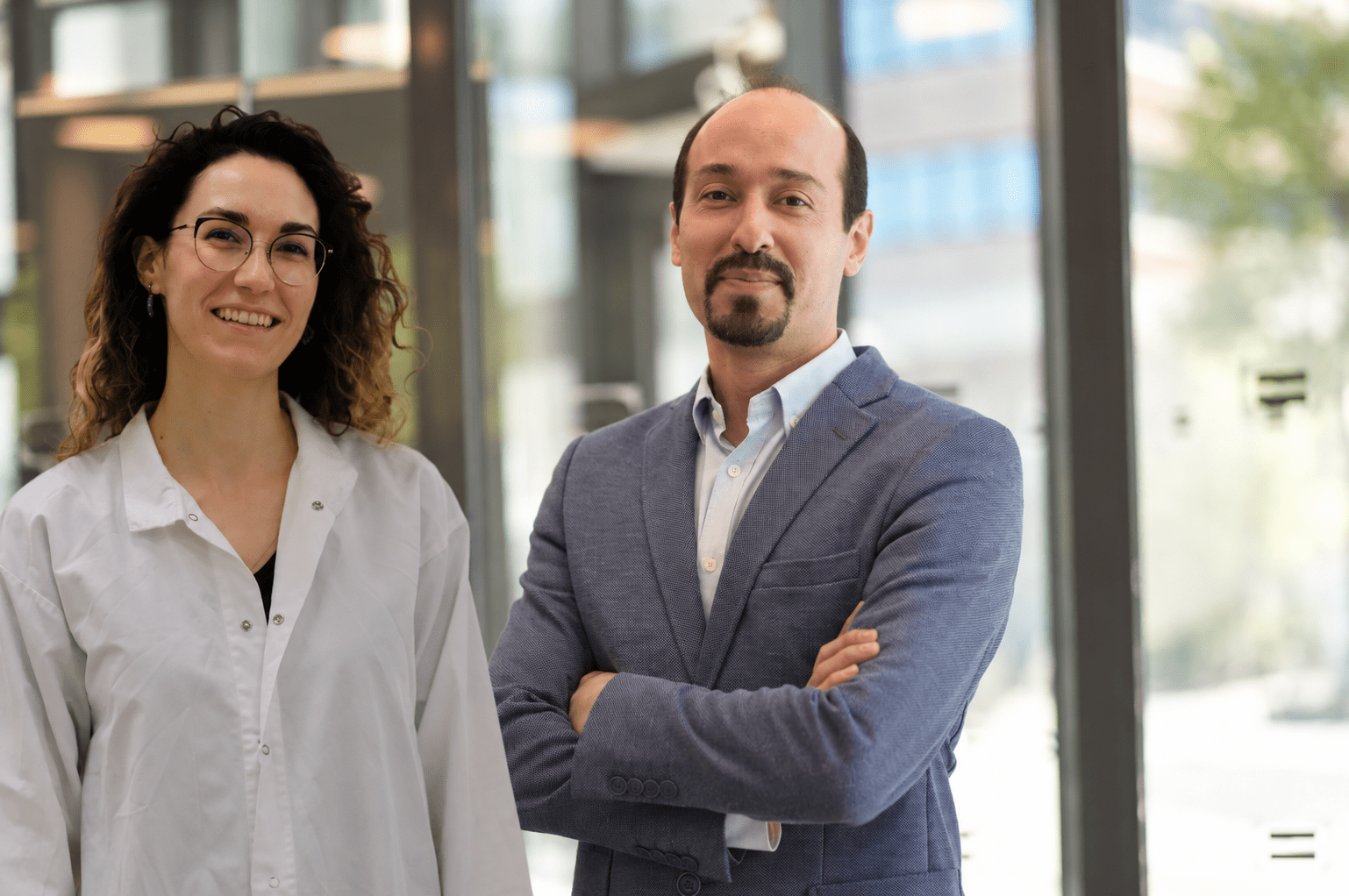
In a new study published in Bone Research, Leire Alonso Galicia, PhD student at KTH and SciLifeLab, and Reza Mirzazadeh, researcher at SciLifeLab, are part of a large collaboration that has created a detailed molecular map of the human growth plate. The study was carried out in Joakim Lundeberg’s group at KTH, where the Spatial Transcriptomics technology used in the work was originally developed.
The growth plate is the part of our bones that enables them to grow during childhood. It is also involved in several skeletal growth disorders. Yet it is difficult to study at the molecular level because bone and cartilage are challenging sources of RNA, which can be difficult to access and may be present at very low levels.
That was the problem the study’s RNA-Rescue Spatial Transcriptomics (RRST) method was designed to address. Spatial transcriptomics allows researchers to see which genes are active in different parts of a tissue, creating a kind of molecular map. RNA Rescue helps recover RNA from tissues where it is difficult to access or available in low quantities.
They developed RNA Rescue in 2023 and tested it on several challenging tissue types. Then they applied the method to mouse bone, where they successfully studied the formation of growth plates. With those results in hand, they turned to the human equivalent.
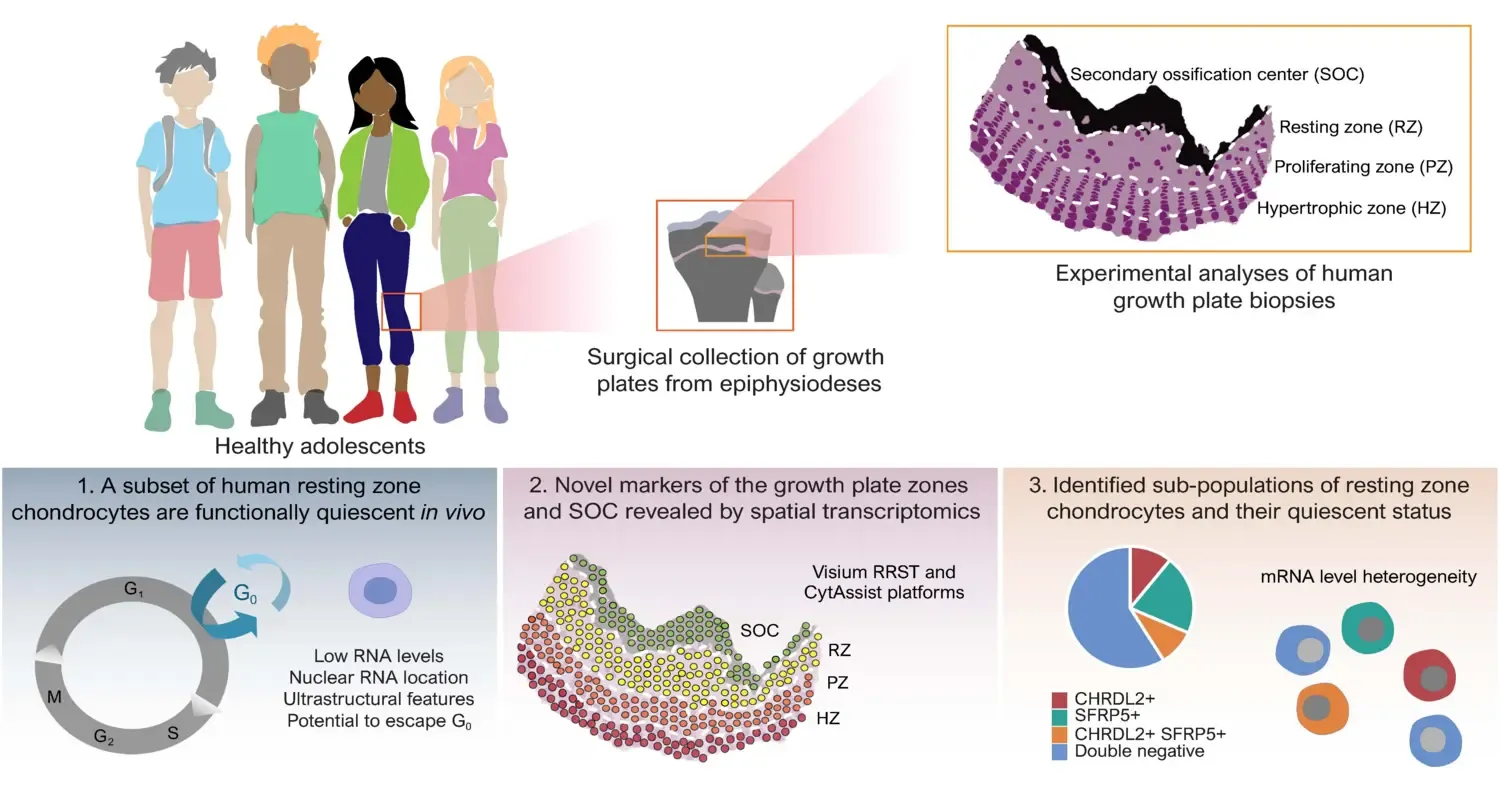
Using human growth plate samples, they were able to map gene activity across the tissue and study cell populations that have previously been difficult to investigate.
One of the more interesting observations came from an area called the resting zone. Cells in the resting zone contain very little RNA. Normally, a weak signal could indicate poor-quality data, and such cells might be excluded from an analysis.
In this case, however, the low RNA levels reflected the biology of the cells. The resting-zone cells are quiescent, or dormant, and therefore much less active than the cells around them.
“It was fascinating to realize that the low signal was actually part of the biology,” Leire Alonso Galicia says.
The study was carried out in a highly collaborative environment at SciLifeLab. The researchers had access to the instruments and expertise needed to develop and troubleshoot the method, while the proximity to Karolinska Institutet made collaboration with Philip Newton’s group, which focuses on growth-plate biology, much easier.
“We are a technology lab and are always up for a challenge,” Leire says. The human growth plate was an especially interesting challenge because of its role in determining how our bones grow, while also being difficult to obtain and study.