
The PROMISE Initiative: Accelerating Cancer Innovation

October 13, 2026 @ 09:00 – 18:30 CEST
This conference focuses on the PROMISE Cancer effort led by Swedish scientists representing Stockholm, Uppsala, Umeå, Linköping, Lund, and Gothenburg as well as SciLifeLab.
Cancer encompasses more than 200 distinct diseases, each with widely varying prognoses, ranging from highly treatable to aggressive cancers with poor outcomes. Advances in molecular profiling hold great promise for improving diagnostics and treatment by enabling more precise, personalized approaches tailored to individual patients. Sweden has world-leading cancer registries and high-quality biobanks, creating unique opportunities for cancer research. By joining forces across the research community, we can better leverage these national strengths to benefit patients. SciLifeLab platforms support the generation, integration, and analysis of data across genomics and a broad range of other omics technologies.
The goal of the conference is to expand the PROMISE Cancer initiative, promote its efforts, and continue building the Swedish cancer community.
Registration
About PROMISE
Precision Omics Initiative Sweden (PROMISE) is a national initiative using genomics and multiomics to understand common diseases, rare diseases, and cancer.
Program and speakers
Mike Stratton qualified in medicine at Oxford University and Guy’s Hospital Medical School and obtained a PhD in the Molecular Biology of Cancer at the Institute of Cancer Research, London. His research into the genomes of normal and cancer cells includes discovery of the breast cancer susceptibility gene BRCA2, of somatically mutated BRAF in malignant melanoma, and establishing the conceptual and analytic framework of mutational signatures. He is a Fellow of the Royal Society, an International Member of the US National Academy of Sciences and was Knighted in the 2013 Queen’s birthday honours.
Thoas Fioretos, MD, PhD, is Professor of Clinical Genetics at Lund University and Senior Consultant at Skåne University Hospital. His research focuses on the molecular basis of acute leukemia and its translation into improved diagnostics and targeted therapies. His group applies genomic and single-cell approaches to define cell states, stem-cell properties, immune-evasion mechanisms and cell-surface targets. The group was among the first to establish IL1RAP as a therapeutic target on leukemia stem cells and recently identified SLAMF6 as an immune checkpoint in acute myeloid leukemia. These discoveries have supported antibody-based therapies, including an investigator-initiated trial evaluating an IL1RAP-targeting antibody in AML and high-risk MDS at MD Anderson Cancer Center. Fioretos is a Wallenberg Clinical Scholar, Platform Scientific Director of Clinical Genomics Lund at SciLifeLab and a founding member of Genomic Medicine Sweden. He is a member of the Royal Swedish Academy of Sciences and currently chairs its Class for Medical Sciences.
Dr. Shahar Alon leads the Spatial Genomics lab at the Faculty of Engineering, Bar-Ilan University. Dr. Alon background is in Physics and Neuroscience, with a PhD from Tel Aviv University, and a postdoc in the group of Prof. Ed Boyden at MIT. Dr. Alon was awarded the LSRF scholarship during his postdoc and the ERC starting grant as a principal investigator. Alon’s group research questions are mainly related to RNA localization in neurons in healthy and disease-related tissues as well as in cancer tissues. Alon’s group builds technologies and data analysis tools for spatial single cell analysis.
Esther Rheinbay is an Assistant Professor of Medicine at Harvard Medical School and a Principal Investigator at the Krantz Family Center for Cancer Research at Massachusetts General Hospital. She is also an Associate Member of the Broad Institute of MIT and Harvard. Dr. Rheinbay’s research focuses on the intersection of cancer genomics and epigenomics, with a particular interest in understanding how non-coding mutations and large-scale chromosomal alterations drive tumor progression. Her group is also interested in the role of the sex chromosomes, and specifically the Y chromosome in cancer. Dr. Rheinbay earned her undergraduate degree in Bioinformatics from the University of Tübingen and her Ph.D. from Boston University, where she specialized in computational epigenomics. She completed her postdoctoral training at the Broad Institute. Beyond the lab, Dr. Rheinbay is an advocate for supporting parent scientists in academia, and enjoys teaching the creativity of designing effective scientific figures.
Karin Forsberg-Nilsson is Professor of Stem Cell Research at Uppsala University, Sweden, and a SciLifeLab Group Leader. She received her PhD from Uppsala University in 1992 followed by a postdoc at the National Institutes of Health, USA. Alongside her research, she has held leadership positions in the pharma/biotech sector, the Swedish Research Council, SciLifeLab, and Uppsala University, most recently serving as Dean of the Faculty of Medicine. Her research focuses on the intersection of cancer and neurobiology, combining neural stem cell biology with expertise in brain tumor biology and genetics. Her laboratory investigates non-coding mutations in brain tumors, with a particular focus on regulatory regions under evolutionary constraint. This work is based on the hypothesis that conserved genomic regions are more likely to be functional and that mutations within them may have greater biological impact.
Ann Nordgren, MD, PhD, is Professor of Clinical Genetics at Karolinska Institutet and the University of Gothenburg, and Senior Consultant in Clinical Genetics at Karolinska University Hospital, Stockholm. Her work focuses on rare diseases, including intellectual disability, congenital malformation syndromes and childhood cancer predisposition. A major focus of her research is the link between rare genetic syndromes and cancer in children. Her group studies germline predisposition to childhood cancer, including leukemia, using multi-omics, detailed clinical phenotyping and population-based epidemiological studies. She also leads the Undiagnosed Diseases Network Sweden (UDN Sweden), which applies advanced genomic analyses to solve previously undiagnosed cases. She is Director of the Center for Rare Diseases (CSD), Stockholm-Gotland, and National Coordinator for the European Reference Network ITHACA. Her goal is to shorten diagnostic journeys, enable precision medicine for individuals with rare diseases, and improve survival and reduce late effects in children with cancer.
Johan Lindberg is Principal Researcher at the Department of Medical Epidemiology and Biostatistics, Karolinska Institutet. His research covers cancer genomics, bioinformatics, assay development, biomarker discovery, and clinical trials. He has established an infrastructure and a team that performs prospective genomic analysis of cancer genomes and delivers results within a clinically relevant timeframe. More than 6500 reports have been sent to approximately 50 hospitals in six European countries. He is responsible for the prospective genomic analysis in the ProBio Biomarkers trial (NCT03903835), an outcome-adaptive randomised platform trial in metastatic prostate cancer (Nature Medicine, 2024), and held the same responsibility in the ALASCCA trial which evaluated low-dose aspirin in PI3K-altered localised colorectal cancer (New England Journal of Medicine, 2025). Assays developed in these programmes are currently in routine diagnostic use at Karolinska University Hospital for metastatic prostate cancer and six further diagnoses.
Olli Kallioniemi is Research Director at the Institute for Molecular Medicine Finland (FIMM), part of HiLIFE at the University of Helsinki. He earned his MD (1985), PhD (1988), and specialization in Clinical Chemistry (1990) from the University of Tampere. He then spent 11 years in the U.S. as a postdoctoral fellow at UCSF and tenure-track investigator at NHGRI/NIH, where he was tenured in 2001. From 2007–2015, he served as the founding director of FIMM in Helsinki, later recruited to Sweden to direct the Science for Life Laboratory (SciLifeLab) in 2015–2024, Sweden´s national life science research infrastructure, as well as nominated to a professorship in molecular precision medicine at Karolinska Institutet. He also acted as the Founding Director of the 3.3B SEK SciLifeLab-KAW Data-Driven Life Science (DDLS) program. His research focuses on AI- and data-driven precision medicine, particularly in acute myeloid leukemia and prostate cancer, and he co-leads a national initiative to plan the future of Finnish health data space and its utilization. He has authored 420+ publications, holds ~20 patents, and supervised 27 doctoral theses and over 30 postdocs. His honors include the Anders Jahre Young Investigator Award, Äyräpää Prize, AACR Team Science Awards, and Biomedicum Medal. He is a member of EMBO, the European Academy of Cancer Sciences, the Royal Swedish Academy of Sciences, and the Nobel Assembly at Karolinska Institutet.
Berend Snijder is a Faculty Member at the Botnar Institute of Immune Engineering. He is a group leader at the Swiss Institute of Bioinformatics and the Comprehensive Cancer Center Zurich, and was previously Assistant Professor at the Institute of Molecular Systems Biology at the ETH Zurich. Berend’s research focuses on the systematic functional and multi-omic profiling of human tissues in health and disease, with strong bioinformatics and clinical/translational focus. He is a leading figure in the field of functional precision medicine. Berend has co-founded three spinoff companies, including Allcyte (acquired by Exscientia, now Recursion), Prevision Medicine, and Graph Therapeutics.
Tuuli Lappalainen, PhD, is a Professor at KTH Royal Institute of Technology, the Director of the Genomics Platform and the National Genomics Infrastructure of SciLifeLab, Sweden, and a Senior Associate Faculty Member at the New York Genome Center. Dr. Lappalainen received her PhD in Genetics from the University of Helsinki. Her research focuses on molecular and cellular effects of genetic variation in human populations and their contribution to human traits and diseases. She has contributed to many international research consortia in human genetics, and she has received multiple prizes for her contributions to the field.
Tobias Sjöblom is Professor of Tumor Genetics at Uppsala University, Sweden. His current research interests include the somatic genetic basis of colorectal cancer, phenotypes of cancer mutations, and diagnostics and therapeutics development based on somatic mutations. He is Program Director for U-CAN, a longitudinal cancer research initiative encompassing >30.000 patients to support cancer biomarker research.
Dr. Lao Saal, MD/PhD, is Head of Translational Oncogenomics, Division of Oncology, at Lund University, and is the Co-Director of the CIRCE Women’s Cancer Research Center and Head of SCAN-B Translational Research. He was also founder and CEO of SAGA Diagnostics, a spinout company from his laboratory that focused on circulating tumor DNA liquid biopsy testing, and which was acquired by Foundation Medicine / Roche for up to 595 MUSD, and is the consulting Medical Director for the AI digital pathology company DoMore Diagnostics. Dr. Saal has MD and PhD degrees from Columbia University (New York) and has trained at the U.S. National Institutes of Health and Memorial Sloan Kettering Cancer Center, and has published more than 80 articles, including in leading journals such as Nature Genetics, Science, and PNAS, which in total have been cited more than 15,000 times.
Johanna Sandgren, PhD, is Director of the Swedish Childhood Tumour Biobank at Karolinska Institutet and Karolinska University Hospital in Stockholm, Sweden. She serves on the coordinating group of Genomic Medicine Sweden Childhood Cancer and the operational leadership group of the BrainChild initiative led by the Swedish Childhood Cancer Fund. She also currently contributes to the reference group for implementation of a digital biobank application system developed by Biobank Sverige. Dr. Sandgren earned her PhD in Cancer Genomics from Uppsala University and has more than 15 years of experience in the area of pediatric cancer research. The focus now, and for almost 10 years, is on facilitate the advancing of childhood cancer research, and care, through the research infrastructure Swedish Childhood Tumour Biobank (Barntumörbanken). This by enabling controlled access to population-based collection of high-quality biospecimens, harmonized OMICS and meta data, as well as via collaborations and services that support both research and clinical studies.
Andreas Josefsson, MD, PhD, is Associate Professor and Senior Consultant in Urology at Umeå University and Norrland University Hospital. His research focuses on prostate cancer, particularly high-risk and metastatic disease, combining clinical studies with translational work on tumour biology and biomarkers. He is principal investigator and chair of SPRINTR (Swedish PRecision medicine Initiative for Novel Treatments and Research), a national prospective platform in which patients are enrolled in routine care, with structured clinical data, molecular profiling, imaging, digital pathology, possibility for biobanking, and linkage to national registries. SPRINTR started in prostate cancer, includes all seven Swedish university hospitals and several more sites, and serves as a study-ready population for translational research and clinical trials. The concept is now being extended to other cancer types. He is also a member of the steering groups of Umeå Comprehensive Cancer Center, the National Prostate Cancer Register, and the Scandinavian Prostate Cancer Group.
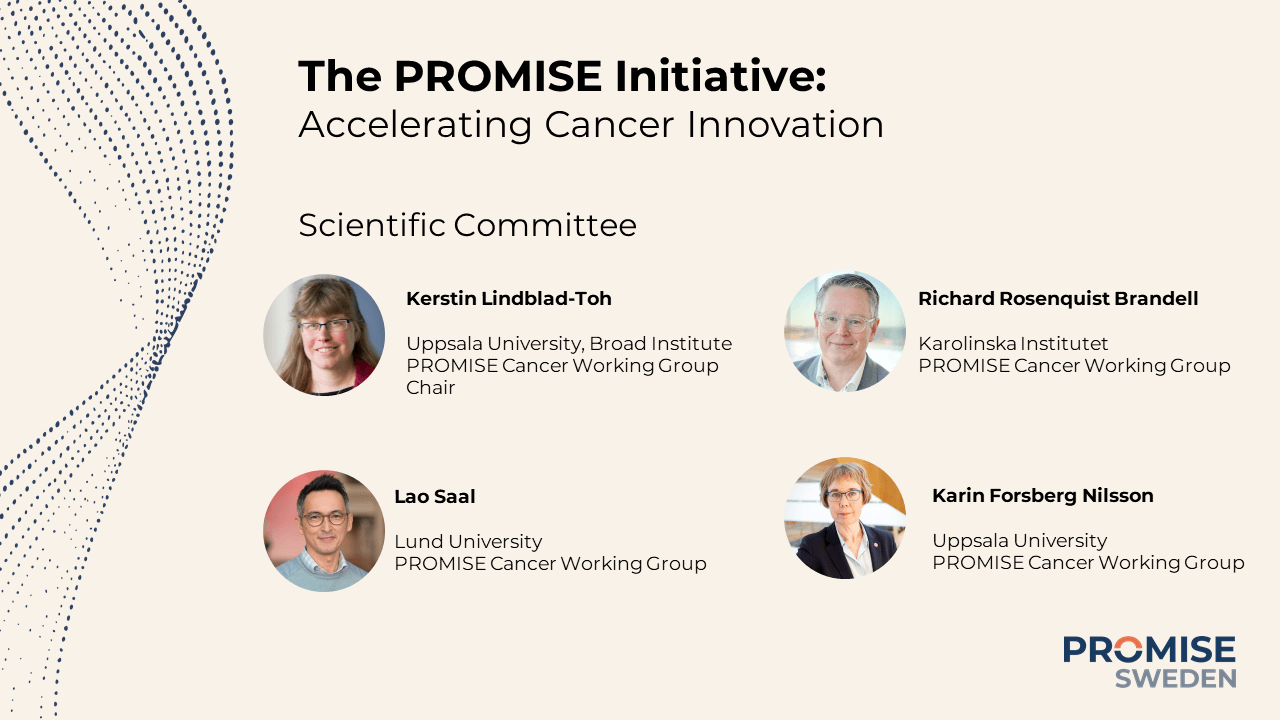
Scientific committee
Project manager
Anna Clareborn
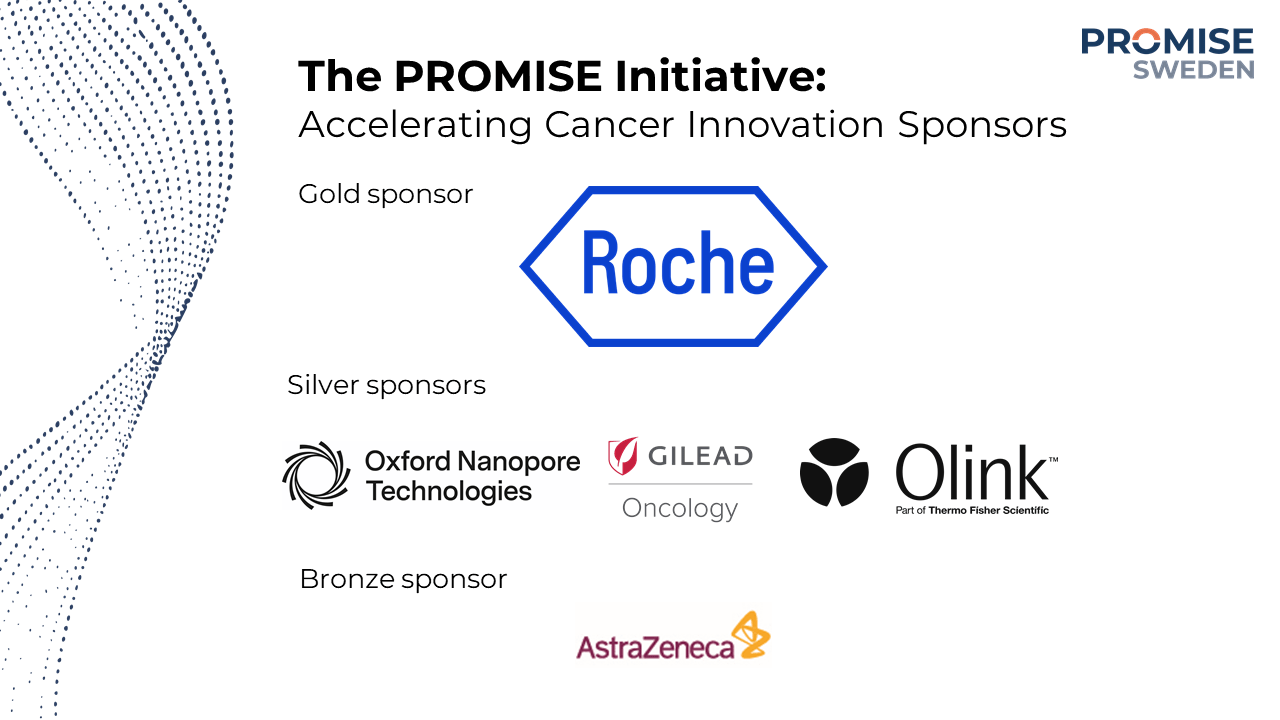
Event Sponsors
 Google Calendar