[The Svedberg seminar] – Reading the Living Mitochondrion: Functional Bioenergetics Uncovers Druggable Vulnerabilities in Pediatric Brain Tumors
October 19, 2026 @ 15:15 – 16:15 CEST
Sameh S. Ali
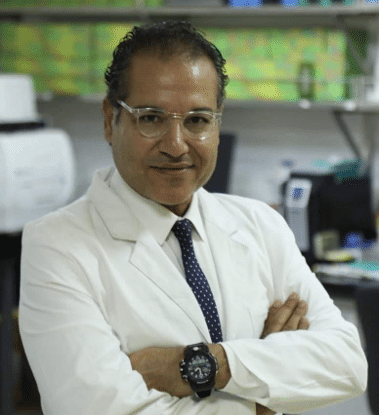
Associate Professor AcHead of the Tumor Biology Program at 57357 Children’s Cancer Hospital Egypt
Bio
Dr. Sameh S. Ali is Head of the Tumor Biology Program at 57357 Children’s Cancer Hospital Egypt, where he leads a translational research program focused on mitochondrial bioenergetics, redox biology, and cancer metabolism. He previously served as Founding Director of the Center for Aging and Associated Diseases at the Helmy Institute of Medical Sciences, Zewail City of Science and Technology, and as Professor of Biophysics at Zewail City.
Dr. Ali has received numerous distinctions, including the State Excellence Award in Basic Sciences (Egypt, 2020), early career and leadership awards from the U.S. National Institute on Aging and UCSD (Mentored Quantitative Career Development Award; Stein Institute Pilot Grant; Valedictorian of the National Center for Leadership in Academic Medicine workshop), as well as competitive Japanese Monbusho scholarships and multiple international postdoctoral fellowships. He is a founding member of the Scientific Committee of the Egypt Genome Project and serves on key national bodies such as the Egyptian National Committee of Biochemistry and Molecular Biology and the Technical Advisory Committee of the Egyptian Academy of Scientific Research and Technology, in addition to long‑standing roles in international societies including the Mitochondria Physiology Society and the Bioblast/Global Mitochondria Network scientific committee.
Beyond his >80 peer‑reviewed articles and several U.S. patents on carboxyfullerene‑based neuroprotective agents, Dr. Ali has a prominent public‑facing role through frequent appearances on Egyptian and Arab television and digital media, where he discusses cancer, aging, COVID‑19, and the scientific method, and through an active social‑media presence with nearly 100,000 followers engaging with his scientific and philosophical essays.
Reading the Living Mitochondrion: Functional Bioenergetics Uncovers Druggable Vulnerabilities in Pediatric Brain Tumors
Brain tumors are now the leading cause of cancer death in children, yet for many of them the genome offers no druggable target. Diffuse intrinsic pontine glioma (DIPG) remains incurable, posterior fossa A ependymoma has no recurrent driver mutation, and “benign” craniopharyngioma causes lifelong morbidity. This lecture looks one layer below the genome. Using high-resolution respirometry on freshly resected tumors, real-time flux analysis, EPR spectroscopy, live-cell imaging and multi-omics, our laboratory measures mitochondria while they are still alive. I will show how this reveals a fatty-acid-fuelled, epigenetically primed metabolism that separates ependymoma grades; mitochondria deficits in craniopharyngioma; and a leaky, reserve-less bioenergetic state that makes DIPG cells selectively vulnerable to metabolic interventions. Finally, a pediatric mitochondrial disease case shows how the same toolkit turns a variant of uncertain significance into a functional diagnosis.
Host: Mohamad Ali, UU mohamad.ali@imbim.uu.se
 Google Calendar
  iCalendar