DDLS Annual Conference 2026
November 9, 2026 @ 11:30 – November 10, 2026 @ 12:30 CET
The Data-Driven Life Science (DDLS) program, funded by the Knut and Alice Wallenberg Foundation (KAW), warmly welcomes you to the 5th DDLS Annual Conference, taking place November 9-10, 2026, at Aula Magna, Frescati Campus, Stockholm.
Target Group: Anyone interested in data-driven life science is welcome to attend the Conference. You don´t need to be part of the SciLifeLab & Wallenberg National Program for Data-Driven Life Science, even though the conference focuses on achievements and highlights program activities.
This two-day, in-person event will highlight DDLS research and activities, showcase new technologies and services available to researchers across Sweden, and provide a forum for knowledge exchange and collaboration. Participants will have the opportunity to:
- Share and discuss research findings
- Explore ideas and insights across disciplines
- Build networks for collaboration and career development
- Gain perspectives beyond their own fields of expertise
The conference begins with a light network lunch and registration on November 9 (11:30–12:30) and concludes with a networking lunch on November 10 (12:30–13:30).
Keynotes

Program
November 9
| 11:00 | Registration opens |
| 11:30 | Light lunch |
| 12:30 | Introduction and Welcome |
| 12:50 | Three Impactful Problems in Drug Discovery That Might Be Solvable with Machine Learning (and What We Are Doing About Them at Relation Therapeutics) Lindsey Edwards, CTO & President of Platforms, Relation Therapeutics, London, UK |
| Panel Discussion Moderators: Ola Engkvist, Executive Director AstraZeneca & Adjunct Professor Chalmers University of Technology; Tuuli Lappalainen, Professor, KTH/SciLifeLab 1. Gianfranco Grompone, PhD, CSO, BioGaia AB & Affiliated Scientist, Univ. of Gothenburg 2. Lina Hultin Rosenberg, Director Data & Analytics, R&D, Olink / Thermo Fisher 3. Peetra Magnusson, PhD, Assoc. Prof., Dept. of IGP & DDLS Director, Uppsala Univ. 4. Patrik Rydén, PhD, Prof. of Math Statistics & IDS Director, Umeå University 5. Lindsey Edwards, CTO & President of Platforms, Relation Therapeutics, London, UK | |
| 14:00 | Poster session I (odd numbers) with Coffee |
| 15:00 | DDLS Fellows talks |
| Steering AlphaFold through the distogram Nicholas Pearce, UU | |
| Predictors of genome-wide variation in the effects of new mutations Jennifer James, UU | |
| Towards autoregularization of reconstruction and datamining in cryo-EM Björn Forsberg, LiU | |
| 16:00 | Meet the new DDLS Fellows |
| 16:15 | Presentation of NAISS Erik Lindahl, LiU, director of NAISS |
| 16:30 | Poster session II (even numbers) with Mingle |
| 17:30 | End of day 1 |
November 10
| 09:00 | DDLS Fellows talks |
| Leveraging population genomic data to understand clonal hematopoiesis and blood cancer risk Abhishek Niroula, GU | |
| Understanding Cancer Heterogeneity Through Machine Learning and Molecular Networks Golnaz Taheri, KTH | |
| 10:00 | Coffee break |
| 10:45 | Top-Down and Bottom-Up Exploration of Alternative Community Types in the Human Gut Microbiome Karoline Faust, Associate Professor, KU Leuven, Belgium |
| 11:25 | Presentations of DDLS funded projects |
| Learning 3D genome dynamics from heterogeneous data Johan Elf, UU | |
| Multimodal AI-based Precision Diagnostics and Decision Support for Breast Cancer (AID4BC) Mattias Rantalainen, KI | |
| TIMED: Time-Resolved Imaging and Multi-Channel Evaluation of Cellular Dynamics Rocio Mercado, Chalmers; Ola Spjuth, UU | |
| Microscopy Foundation Model & AI-Ready Data Hub for Smart Microscopy Hanzhao Zhang, LiU | |
| Swedish Metabarcoding Network (SMN) Tobias Andermann, UU | |
| TissUUmaps RDCP Carolina Wählby, UU | |
| CRITICAL MICROBES – Comprehensive Research on InfecTIons Complications Across the Lifespan – MICROBiology Epidemiology in Sweden Anne-Marie Connolly, UmU | |
| Closing Words and Best Poster Award | |
| 12:40 | Lunch and networking |
| 13:30 | Optional workshop organised by SciLifeLab Data Centre: How to use LLMs to present results from your research project as a web application (register here) |
See separate registration page to sign up for workshops on November 10.
Keynotes
Title: Three impactful problems in drug discovery that might be solvable with machine learning (and what we are doing about them at Relation Therapeutics).
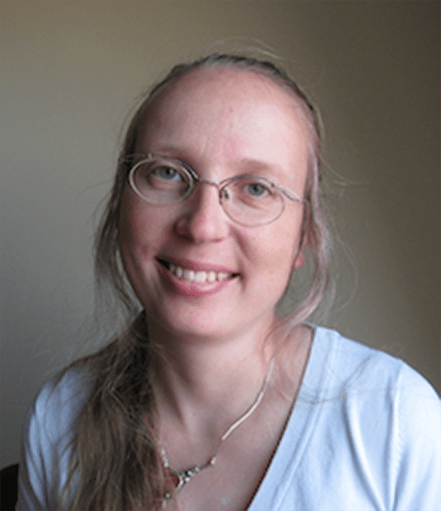
Bio: Lindsay is an internationally recognised leader at the interface of AI, machine learning, computational biology, and drug discovery. Across both academia and industry, he has consistently advanced the translation of science into medicine using computational sciences. In his academic career in Australia and at King’s College London, he developed innovative computational approaches to human metabolism, hypoxia, and respiratory physiology. His teams pioneered methods for modelling metabolic and transcriptomic data, applying these to diverse clinical contexts including respiratory disease, diabetes, hypertension, Parkinson’s disease, and critical illness. In industry, Lindsay founded one of the first pharmaceutical data science divisions at GSK, embedding machine learning and data science into every stage of the discovery pipeline. As CTO of Relation Therapeutics, he has raised over $200M, creating one of the most significant TechBio companies rooted in scientific translation (including forging a landmark platform multi billion dollar collaboration with GSK). His role on the Scientific Advisory Board of the Schmidt Centre at the Broad Institute of Harvard and MIT further reflects his international collaborative reach, engaging with leading global scientists at the intersection of AI and life sciences. His publication record—over 40 papers in top biomedical journals (NEJM, JAMA, PNAS) and premier AI/ML venues (NeurIPS, ICML, ICLR)—is exceptionally rare, demonstrating dual impact across medicine and computational science. He was recently elected a Fellow of the Academy of Medical Sciences.
Title: Top-down and bottom-up exploration of alternative community types in the human gut microbiome.
Bio: Karoline Faust is an Associate Professor at KU Leuven who heads the Lab of Microbial Systems Biology, which focuses on investigating microbial community dynamics in silico and in vitro. In particular, her team is studying interactions between human gut bacteria and the resulting dynamics with synthetic communities in controlled conditions. In addition, the team develops new tools for the analysis of microbiome data, specifically the analysis of microbial networks. The group’s work is thus situated at the intersection of bioinformatics, systems biology, and microbial ecology.
Abstract: The human colon is home to a diverse microbial community, the gut microbiome, which impacts the host’s health and well-being. The composition of the gut microbiome varies across persons, forming distinct groups known as enterotypes, which have been linked to differences in host characteristics and behavior such as diet. However, these environmental factors do not explain observations of transient perturbations leading to community shifts, which persist even after the perturbation ceased. In my talk, I will discuss multi-stability as an alternative hypothesis to explain enterotypes. I will present simulations and in vitro experiments that support the idea that alternative community types observed in the gut can be interpreted as different states of a multi-stable community. Investigating the causes behind alternative community types is relevant, since they affect the interpretation of microbiome data. In particular, multi-stability implies that different gut microbial community compositions can be due to past perturbations rather than current differences between hosts.
Affiliation: Molecular Bacteriology Unit (Rega Institute), Department of Microbiology, Immunology and Transplantation, KU Leuven
Title: Presentation of NAISS
Bio:
Abstract:
Affiliation: LiU, director of NAISS
DDLS Fellows Talks
Title: Towards autoregularization of reconstruction and datamining in cryo-EM
Bio: Researcher in structural biology and method development in cryo-EM
Abstract: Cryo-EM is the method of choice for visualization of proteins and biomolecules with molecular detail, permitting multiple states, binding partners and molecular motions to be visualized with more flexibility than other methods. However, this is highly dependent on the sample and conditions, and the wide range of use cases and application details creates a necessity for data processing to be adaptive. Historically, this has relied on expert users to inject reasonable bias into the processing pipeline, using deep technical knowledge and elaborate specialized pipelines. Here I will present an overview of how we aim to provide more adaptive control of the data processing, through construction of natural features that decrease bias with increased meaningful regularization. This also requires a new framework for evaluating performance and better synthetic data for legitimate ground-truth evaluation of current methods of data processing.
Affiliation: Linköping University
Title: Leveraging population genomic data to understand clonal hematopoiesis and blood cancer risk
Bio: Abhishek Niroula is a DDLS Fellow and Assistant Professor at the University of Gothenburg. He received his PhD from Lund University, where he studied the impact of genetic variation on human health. During his first postdoctoral appointment, he worked in computational functional genomics to understand the functional impact of genetic variants identified through genome-wide association studies. He subsequently joined the Broad Institute, where his postdoctoral research focused on pre-cancerous somatic mutations and the development of models to predict an individual’s risk of developing blood cancer. His laboratory at the University of Gothenburg now investigates the biology of pre-cancerous clones, the mechanisms that regulate their expansion, and how these clones contribute to human diseases, including cancer and cardiovascular disease.
Abstract: Cancer develops through the gradual accumulation of somatic genetic alterations and clonal evolution, often over many years. Large-scale genomic and health datasets provide new opportunities to detect these changes at an early stage and identify individuals at increased risk of disease. Our lab studies clonal hematopoiesis, an age-associated expansion of blood cell clones carrying somatic genetic mutations. Clonal hematopoiesis is associated with an elevated risk of blood cancers as well as non-malignant conditions, including cardiovascular disease. Using genomic data from large population-based cohorts, we characterize clonal hematopoiesis in individuals without blood cancer and investigate the genetic drivers and regulators of clonal expansion. By integrating genomic information with demographic, clinical, and longitudinal health data, we investigate the factors that influence malignant transformation and develop models for predicting future blood cancer risk. Ultimately, our work seeks to improve our understanding of the earliest stages of cancer evolution and provide a foundation for identifying individuals who may benefit from closer monitoring or early intervention.
Affiliation: Department of Medical Biochemistry and Cell Biology, Institute of Biomedicine, Sahlgrenska Academy, University of Gothenburg, Gothenburg, Sweden Science for Life Laboratory, University of Gothenburg, Gothenburg, Sweden
Title: Steering AlphaFold through the distogram
Bio: Nicholas Pearce is a DDLS Fellow at Uppsala University working on method development within structural biology, particularly for the identification of weak and dynamic signals in X-ray crystallography and Cryo-EM data.
Abstract: Since its publication in 2021, the networks within AlphaFold2/3 have been prodded and probed to understand how to steer the predicted structures to contain desirable features. We now have several methods that allow the imposition of external restraints on the structure predictions, whether geometric priors or experimental data. However, existing methods either use a sample-and-prune approach or else the restraint is a weak prior and can be ignored during structure prediction. We present a method for directly optimizing the pair representation within AlphaFold-like structure predictors to produce desirable features in the distogram, which can be intuitively linked to different kinds of structural restraint. We demonstrate this “resTrain” method in a variety of applications including conformer generation, docking, and NMR structure determination.
Affiliation: Department of Cell and Molecular Biology, Uppsala University
Title: Understanding Cancer Heterogeneity Through Machine Learning and Molecular Networks
Bio: Golnaz Taheri is an Assistant Professor and Docent at KTH Royal Institute of Technology and a research group leader at SciLifeLab. She is a WASP and DDLS Fellow and a member of the Digital Futures faculty. Her research focuses on developing machine-learning methods for complex biomedical data, particularly graph-based modelling and multimodal data integration. Her group combines methodological development with applications in cancer genomics, drug interactions and response, with an emphasis on biological interpretation.
Abstract: Cancer heterogeneity reflects both molecular differences within tumours and interactions between cancer cells and their surroundings. In this talk, I will discuss how machine learning and network modelling can help study this complexity, drawing on breast and prostate cancer research and ongoing work investigating how cancer–fibroblast interactions influence responses to drug perturbations. The main focus will be our framework for prioritising candidate regulatory genes in breast cancer. Rather than analysing all tumours through a shared molecular network, we infer a separate regulatory network for each breast cancer subtype and combine gene-expression features with information about each gene’s position in the network. I will present how our findings recover known cancer genes and subtype-relevant biological pathways, and highlight a candidate gene in one of the breast cancer subtypes, where its expression is associated with patient outcomes. Through these examples, I will discuss the contribution of network structure to gene prioritisation and the biological interpretation of cancer heterogeneity across molecular and cellular scales.
Affiliation: Department of Computational Science and Technology, School of Electrical Engineering and Computer Science, KTH Royal Institute of Technology, and Science for Life Laboratory (SciLifeLab), Stockholm, Sweden.
Title: Predictors of genome-wide variation in the effects of new mutations
Bio: As a researcher, I’m fascinated by new mutations; these provide the vital raw material necessary for evolution and adaptation. New mutations occur regularly, generating genetic diversity- new heritable variation among individuals. However, how many of these new mutations generate variation in the traits of the individuals that carry them? And, most importantly for evolution by natural selection, how do new mutations impact fitness, the ability of individuals to survive and reproduce? My work seeks to address these important questions, using a combination of population genetics and proteomics.
Abstract: In our recent work, we assessed how predictive gene features (such as local recombination rate, level of organisation within gene gene networks, and gene length) are to the level of selective constraint genes experience, and assessed how this impacts the effects that new mutations have on such genes. We used data from the full genomes of Mus musculus castaneus (mouse), Drosophila melanogaster (fruit fly) and Saccharomyces cerevisiae (yeast), and a combination of population genetics and machine learning inference methods. We found that genes with higher connectivity in gene interaction networks and higher levels of expression were under greater selective constraint, and new mutations in such genes had the strongest deleterious effects. Our results highlight the value of using gene features collectively to link the genomic architecture, fitness landscapes, and patterns of molecular evolution. We also found that genes with the highest proportion of fixed beneficial mutations and therefore the highest rates of adaptive evolution tended to be those that have intermediate levels of selective constraint- i.e., not those genes that are under extremely strong negative selection but also not the genes under low levels of selective constraint. These are perhaps the genes in a ‘happy middle ground’- mutations in these genes are able to effect moderate phenotypic change when adaptive evolution is required, but not so much change that they risk disrupting many systems at once.
Affiliation: DDLS fellow Uppsala University
Registration
Registration and Poster Submission Deadline is on October 21.
Poster submission is closed!
Since we expect some cancellations between the deadline (October 21) and the event date, we will keep participant registration open until the event date. BUT NOTE!
A) We cannot accommodate allergies or dietary preferences.
B) We can only offer refreshments and lunch if we have the same amount of cancellations. Select your attendance for Lunch and poster mingle, but please check with the on-site registration desk to see if coffee and lunch are available.
DDLS Annual Poster Prize
The DDLS Poster Prize encourages PhD students and postdoctoral researchers to present high-quality work in data-driven life science. The award, decided by a Scientific Committee jury, includes a certificate and a travel grant of up to 5,000 SEK. Conditions apply. If you present a poster, please ensure you stay for the Poster Award Ceremony at 12:00 by the end of the Conference.
DDLS Annual Conference Workshops 2026
During the second day of the DDLS Annual Conference, participants will have an opportunity to attend one of two workshops. The workshops are designed for researchers in data-driven life sciences at all career stages.
Each workshop has a limited number of seats on a first-come, first-served basis. Those registered after the limit is reached will be placed on a waiting list. The workshops will take place in various rooms at the Aula Magna. All workshops start at 13:30 and end 15:30. Coffee/tea and fika will be served during the workshops.
Feel free to email datacentre@scilifelab.se with any questions about the workshops.
Workshop 1. How to use LLMs to present results from your research project as a web application
Workshop 2. Public hosting of Shiny apps: hands-on workshop
 Google Calendar