
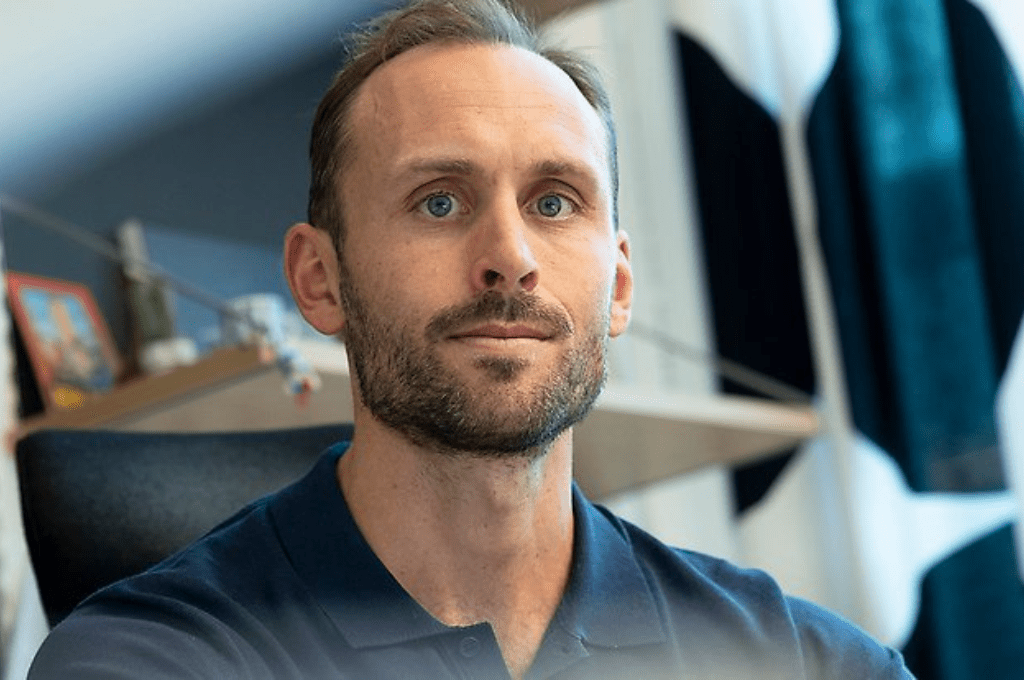
Major grant awarded for Cancer Antibody Atlas project
Does autoimmunity play a role in the development of cancer? Why do some people with an increased risk of cancer never develop the disease? SciLifeLab Group Leader Nils Landegren (UU) is part of an international team that has been awarded the equivalent of SEK 225 million through the Cancer Grand Challenges initiative to investigate these questions.
Of the total grant, Nils Landegren’s research group will receive SEK 38 million. His research focuses on autoimmunity, a process in which the immune system attacks the body’s own tissues. Recent studies suggest that autoimmunity may contribute to more diseases than previously recognized. For example, some people who became seriously ill with COVID-19 carried autoantibodies that blocked important functions of the immune system. Landegren and colleagues will now investigate whether similar mechanisms may also play a role in cancer.
“Autoantibodies are not new in themselves. The important role they play in the classic group of autoimmune diseases is well documented. However, we do not yet know what significance they have for cancer. Until now, it has not been possible to study this area effectively, but with new tools we have already seen major advances in other areas. So we thought: could this also be an important mechanism in cancer? That is what we are focusing on here in Uppsala,” says Nils Landegren.
Protected against cancer
The researchers involved in the Cancer Antibody Atlas project are not only interested in how cancer develops, but also in why some individuals appear to be protected against the disease.
To collect the large amounts of information needed, Nils Landegren’s research group will use two large patient and population registries in Uppsala. These include ULSAM, which follows men born between 1920 and 1924 who live in Uppsala County, and U-CAN, a biobank and database with more than 30,000 cancer patients.
“The first step is to find new antibodies linked to cancer or the absence of cancer. In later stages, we really want to go into depth and understand the mechanisms and prove what may play a direct pathogenic or protective role,” says Nils Landegren.
The project will include large-scale immunological analyses of blood samples from individuals with and without cancer to build a Cancer Antibody Atlas. The aim is to identify autoantibodies that may play protective or disease-driving roles in cancer, for example by interfering with immune signaling pathways or tumor immunological checkpoints. Parts of the analyses will be carried out in the research group at Uppsala University, while others will be performed at SciLifeLab’s affinity proteomics platforms at KTH and Uppsala University.
“The SciLifeLab infrastructure will be essential to achieve the quality and scale of data collection required for the atlas project,” says Nils Landegren.
Hope to find protective antibodies
One aim of the project is to improve possibilities for early detection of cancer. A simple blood test could reveal whether a patient carries antibodies that could be related to cancer.
“But an even more ambitious hope is to detect antibodies that either drive or protect against disease. If we can find reasons why some people have become susceptible to cancer, we could treat harmful antibodies. If we also find protective antibodies, this could be even more significant, as it would provide us with general insights into the treatment of cancer,” says Nils Landegren.
In the project, he is collaborating with colleagues from the University of Texas Southwestern, Johns Hopkins University, and CDI Laboratories in the United States; EPFL in Switzerland; the University of Oxford in the United Kingdom; and Aarhus University in Denmark.Original text: Åsa Malmberg, Uppsala University
Original text: Åsa Malmberg, Uppsala University
Photo: Mikael Wallerstedt, Uppsala University
Cancer Grand Challenges
Cancer Grand Challenges is a global research initiative that identifies the toughest challenges in cancer research. It is funded by Cancer Research UK and the National Cancer Institute in the United States. The aim is to give global, interdisciplinary research teams the opportunity to contribute to finding solutions.