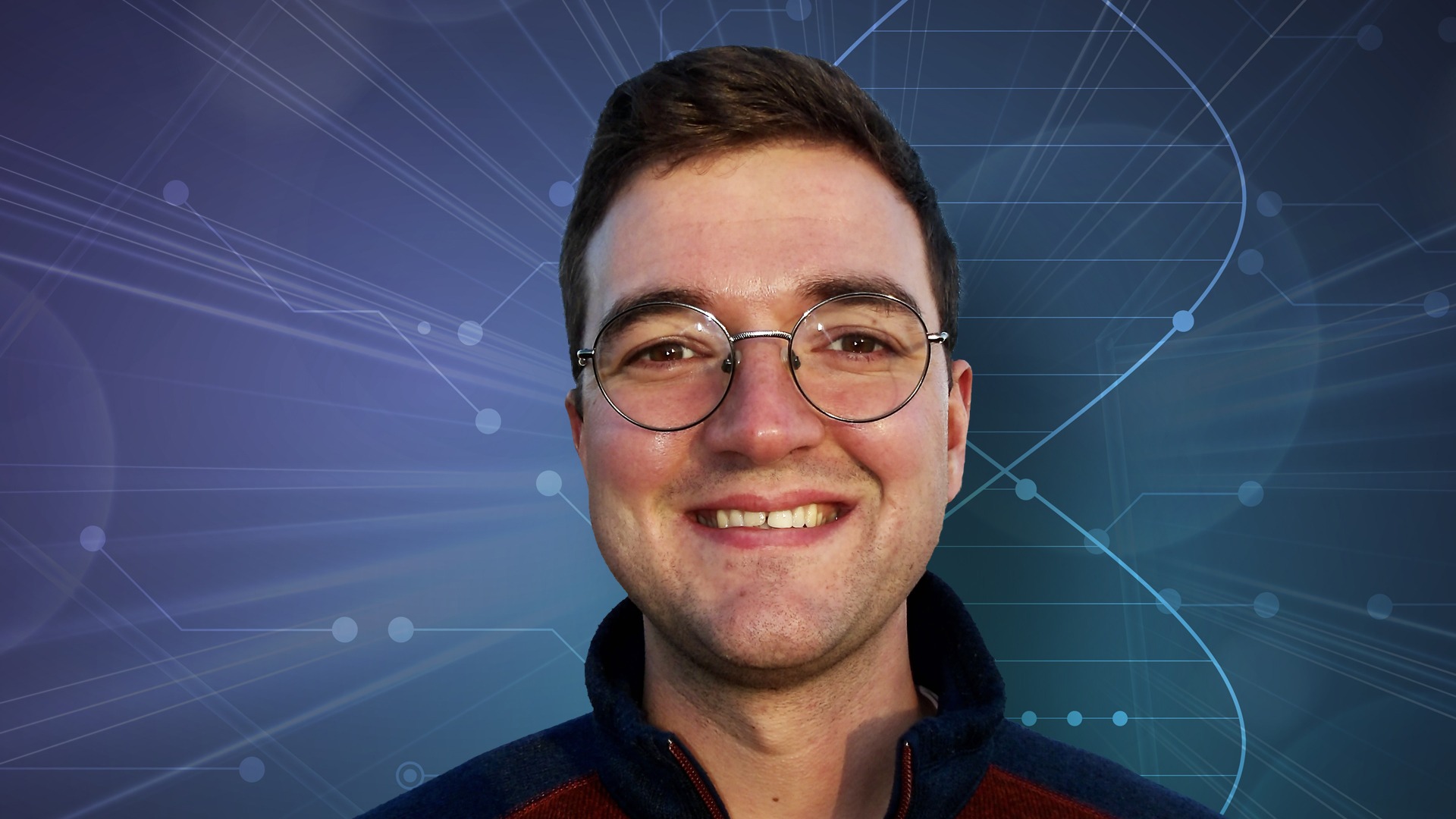

New DDLS Fellow: Tobias Baril
As part of the SciLifeLab & Wallenberg National Program for Data-Driven Life Science (DDLS), Tobias Baril has joined the Swedish Museum of Natural History as a new DDLS Fellow in the Evolution and Biodiversity research area. His research focuses on how transposable elements, often called “jumping genes”, influence genome evolution and biodiversity, using computational approaches including AI and machine learning.
Tobias completed an Integrated Master’s degree in Biochemistry at the University of Southampton in 2018, before moving to the University of Exeter’s Penryn Campus to undertake a PhD in Evolutionary Genomics under the supervision of Dr Alex Hayward, which he completed in 2022. Following his PhD, he joined Professor Daniel Croll’s group at the University of Neuchâtel in Switzerland as a postdoctoral researcher. Tobias subsequently moved to the Swedish Museum of Natural History (NRM), where he took up his position as a DDLS Research Fellow.
How do you think your expertise can contribute to the program?
I bring a combination of expertise in evolutionary genomics, transposable elements and computational tool development. Having worked across diverse lineages across the tree of life, I also bring a broad comparative perspective, drawing on insights from organisms with very different biology and evolutionary histories.
I see my contribution to DDLS as bringing biological questions and challenging genomic datasets that can both benefit from and help drive the development of new data science approaches. In particular, transposable elements offer exciting opportunities for applying AI and machine learning to understand complex genomic sequence patterns, improve their identification and classification, and ultimately understand their impact on host genomes. Finally, I see training the next generation of researchers as an important part of my contribution: equipping students and postdocs with the skills to develop computational approaches, analyse large-scale genomic data and connect data-driven methods with meaningful biological questions.
Shortly describe your research in an easy to understand way.
My research focuses on transposable elements (TEs), often called ‘jumping genes’. These are pieces of DNA that can copy or move themselves to new locations within a genome. Although once considered little more than ‘junk DNA’, we now know they can have profound effects on genome structure, generate genetic variation and even contribute to the evolution of new traits. Examples include the distinctive merle coat pattern in dogs, the colourful and sometimes speckled kernels of maize, and (my personal favourite) the deep red pigmentation of blood oranges. All of these are examples of TEs influencing traits we can see around us!
I am particularly interested in understanding TEs from an ecological and evolutionary perspective, and how their interactions might contribute to biodiversity. Much like species in an ecosystem, TEs interact and compete with one another and their host genomes, which have evolved mechanisms to control them. I study these interactions across a wide range of organisms, from fungi to plants and animals, to understand why TEs persist and how they shape genome evolution. I also develop computational tools, including approaches based on AI and machine learning, to help us understand the ‘language’ of TEs: identifying them, characterising their dynamics and understanding how they influence their hosts.
How do you think the program and interactions with the other DDLS-Fellows will benefit you?
I think one of the greatest benefits of the DDLS program is the opportunity to interact with researchers from a wide range of scientific backgrounds. Although we may be working on very different biological questions, many of the computational challenges we face are shared. I see this as a great opportunity to learn from people with expertise different from my own, exchange ideas and discuss novel approaches to shared challenges. I’m also excited by the possibility of developing collaborations with researchers I might not otherwise have had the opportunity to work with, potentially opening up entirely new research directions in different fields.
Name one thing that people generally do not know about you.
Most people know that I spend a lot of time outdoors – climbing, cycling, hiking, etc. But perhaps less well-known is that I’m also a bit of a LEGO enthusiast. It’s nice to switch off from research and spend some time building something with my hands, rather than spending all day behind a desk!
Where do you see yourself in five years regarding the DDLS aspect?
In five years, I hope to have established a thriving research group that is making meaningful contributions to our understanding of genome evolution and biodiversity, while developing innovative computational approaches to tackle increasingly complex biological questions. I would particularly like to see the tools and methods we develop, including those using AI and machine learning, being adopted by the wider research community.
Beyond my own research, I hope to have built strong collaborations across the DDLS network, bringing together researchers with different expertise to explore new questions and approaches. I also want to contribute to the development of the next generation of data-driven life scientists, both through mentoring researchers within my group and participating in wider training initiatives. Ultimately, I’d like to look back and feel that I’ve not only established a successful research group, but also made a lasting contribution to the DDLS community and its broader ambitions.
In one word, describe how you feel about becoming a DDLS-Fellow.
Energised.