On the path to the European Health Data Space (EHDS)
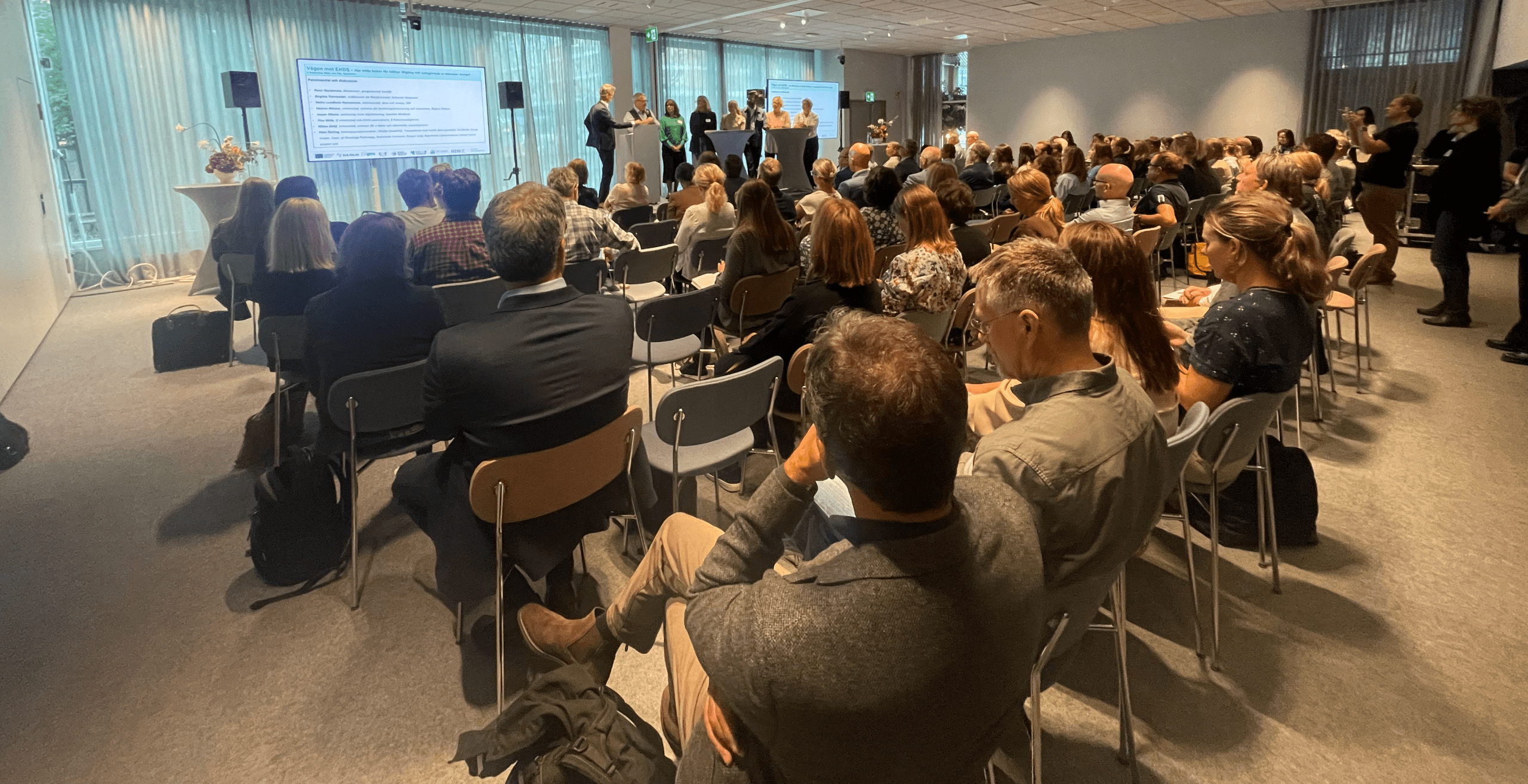
On September 3, representatives from the government, authorities, regions, hospitals, academia, industry and patient organisations met under the umbrella of the DIGIfor1healthSE-project to discuss how to advance Sweden’s accessibility to and utilization of health data by a national digital infrastructure as well as for implementation of the EHDS. The importance of collaboration for a common objective was emphasized, but the question remains how to move forward together in this major systemic change. The EHDS is not yet finalized, with implementing acts still being developed. This means that the EHDS in Sweden will ultimately become what we shape it into nationally.
An international outlook
The day was kick-started with an international outlook, with Owe Langfeldt, Policy Officer, European Commission presented The EHDS and the HealthData@EU infrastructure to ensure sustainable access to health data, and Markus Kalliola, Program Director, Sitra International Programs presenting Nordic perspectives for primary- and secondary use of health data.
Eric Fey, Development Manager AI at Helsinki University Hospital and Lead Data Scientist – iCAN Digital Precision Cancer Medicine, University of Helsinki discussed a clinical example from primary use to secondary use of health data in Finland. He stressed the need for a system that enables the secondary use of patient data to drive real-world evidence generation, that facilitates innovation and the development of novel, advanced analytic methodologies, and that encourages cooperation, internationalization and collaboration, but also mentioned the human aspect.
“One of the biggest hurdles is the fear and resistance to change driven by concerns about data security, privacy, varying interpretations of regulations, entrenched procedures, and chronic under-staffing and under-resourcing. Yet, given the unprecedented richness of health data now being collected through EHR systems and registries across Europe, we have both a unique opportunity and an ethical obligation to society, our people and our patients, to make the very best use of these data. My vision is a European data ecosystem that enables cutting-edge research through federated analysis and machine learning—where knowledge can be generated from real-world data sources distributed across Europe, while sensitive personal information remains private, secure, and protected at its source, where it rightfully belongs”, said Eric Fey.
The national perspective
A panel discussion focusing on the joint effort of how to build a national digital infrastructure with a holistic approach to primary and secondary use of health data engaged representatives from authorities, patient organization, regions, industry and academia.
“With many players involved, we need a shared vision that takes into account the needs of the regions and healthcare, but more importantly, we must start to actually do work together, and to create an infrastructure and systems that ensures data accessibility for relevant parties” said Helén Lundkvist Nymansson at Swedish Association of Local Authorities and Regions (SKR) during the panel discussion.
At the event, participants engaged in three parallel workshops exploring primary and secondary use of health data, with a focus on interoperability. One workshop expanded on the “Arne case,” originally developed in an international hackathon, to create scenarios for secondary use of health data that are relevant to the EHDS. Another workshop built a pediatric cancer case study to illustrate the use of health data, while the third used roleplay to demonstrate decentralized/federated data processing in a secure process environment, giving participants hands-on experience in navigating data access, method development, analysis, and dissemination of results. All sessions highlighted both practical challenges and opportunities for collaboration and advancing in clinical development, research, innovation as well as regulatory aspects.
Heading for the future with the patient in focus
Now it is time for the next step – and “building trust” was mentioned by several speakers as one of the key issues on Sweden’s path towards the EHDS. We need to work together through cross-sector collaboration which is key to Sweden’s continued path towards trust and consensus on the balance between risk and value ahead of the EHDS.
“This day has given me a lot of hope; it’s great that we are talking to each other between different organizations and at different levels! But it’s not enough for us to sit in our reference groups and contact each other when new directives come out. We also often forget that for implementing precision medicine, research data needs to reach back to healthcare. As research and healthcare is constantly evolving, primary and secondary use of patient data needs to be intimately connected to benefit patients”, reminded Päivi Östling, Translation and Health Data Specialist, SciLifeLab and Karolinska Institutet.