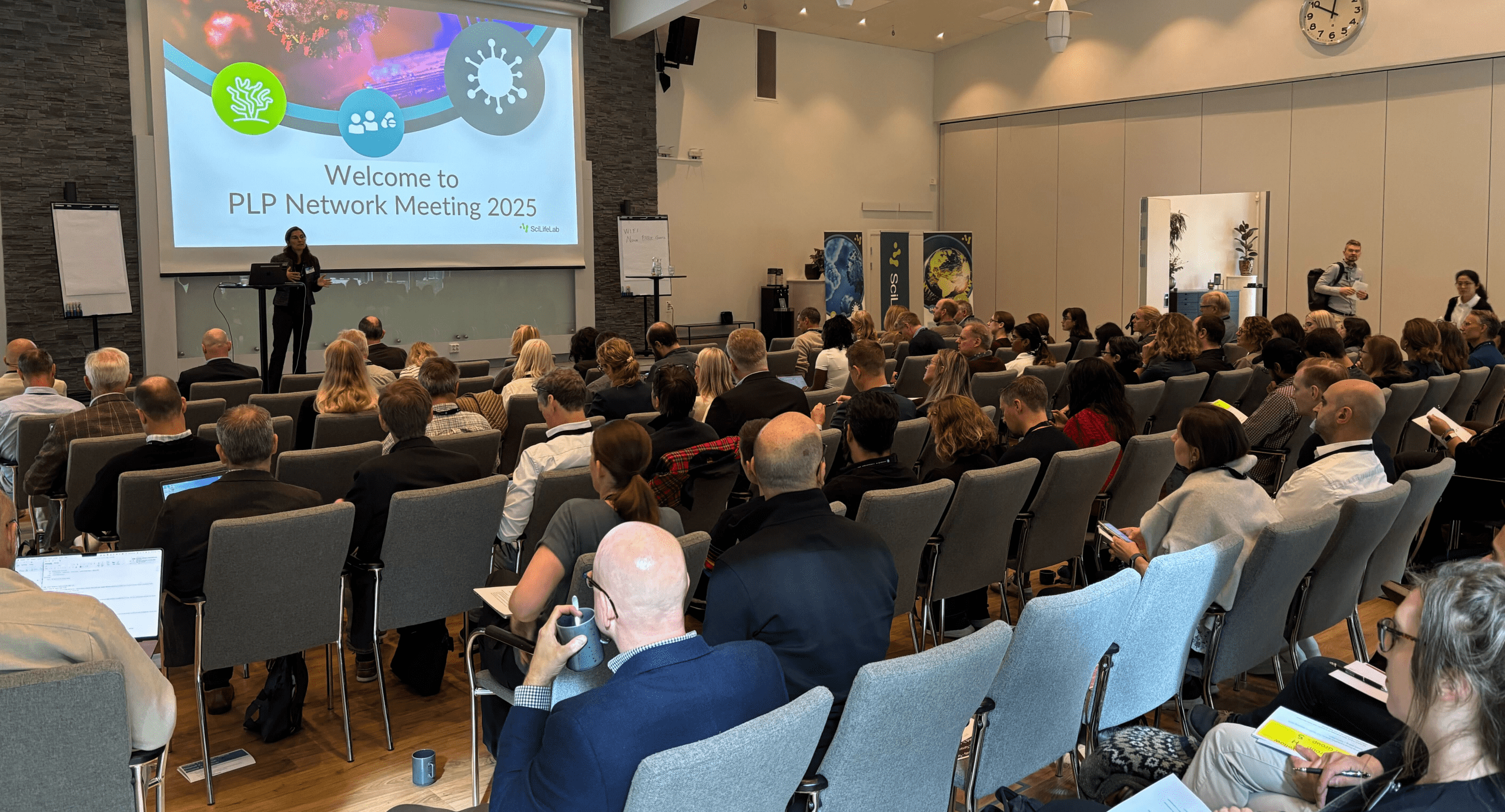
Pandemic Laboratory Preparedness network meeting 2025
When the third Pandemic Laboratory Preparedness Network Meeting took place, over 100 participants from across Sweden and beyond gathered to exchange knowledge and strengthen global readiness for future health crises.
The event was designed not only as a scientific meeting but also to foster interactions between academia, healthcare, government agencies, and international partners. The program combined panel discussions, “speed dating” sessions, scientific presentations, posters – and a quiz.
“We have designed the program to reflect the breadth and approach we want to take when it comes to pandemics or other similar crises. By collaborating with SciLifeLab’s strategic area Planetary Biology, we have created an agenda that encompasses both human health and environmental aspects”, said Alice Sollazzo, one of the meeting’s organizers.
Preparedness in crisis and in peacetime
The Pandemic Laboratory Preparedness initiative was launched after the Covid-19 pandemic revealed weaknesses in global and national preparedness systems. This year’s meeting underlined the importance of continuous investment and collaboration.
“I’m glad that the PLP program has received funding and can continue — it’s essential to be able to work continuously, as one-off efforts are pointless when working with preparedness,” “I was impressed by Jonathan Edgeworth’s presentation, which described how advanced molecular diagnostics have been iteratively developed and quickly reached clinical relevance, said Jan Albert, Karolinska Institutet.”
Tackling key challenges
The core of the meeting was the group discussions, where participants — divided by expertise and interest — worked on identifying key problems, short-term goals, and long-term visions in different domains of pandemic laboratory preparedness.
Antimicrobial Resistance: Participants emphasized that antimicrobial resistance remains a silent pandemic. Hospitals face unnecessary deaths and prolonged stays due to drug-resistant bacteria. The main obstacles are not only scientific but also economic, as leadership and budget priorities often prevent the implementation of rapid diagnostics and surveillance.
Clinical Metagenomics: Metagenomics has the potential to transform diagnostics and surveillance, but it remains costly, slow, and underused. Short-term priorities included improving performance, implementing rapid metagenomics in diagnostic labs, and running prospective intensive care unit (ICU) studies. Participants also suggested creating a national surveillance program for metagenomic data and joining international initiatives.
Method Development and Diagnostics: Rapid detection and data sharing are crucial when a pandemic strikes. Discussions highlighted the need for centers for imported infections, flexible in-house diagnostic methods, and close collaboration between academia, hospitals, and public health agencies.
Zoonoses, Climate Change, and One Health: Preparedness requires a One Health perspective linking human, animal, and environmental health. Participants highlighted how land use change, global warming, and biodiversity loss contribute to the emergence of new diseases. Immediate goals include encouraging integrated research calls that combine human, animal, and environmental studies, promoting international collaboration, and updating the list of priority pathogens. The long-term vision is to establish platforms for integrated surveillance, invest in pan-vaccines such as pan-influenza or pan-flavivirus, and improve diagnostics for neglected diseases.
Human and Environmental Surveillance: Wastewater analysis, population sampling, and clinical data integration were seen as powerful yet underutilized tools. However, efforts remain fragmented. Four-year objectives included pilot projects combining wastewater surveillance, self-sampling, and clinical data, alongside platforms for real-time data sharing. Within a decade, participants hoped for an EU-wide mandate for coordinated surveillance.
Vaccines and Antivirals: The Covid-19 pandemic demonstrated both the potential and the limits of vaccine development. There is still a lack of antivirals and declining trust in vaccines. Near-term priorities include expanding vaccine research beyond familiar viruses, funding discovery-stage host response studies, and building strong national and international collaborations with industry.
Data Handling, Modelling, and Prediction: Data fragmentation was identified as a major bottleneck. Despite existing standards, they are often too complex or inconsistently applied. Short-term solutions focused on assigning dedicated personnel for data stewardship, developing interfaces that allow communication between diverse systems, and launching awareness campaigns and training on data management.
Communication, Training, and Data Management: The pandemic revealed severe gaps in communication and crisis training. Researchers, public health authorities, and the public lacked structured protocols for sharing data, coordinating efforts, and countering misinformation. Participants suggested developing a “living document” of best practices, standardized repositories, and proactive community trust-building during peacetime. In the long term, simulation exercises to test and refine crisis communication were mentioned as a powerful tool.
Infrastructure, Competence, and Sustainability: Maintaining expertise and infrastructure between pandemics remains a challenge. Staff retention, updated equipment, and stable financing require long-term commitments. Short-term measures included strategic grants, action plans for sharing staff and equipment, and a universal material transfer agreement (MTA) for isolates. In the longer term, both sustained support and political buy-in are needed to ensure readiness.
SciLifeLab as a Connecting Force: Participants emphasized SciLifeLab’s unique role in connecting Sweden’s diverse laboratory sectors, ranging from hospitals to veterinary agencies and defense research. Goals included creating an Authority Preparedness Laboratory Group to align plans, securing continuous training, and strengthening national laboratory preparedness.
Panel debate: Are we really prepared?
The closing panel, featuring Jan Albert, Karolinska Institutet, Sara Byfors, The Public Health Agency of Sweden, Jens Mattsson, the Swedish Defence Research Agency, and Jessica Alm, Karolinska Institutet, tackled some of the most pressing questions.
What will cause the next pandemic?
Panelists pointed to zoonotic spillovers in biodiversity hotspots, accelerated by global travel and climate change. Transparency and rapid surveillance were identified as keys to early response.
Most agreed Sweden is better positioned today, thanks to new surveillance systems, large-scale testing capacity, and political momentum. Yet data systems remain fragmented, vaccine skepticism is on the rise, and global political tensions threaten coordinated responses.
Panelists called for structured mechanisms to integrate academic expertise into crisis response. Suggestions included scientific advisory boards for the Public Health Agency, stronger networks with SciLifeLab, and clearer incentives for academic researchers to contribute beyond their own projects.
Looking ahead
The 2025 PLP Network Meeting showed both how far preparedness has come and how much work remains to be done. Discussions spanned cutting-edge diagnostics, vaccine pipelines, and international One Health collaborations, but also highlighted gaps in financing, infrastructure, and communication. Or as one panelist put it during the final discussion: “Better does not always mean sufficient. The question is not whether we are prepared, but whether we are prepared enough.”