Sweden’s powerhouse for Data-Driven Life Science research gather for DDLS Annual Conference
The SciLifeLab & Wallenberg National Program for Data-Driven Life Science, DDLS, is now in its fourth year and has matured into a data producing scientific effort pushing the boundaries of knowledge from data-driven life science. On November 12 and 13, DDLS fellows, stakeholders, and life science researchers gathered in Uppsala for the annual national conference focusing on the entire breadth of the program.
The DDLS program is built on three foundational pillars: research; education and training; and data management and services. The recruited DDLS Fellows have established research groups and contribute to advancing knowledge across the program’s four core areas: Epidemiology and Biology of Infection, Cell and Molecular Biology, Evolution and Biodiversity, and Precision Medicine and Diagnostics. In the opening remarks of the conference, SciLifeLab Director Jan Ellenberg highlighted how data-driven approaches reshape life science into a predictive field of science.
“In the future, life science research will undergo a paradigm change. It will not only be data-driven but will also become increasingly integrative and predictive, marking a true revolution in how we understand living systems. The DDLS program is about empowering researchers with the computational tools, data resources, infrastructure and training needed to turn data into knowledge and knowledge into societal impact. By bringing together interdisciplinary expertise across computational, molecular, clinical and environmental sciences, we are building the foundation for a new era of discovery and innovation in life science.” said Jan Ellenberg, SciLifeLab Director and Director of the SciLifeLab & Wallenberg National Program for Data-Driven Life Science, DDLS.
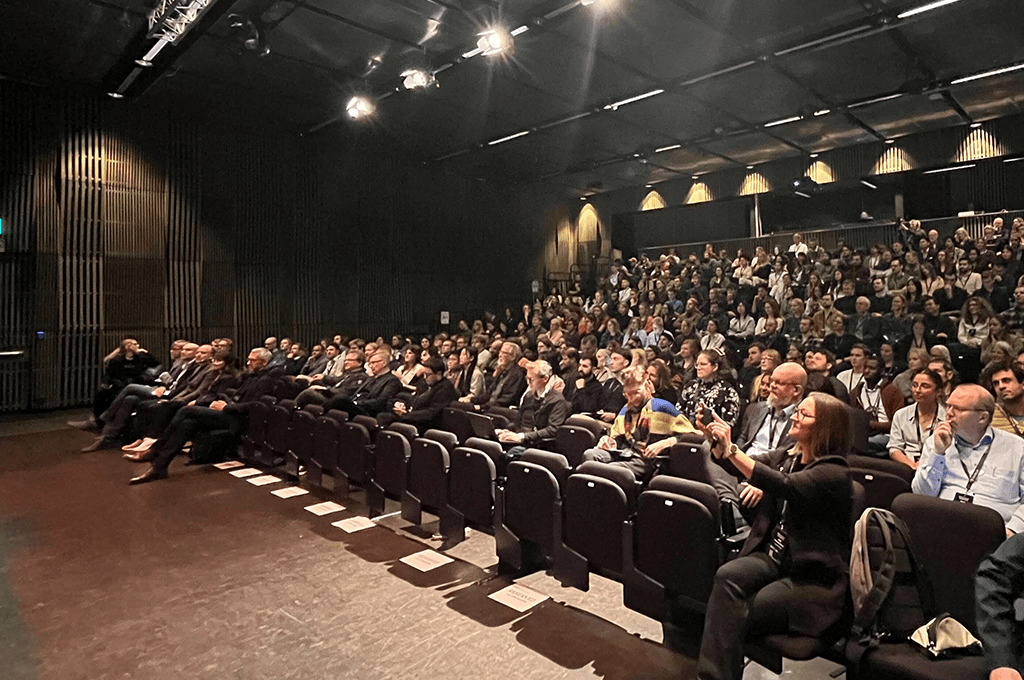
DLS fellows, stakeholders, and life science researchers gathered in Uppsala on November 12 and 13.
Up to date, 36 DDLS fellows have been recruited, and an additional 14 DDLS fellows will be recruited to the program the research school for 280 PhD students in academia and industry plus postdoctoral program with 230 positions has started and the community is very active in organizing meetings and courses to meet and exchange ideas within and across research fields.
During the conference, Novelty, Excellence, Synergy, and Teams (NEST) Projects and Research Data Community Projects (RDCP) were highlighted alongside presentations from DDLS Fellows ranging from microbiome enhanced forecasting of pregnancy complications (Luisa W Hugerth, Uppsala University), and mechanistic design of phage-based antimicrobials (Andrea Fossati, Karolinska Institutet), to work towards an interpretable deep learning model of cancer (Avlant Nilsson, Karolinska Institutet). DDLS Fellow Kelly Swarts works at the Umeå Plant Science Center at Swedish Agricultural University and focuses on conifer adaptation to the environment.
“Conifers have adapted to changing climates for more than 250 million years, developing remarkable genetic diversity and resilience. But today’s rapid climate change is testing those limits. By combining quantitative, computational, and population genetic approaches, my group aims to understand how conifers adapt and also to identify individuals that can help forest populations stay resilient in the face of environmental change”, she explained.
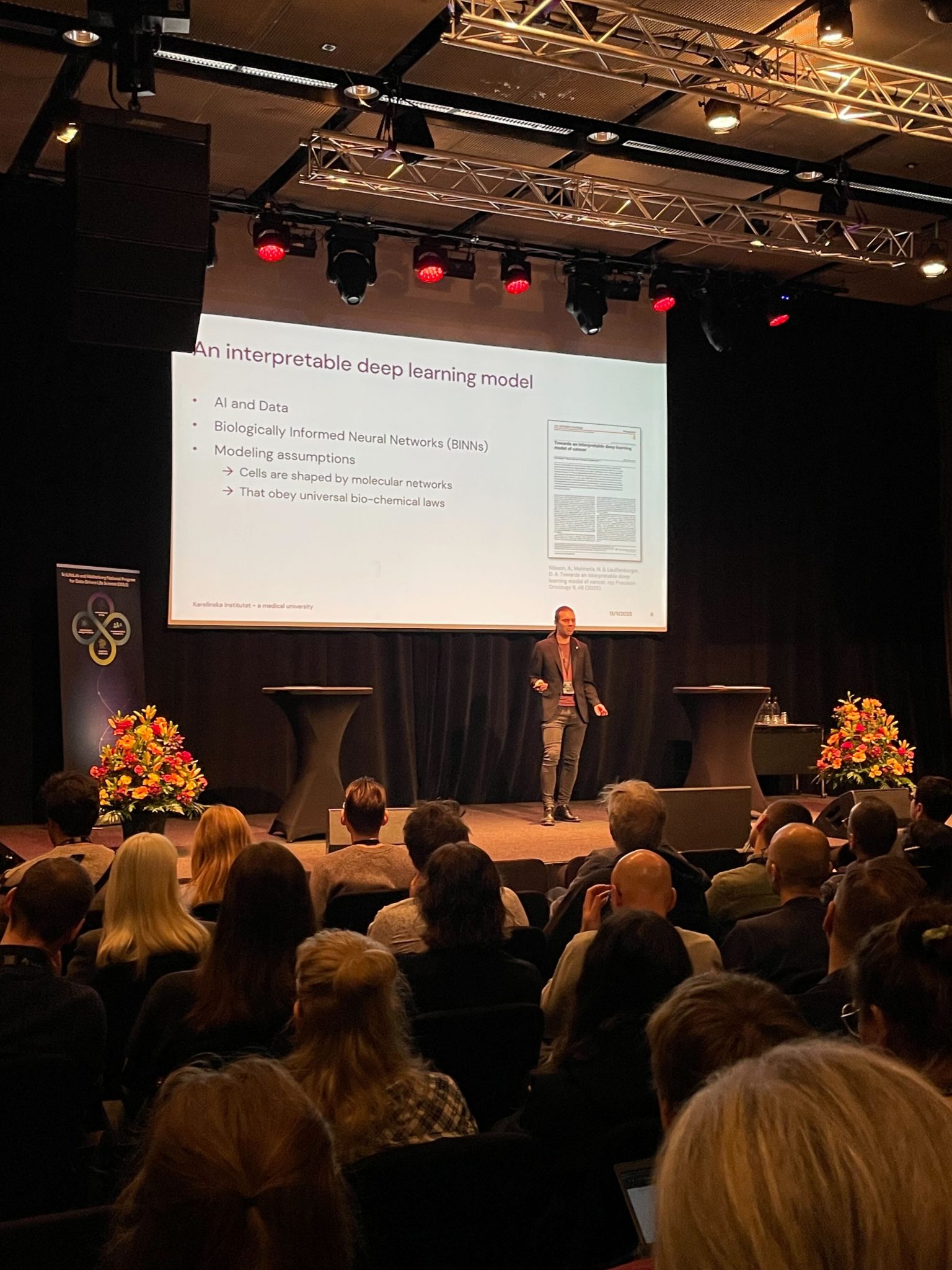
DDLS Fellow Avlant Nilsson (Karolinska Institutet) presented a talk titled Towards an interpretable deep learning model of cancer.
Olli Kallioniemi, former Director of SciLifeLab (2015–2024) and founding Program Director of DDLS, is currently Research Director at the Institute for Molecular Medicine Finland (FIMM) in Helsinki, while also continuing his activities as a group leader at SciLifeLab/Karolinska Institutet.
“It is very inspiring to see how the DDLS program is now translating data-driven strategies into tangible scientific progress. The impact of the coordinated, long-term investments in DDLS is already very concrete and will grow exponentially stronger in the years ahead. A key strength of the program is the combination of its different elements – DDLS Fellows, postdoctoral researchers, PhD students, excellence and community programs, as well as support for national data infrastructure. Together, these create a powerful ecosystem for data-driven research and innovation. The decision by the Knut and Alice Wallenberg Foundation to launch a 12-year program was truly visionary and provided a unique platform for Sweden to take a quantum leap towards predictive, data- and AI-driven life science. It has been a privilege to be involved in launching this program, and I look forward to following its continued success,” said Olli Kallioniemi.
The DDLS Annual Conference 2025 provides a snapshot of data-driven life science in Sweden today. Furthermore, it is the annual event that gathers the full DDLS community to share results, ideas and discuss future outlooks and possible collaborations between diverse disciplines under a shared vision of predictive and computational biology. By bringing together researchers in the field, within the DDLS program and beyond, the conference highlighted cutting-edge advances in AI-based diagnostics, genome dynamics, infection biology, precision medicine, and biodiversity. With its focus on open science, cross-sector partnerships, and training in data-intensive methods, the SciLifeLab & Wallenberg National Program for Data-Driven Life Science continues to accelerate Sweden’s transformation into a global leader in predictive, data-driven life science.
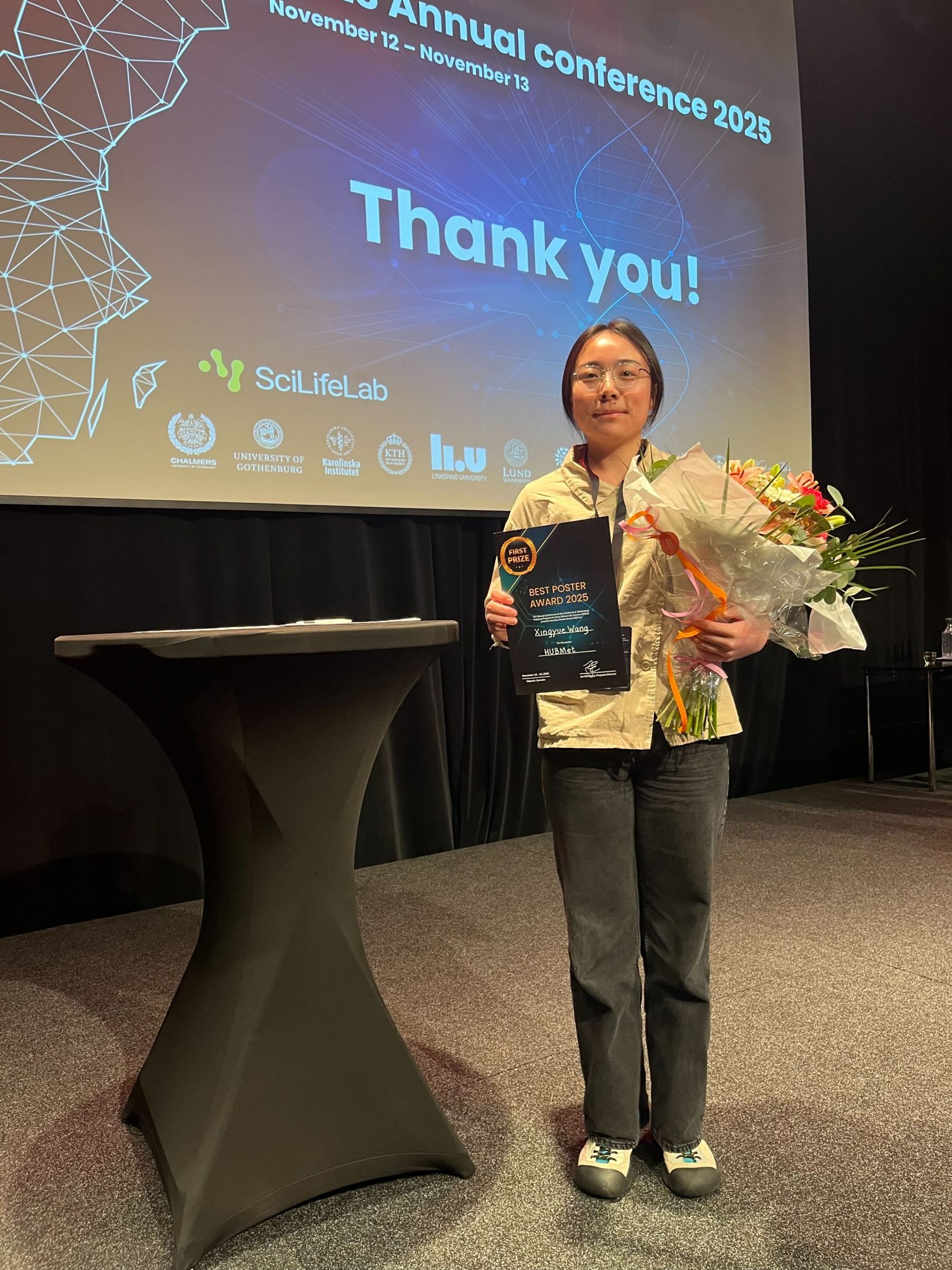
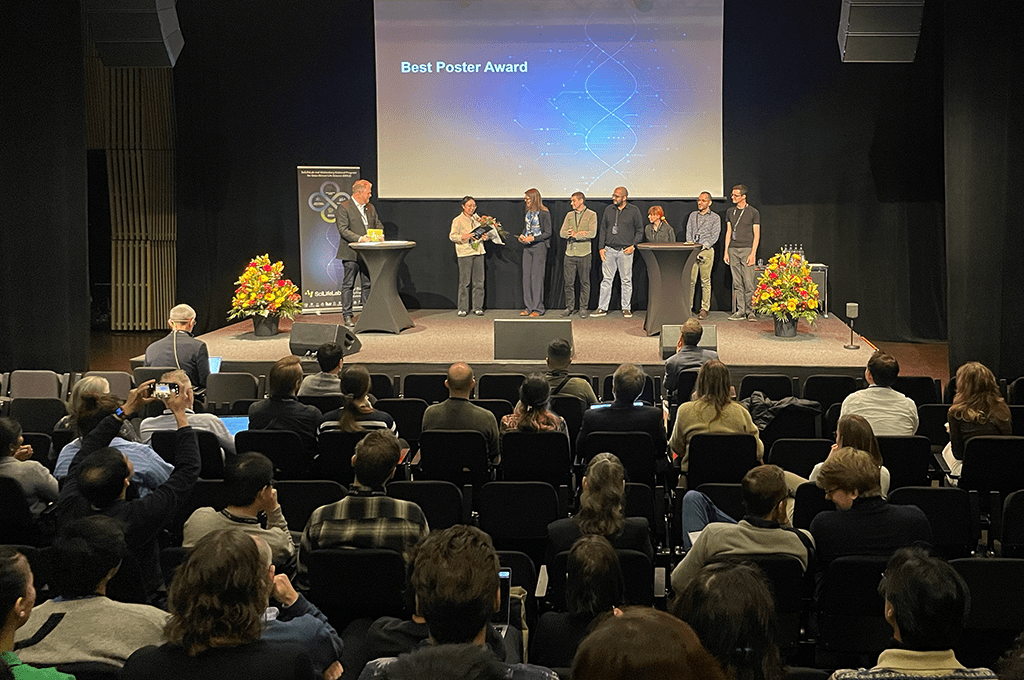
Xingyue Wang was awarded Best Poster Award at the conference for the poster HUBMet.