
The Human Protein Atlas supports Biohub’s global Virtual Biology Initiative for AI-accelerated biology
The Human Protein Atlas supports the global effort announced by Biohub to create an open data foundation for AI-accelerated biology. The initiative brings together leading institutions and international consortia to generate the technologies and multi-modal datasets needed to build predictive models of the human cell.
On April 29, Biohub announced the Virtual Biology Initiative, a five-year initiative to galvanize a global effort to create the technologies, datasets and infrastructure needed to build predictive models of life. The initiative is anchored by a USD 500 million commitment from Biohub, including support for external research and data-generation efforts as well as internal technology development in imaging, engineering, data generation and computational biology.
The Human Protein Atlas, based at SciLifeLab in Sweden, is named as part of this broader global effort together with leading institutions and consortia including the Allen Institute, Arc Institute, Broad Institute, Human Cell Atlas and the Wellcome Sanger Institute. The Human Protein Atlas represents the EU-based participation named in the announcement, alongside the UK-based Wellcome Sanger Institute, underlining the important role of European open-science infrastructures in the emerging field of AI-driven cell biology.
The initiative aligns well with the mission of the Human Protein Atlas to provide open access data on the human proteome.
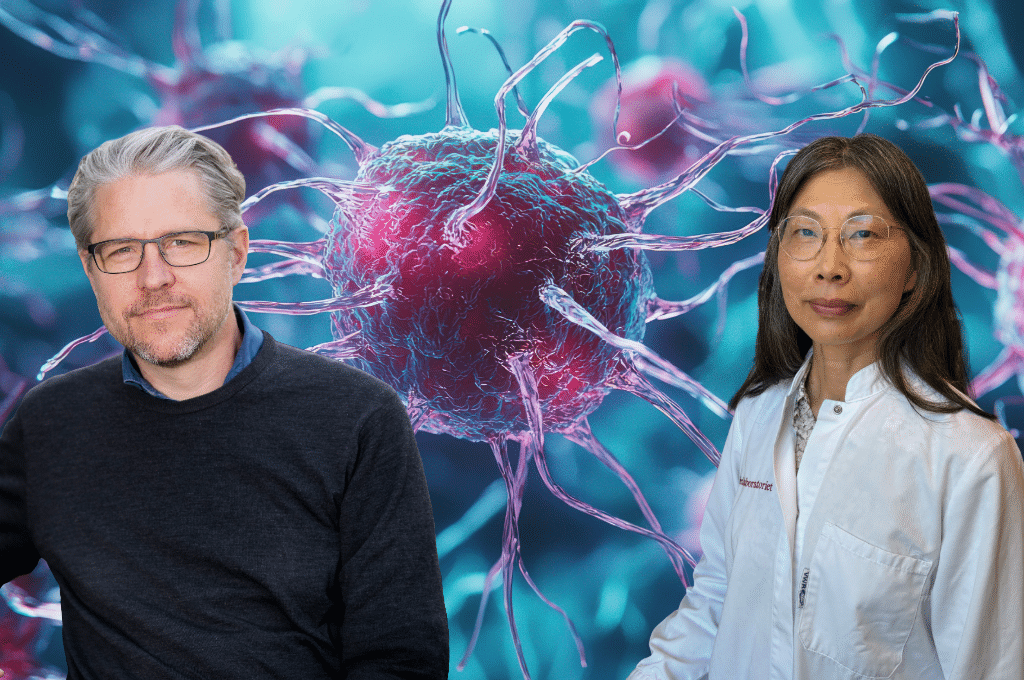
“Predictive models of the human cell will only be as powerful as the data used to build and validate them. The Human Protein Atlas was created to make high-quality, openly available protein data accessible to the global research community. With additional support from the Knut and Alice Wallenberg Foundation for the new SciLifeLab flagship program Alpha Cell, we are now using this foundation to move toward AI-based models that connect protein localization, cell state and function. We have a strong tradition of international collaboration and data sharing and are proud that the Human Protein Atlas and SciLifeLab are part of the broader international effort to create an open data foundation for AI-accelerated biology,” says Mathias Uhlén, Director of the Human Protein Atlas consortium.
The Human Protein Atlas contributes a long-standing open-science resource and well-established pipelines for high-quality proteomic and imaging data. By integrating protein-level information with transcriptomic, cellular and tissue datasets, Human Protein Atlas adds an important dimension to the understanding of functional biology and to the development of more comprehensive, multimodal representations of human cells.
The next phase of the Human Protein Atlas will include perturbation studies, systems-level proteome measurements and AI-powered modelling. The Knut and Alice Wallenberg Foundation has also been the long-term funder of the Human Protein Atlas, which is one of the world’s most widely used open access biological databases in the world.