

Bernhard Schmierer

Platform Co-Director: Chemical Biology and Genome Engineering, Karolinska Institutet

Head of Unit: CRISPR Functional Genomics

Key Publications

CRISPR/Cas9 screening using unique molecular identifiers. Schmierer B, Botla SK, Zhang J, Turunen M, Kivioja T, Taipale J. Mol Syst Biol. 2017 Oct 9;13(10):945. doi: 10.15252/msb.20177834.

CRISPR-Cas9 genome editing induces a p53-mediated DNA damage response. Haapaniemi E, Botla S, Persson J, Schmierer B, Taipale J. Nat Med. 2018 Jul;24(7):927-930. doi: 10.1038/s41591-018-0049-z. Epub 2018 Jun 11.

Rapid genome editing by CRISPR-Cas9-POLD3 fusion. Reint G, Li Z, Labun K, Keskitalo S, Soppa I, Mamia K, Tolo E, Szymanska M, Meza-Zepeda LA, Lorenz S, Cieslar-Pobuda A, Hu X, Bordin DL, Staerk J, Valen E, Schmierer B, Varjosalo M, Taipale J, Haapaniemi E. Elife. 2021 Dec 13;10:e75415. doi: 10.7554/eLife.75415.

Identification of a SNAI1 enhancer RNA that drives cancer cell plasticity. Fan C, Wang Q, Krijger PHL, Cats D, Selle M, Khorosjutina O, Dhanjal S, Schmierer B, Mei H, de Laat W, Ten Dijke P. Nat Commun. 2025 Mar 25;16(1):2890. doi: 10.1038/s41467-025-58032-w.

Genome-wide identification of modulators of Chlamydia trachomatis parasitophorous vacuole stability highlights an important role for sphingolipid supply. Babu Sait MR, Jachmann LH, Türköz G, Milivojevic M, Llorente-Sáez C, Dhanjal S, Schumacher F, Henriksson S, Gayathri Vegesna NV, Seddik N, Chaban A, Mohanty P, Ölander M, Muraleedharan S, Farmand Azadeh S, Kleuser B, Schmierer B, Sixt BS. PLoS Biol. 2025 Aug 12;23(8):e3003297. doi: 10.1371/journal.pbio.3003297. eCollection 2025 Aug.

An injury-associated lobular microniche is associated with the classical tumor cell phenotype in pancreatic cancer. Söderqvist S, Viljamaa A, Geyer N, Keller AL, Ruksha K, Strell C, Hekmati N, Niculae A, Engstrand J, Sparrelid E, Salmén C, Costa TDF, Zhao M, Strömblad S, Zacharouli A, Ghorbani P, Harrizi S, Hamidi Y, Khorosjutina O, Milanova S, Schmierer B, Bozóky B, Fernández Moro C, Gerling M. Nat Commun. 2025 Sep 26;16(1):8307. doi: 10.1038/s41467-025-63864-7.

As Head of the CRISPR Functional Genomics Unit and Co-Director and Coordinator of the SciLifeLab platform for Chemical Biology and Genome Engineering, I am dedicated to providing researchers with access to state-of-the-art technologies that harness the full potential of CRISPR/Cas systems. This includes enabling applications across a wide spectrum, from fundamental biology to translational approaches.

My group’s own research focuses on the development and implementation of next-generation CRISPR/Cas technologies in basic research. Current projects span from defining the genetic factors that influence CRISPR/Cas delivery into cells, to applying base editing for scanning mutagenesis screens, and refining methodologies for pooled genetic screening using diverse CRISPR/Cas modalities. In addition, we are developing strategies for high-content profiling screens that integrate pooled genetic perturbations with rich phenotypic readouts, such as single cell transcriptomics, microscopic phenotyping, or spatial transcriptomics.

Our work is supported by SciLifeLab, the Infrastructure Council at Karolinska Institutet, and the Swedish Research Council (Vetenskapsrådet).

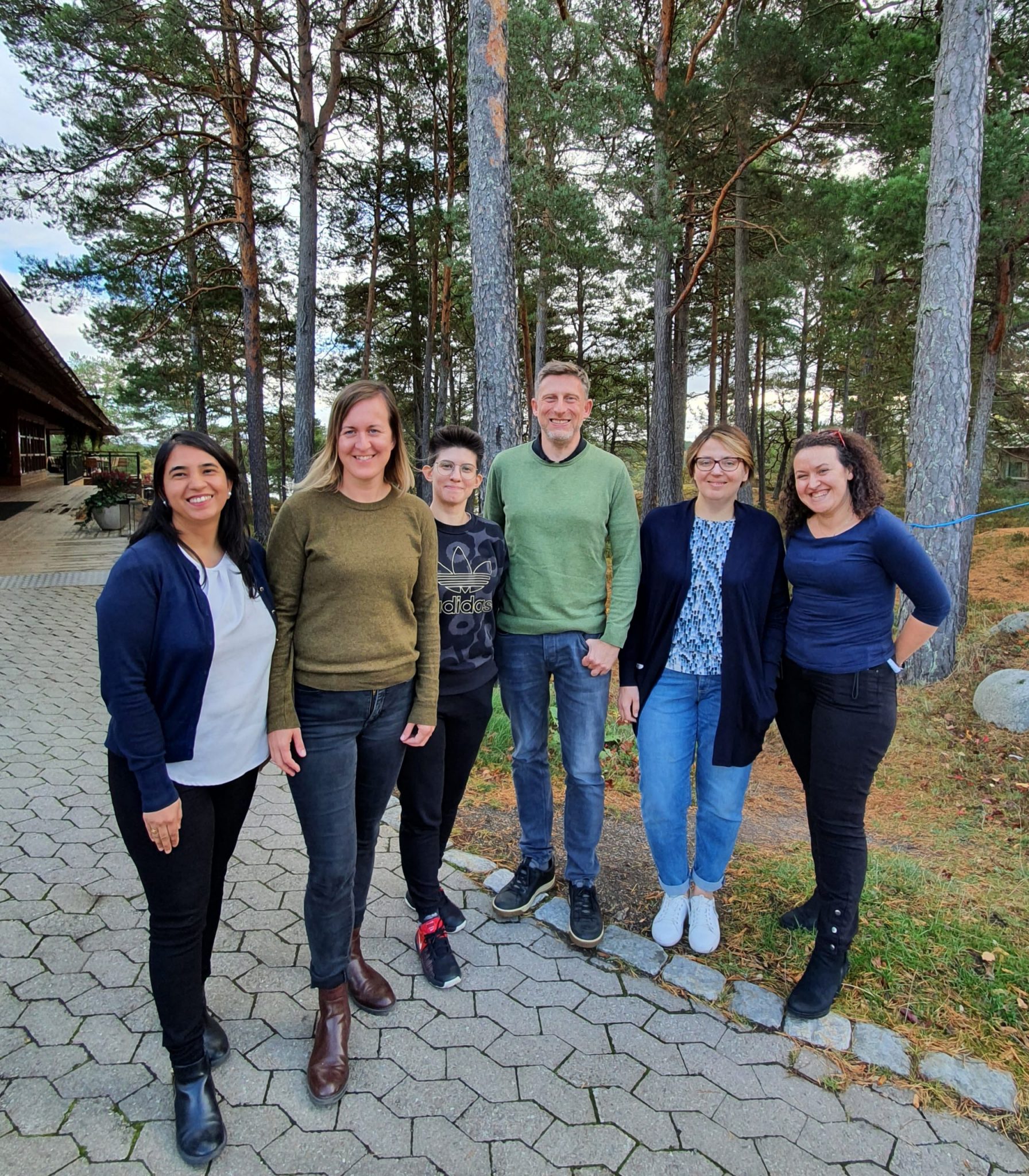
Group Members

Soniya Dhanjal
Olga Khorosjutina
Anneke Navis
Hirofumi Noguchi
Miriam Selle
Last updated: 2025-09-30

Content Responsible: Hampus Pehrsson Ternström(hampus.persson@scilifelab.uu.se)