
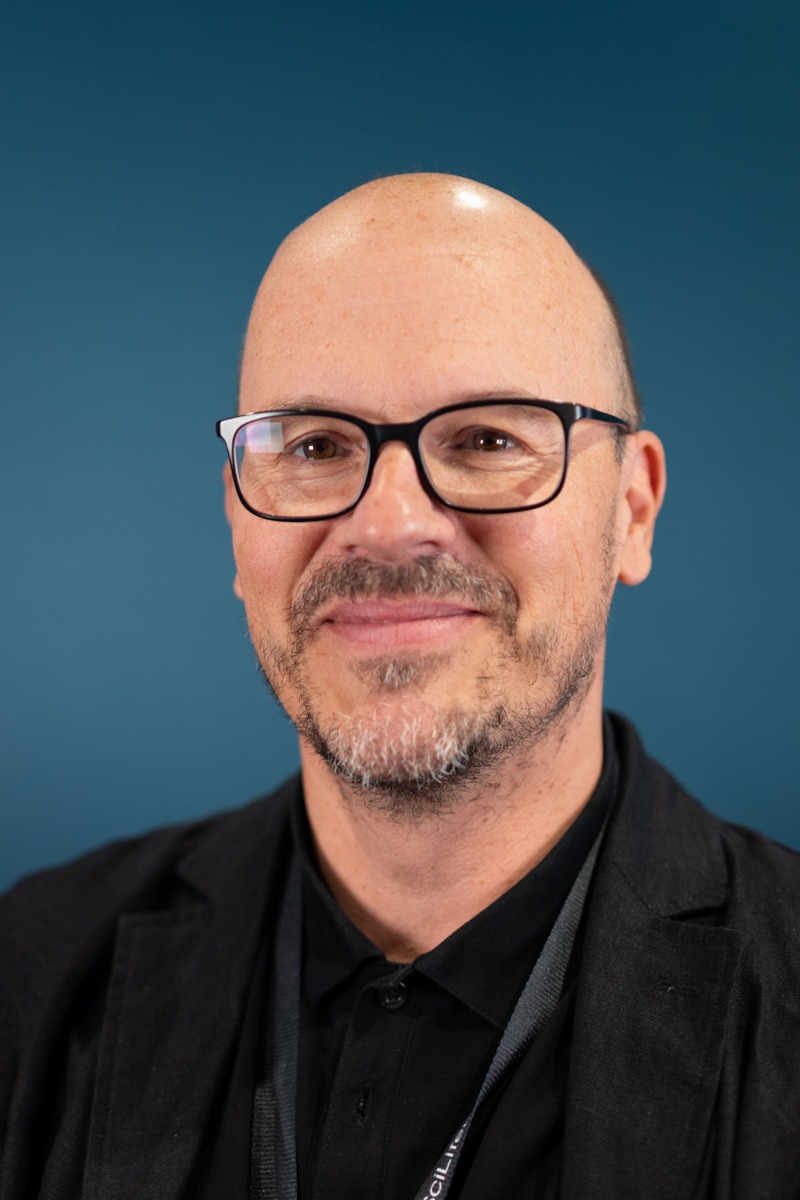
Jochen Schwenk
Department of Protein Science, KTH
Platform Scientific Director: Proteomics
Research Interests
Blood provides an accessible source of information about human health and disease. Our research focuses on developing and applying advanced technologies to study proteins circulating in the blood, aiming for a better understanding of the molecular mechanisms underlying human health and disease.
Our projects investigate metabolic, cardiovascular, respiratory, and inflammatory diseases, breast cancer and general wellness. Because circulating biomarkers are highly sensitive to non-biological (pre-analytical) variation, we place strong emphasis on quality and longitudinal sampling, careful study design, and rigorous control of potential biases.
Alongside large-scale proteomic profiling, we develop proteomics, autoimmunity and serological assays for the use in alternative sample matrices, including dried blood microsamples. For data analysis, we combine classical statistical methods with multivariate and data-driven approaches to uncover the biological significance of circulating proteins.
Our overarching goal is to apply these insights to define the molecular architecture of the circulating proteome across individuals, health conditions, treatment responses, and disease states. By establishing clinically relevant proteomic analyses, we aim to deepen our understanding of human biology and enable the development of improved diagnostics and precision medicine strategies.
Our work is supported by resources from the Human Protein Atlas and state-of-the-art affinity proteomics technologies.
Publication List
https://scholar.google.se/citations?user=gL3i6scAAAAJ
Group members
Current
- Prof Jochen M Schwenk (Group leader)
- Annika Bendes (Postdoc)
- Marcus Saarinnen (Postdoc)
- Leo Dahl (PhD student)
- William Stauch (PhD student)
- Karolina Ristola (Master student)
- August Falk Jernbom (Postdoc at Johns Hopkins)
Co-supervisor to
- Thanadol Sutantiwanichkul (PhD student with Fredrik Edfors)
- Szabolcs Simon-Guth (PhD student with Niclas Roxhed)
- Hampus Hagelin (PhD student with Sara Hägg)
- Andrea Villanueva Raisman (PhD student with Fredrik Edfors)
Associated Infrastructure Unit
- Dr. Claudia Fredolini (Head of Affinity Proteomics, Stockholm)
- Matilda Dahle (Research engineer)
- Maryam Sahi (Research engineer)
- Sarah Andersson (Research engineer)
Alumni
- PhD students: Dr. Tea Dodig-Crnkovic, Dr. Ulrika Qundos, Dr. Sanna Byström, Kimi Drobin (Lic); Dr. Arash Zandian*, Dr. Anna Häggmark-Månberg*, Dr. Burcu Ayoglu*, Dr. David Just*, Dr. Maja Neiman*, Dr. Mahya Dezfouli*, Dr. Maria Mikus*.
- Postodcs: Dr. Cecilia Engel Thomas, Dr. Ragna Häussler, Dr. Claudia Fredolini, Dr. Spyros Darmanis, Dr. Björn Winckler, Dr. Elisa Pin*, Dr. Frauke Henjes*, Dr. Julie Bachmann*.
- Researchers Dr. Mun-Gwan Hong, Dr. Philippa Pettingill.
- Visiting students: Dr. Ilana Kotliar, Dr. Emily Lorenzen (both Rockefeller University).
- Master students (recent): Gustav Gatu, Erik Kling Åhlen, Anna Gardell, Hampus Hagelin.
- Research engineer: Cecilia Mattsson, Elin Birgersson, Sophia Bergström.
- Erasmus students: Emma Ebert, Katharina Boelz, Amelie Vogt, Vincent Albrecht, Paul Boulouednine, Svenja Wingerter, Kristin Stirm.
* Co-supervisor
Contact
jochen.schwenk@scilifelab.se