
View from the outside: SciLifeLab-led study enters global mainstream media
A SciLifeLab-led study published in Science has been picked up by several of the world’s largest media outlets, carrying the story well beyond specialist circles and signaling that multi-protein risk profiling is entering mainstream public discourse.
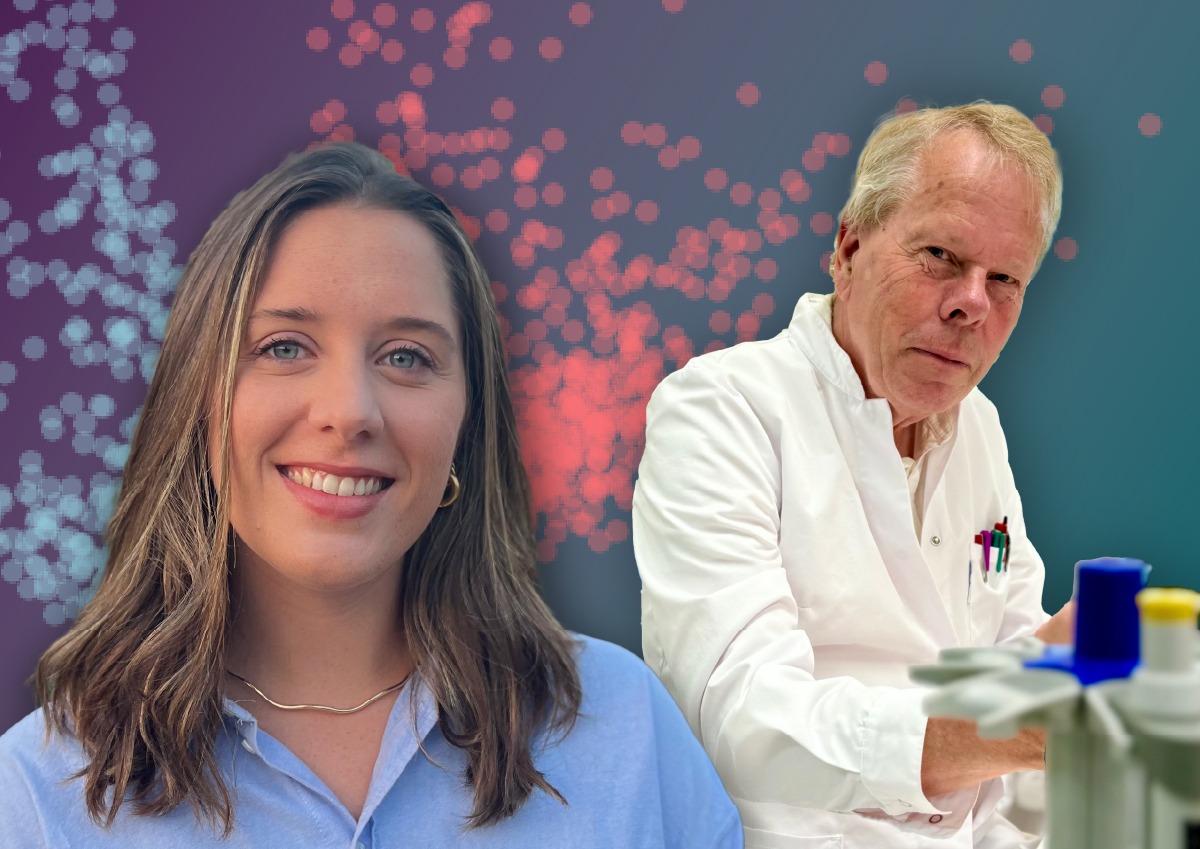
Across global media, from the Financial Times to BBC World Service, journalists focused on the central idea that a simple blood draw might flag disease risk years before symptoms. SciLifeLab and KTH researchers María Bueno Álvez and Mathias Uhlén were first and last authors, respectively. All proteomic analyses were performed at the SciLifeLab Explore lab which is a collaborative effort between the Uppsala nodes of the National Genomics Infrastructure and Affinity Proteomics.
On BBC’s Science in Action, host Roland Pease explored this shift with Human Protein Atlas Director and SciLifeLab researcher Professor Mathias Uhlén.
Roland Pease: “The point is that it’s not that when you see one, you say, oh, that’s a kidney disease, but it’s more like you’re seeing a harmony, as it were, a chord being played by all the different proteins…”
Mathias Uhlén: “We have millions and millions of data points … and machine learning tells us that it’s not this protein, but it’s this profile of proteins that tells you if you have lung cancer or breast cancer.”
That move, from single biomarkers to predictive profiles, sits at the heart of the Human Disease Blood Atlas. As the Financial Times reported, the team have been using new technologies to “monitor the levels of thousands of blood proteins” to build a potential early-warning system for complex diseases, with evidence that “an apparent biological marker for lung cancer” can be detected years before diagnosis.
The Scientist emphasized the scale and openness of the work: “in total, the researchers studied more than 8,200 people and compared the blood proteomes from healthy individuals and those with 59 different diseases or autoimmune conditions using a high throughput protein quantification platform.” The magazine also quoted Holden Maecker, a cellular immunologist at Stanford University who was not involved in the study: “They’ve attempted to do something more comprehensive than anyone’s done before, in terms of mapping the secreted proteome.”
Speaking to the Financial Times, Lei Lu, lecturer in health data science and artificial intelligence at King’s College London, also not involved in the research, called the Human Disease Blood Atlas a “significant leap forward in our ability to predict disease risks using blood proteins. This powerful approach allows us to see a comprehensive picture for the first time, distinguishing between protein patterns that are truly specific to a condition, such as a certain type of cancer, and those that are shared across many diseases,” Lu told the Financial Times. “This dramatically improves the potential accuracy and reliability of future risk prediction models.”
Closer to home, Svenska Dagbladet elaborated that while the promise is clear, “there is still some way to go before this type of blood test is ready for use, both for detecting diseases and then tailoring treatments. The challenge is to develop tests that have high specificity, can rule out disease in those who are not ill and that have high sensitivity — tests that actually find those who are ill and avoid false positive results.”
Uhlén agrees that rigorous validation is the next step. “We have created a basis that we and other researchers can use to move forward,” he said, adding that in the coming years the team plans to repeat the analyses performed with the Sweden-originated Olink technology using a different platform, SomaScan, to confirm the findings.
As Uhlén put it in coverage syndicated across regional newspapers in Sweden: “This is a technological development that is almost unprecedented in medical research.”
Publication:
A human pan-disease blood atlas of the circulating proteome, Science, DOI: 10.1126/science.adx2678
Selected media for further reading:
“Old faces and big spaces in small places”
(interview start at 17:00 in the episode)
BBC World Service
Early cancer clues found in multiple blood protein changes
Financial Times
A pan-disease proteome could improve disease biomarker detection
The Scientist
Human Disease Blood Atlas Maps Protein Fingerprints Across 59 Conditions
Technology Networks
Steg mot blodprov som kan avslöja cancer
Aftonbladet/TT
Steg mot blodprov som kan avslöja cancer
Göteborgs-Posten/TT
SciLifeLab Team Uses Olink to Analyze 9K Blood Samples Spanning 59 Diseases
GenomeWeb
Blodprov som avslöjar cancer allt tidigare
Svenska Dagbladet