
Ensuring scientific rigour while embracing rapidly evolving AI
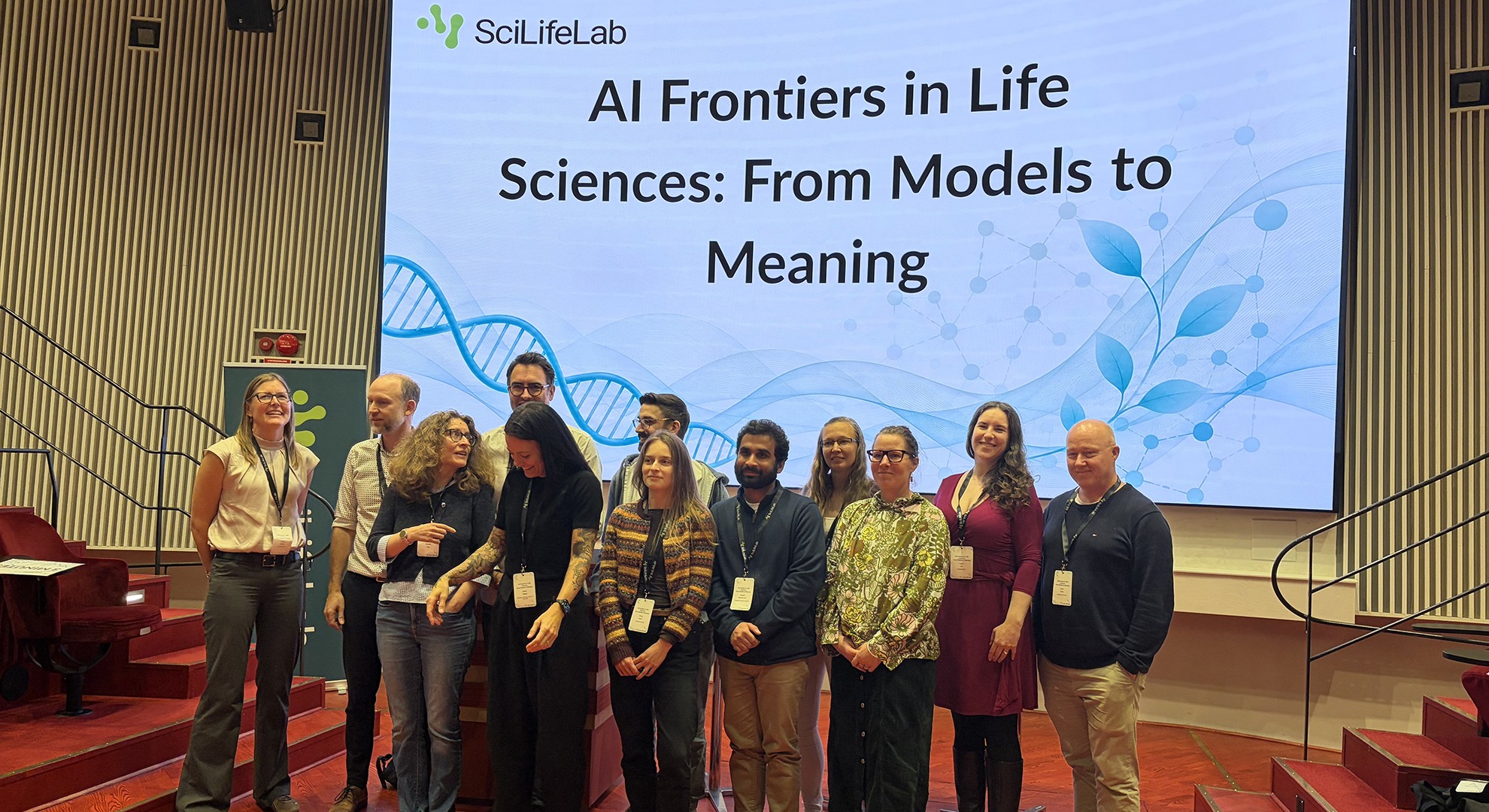
As artificial intelligence rapidly transforms scientific research, questions around scientific rigour, trustworthy AI-driven discoveries and responsible data sharing are becoming increasingly important. These were among the key topics discussed when SciLifeLab brought together invited experts for a full day of discussions on October 1, the day before the AI Frontiers in Life Sciences symposium on October 2.
The discussions addressed several challenges associated with the growing use of AI in life science research, including scientific validation, responsible data sharing and the need for shared international standards. The meeting provided an opportunity for researchers and experts to exchange perspectives on how to ensure that scientific rigour is maintained as AI technologies continue to develop at an unprecedented pace.
These topics are also central to SciLifeLab’s AI strategy, which outlines how the organisation aims to support responsible and trustworthy AI in life science. Through initiatives focusing on AI-ready data, shared standards and international collaborations, the strategy provides an overarching framework for addressing many of the questions raised during the discussions.
A point made in the opening statements, and returned to throughout the discussions, was that AI does not change what counts as science. “Whatever software you use, no matter the field, you need to test and validate what comes out,” said Jan Ellenberg, director of SciLifeLab. “Otherwise it’s not science, it’s fiction.”
A recurring topic was the lack of established ways to validate models and agents. Current benchmarks mostly show whether one model outperforms another on a certain task, not whether or how its results can be trusted. Suggestions ranged from deciding more carefully which tasks go to humans and which can safely go to agents, to more thoroughly checking that a question can actually be answered with the available data before applying a model to it, and publishing the prompts given to agents alongside the code, analyses or other output they produce.
The discussions also highlighted how the rapid development of AI is raising new questions about data sharing and Open Science. While open access to data remains a bedrock of scientific progress, the emergence of increasingly powerful AI systems, including proprietary models, brings new considerations around how data is shared, accessed and used. Finding ways to maintain the openness that enables scientific collaboration while addressing these evolving challenges will be an important part of shaping the future of AI-driven research. By engaging in the international discussion, SciLifeLab aims to contribute constructively to the development of approaches that support both openness and responsible use of data.
The need for shared standards and guidance
Participants raised the need for international agreements on standards for working with and evaluating AI, and that they crucially need to be complemented by open, living guidance developed collaboratively by organisations such as SciLifeLab, ELIXIR and RAISE. International policy takes time, and participants stressed that the area is developing too fast to rely on traditional policy routes alone.
To incentivise contributions to collaborative resources, participants also highlighted the need to rethink how scientific contributions are recognised and evaluated, particularly in funding decisions and academic career assessments. While this is a long-standing challenge, there is a continued need for research institutions and universities to recognise contributions to shared tools, data resources and infrastructure as an important part of scientific progress, alongside traditional research publications.
Ultimately, collaborative resources grow from the ideas and solutions developed by individuals and, alongside shared standards, responsibility for rigorous work also lies with each scientist.
As Ellenberg put it: “Be rigorous, you need to stand behind your results with your credibility as a scientist.”