
First of its kind instrument in Sweden: a new era for chemical exposomics and small-molecule research at SciLifeLab
The new flagship instrument Orbitrap Astral Zoom offers ways to “explore the molecular dark matter of the exposome” and integrate this with other omics approaches. This is made available to Swedish researchers from January 2027.
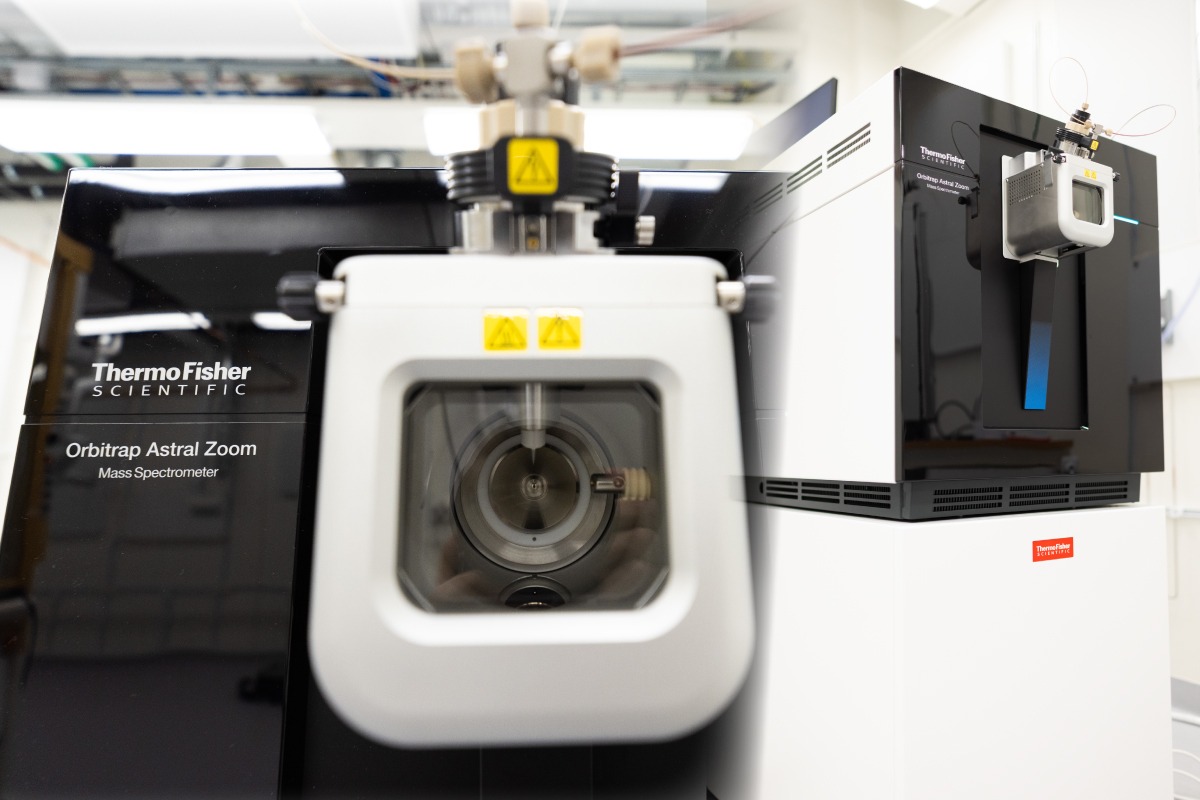
The first Orbitrap Astral Zoom in Sweden has been installed this month at the SciLifeLab Exposomics unit Stockholm, Campus Solna. This is one of the world’s most advanced high-resolution mass spectrometry (HRMS) systems and a flagship instrument for advanced small-molecule research. The Astral Zoom represents a major investment in Swedish research infrastructure and opens new possibilities for studying the vast diversity of chemicals to which humans and the environment are exposed.
Introduced by Thermo Fisher Scientific in 2025, the Astral Zoom combines ultrahigh resolution, exceptional data-acquisition speed and enhanced sensitivity. Its new hardware and acquisition strategies enable researchers to detect and characterize a broader range of molecules, including trace-level compounds in complex samples. Earlier in 2025, the Chemical Exposomics research group, led by Professor and Scientific Director Jonathan Martin, was among the first worldwide to access the Astral Zoom as a pre-release prototype, collaborating with Thermo Fisher Scientific to evaluate and advance its small-molecule applications.
Bridging targeted quantification and untargeted discovery
Understanding the human exposome requires analytical approaches that go beyond conventional targeted measurements. The Orbitrap Astral Zoom enables researchers to combine highly sensitive quantification of known chemicals with comprehensive untargeted screening of previously uncharacterised chemicals, providing a new advanced technology to investigate complex chemical mixtures and their implications for health and the environment.
A strategic investment in research infrastructure and a unique national resource
The Orbitrap Astral Zoom installed at SciLifeLab is the first to be installed in Sweden, and one of only a handful currently available worldwide. This acquisition strengthens the SciLifeLab Metabolomics & Exposomics Platform and establishes a unique national capability for advanced research on small-molecules.
The acquisition was made possible through co-funding from SciLifeLab and Stockholm University’s Department of Environmental Science (ACES), reflecting a shared commitment to strengthening Sweden’s research infrastructure.
“With the Orbitrap Astral Zoom, we aim to push chemical exposomics towards greater sensitivity, dynamic range and analytical depth. This could allow us to detect and identify compounds that have previously remained below our analytical detection limits, while improving the characterization of complex exposure profiles. We are grateful to SciLifeLab and ACES for making this investment possible, and excited to work with researchers on impactful projects that advance exposomics and metabolomics,” says Stefano Papazian, Head of Unit and recipient of the SciLifeLab Expensive Instrument Grant.
The technology offers exciting opportunities across several research areas:
- Exposomics and metabolomics: enhanced detection and deeper characterization of environmental chemical exposures, endogenous metabolites, and their interactions.
- Environmental science and toxicology: improved characterization of trace-level emerging contaminants, chemical mixtures, and their potential health effects.
- Epidemiology and public health: more comprehensive exposure assessment in population cohorts, supporting research into environmental determinants of health and disease.
“Understanding how complex environmental exposures interact with many biological factors to influence the health of living organisms is the challenge we face in exposomics research. The Orbitrap Astral Zoom allows new data acquisition modes that seem tailor made to discover and characterize important environment chemicals in complex biological samples. I’m excited to see this technology enabling new cross-disciplinary research in Sweden, as it will be dedicated to users seeking to gain a deeper understanding of the environmental determinant of human or ecosystem health,” says Professor Jonathan Martin, Scientific Director of the Exposomics Unit.
The Orbitrap Astral Zoom will be available to researchers through the Exposomics Unit starting in January 2027.
To encourage innovative applications and maximise the scientific impact of this investment, the SciLifeLab National Facility for Exposomics will launch a dedicated sponsorship programme for selected, high-impact research projects across metabolomics, exposomics, environmental chemistry and health research to be conducted on the Astral Zoom during 2027–2028. Further information will follow.