New Approaches to Characterize the Chemical Exposome
September 22, 2026 @ 15:15 – 16:15 CEST
Spotlight Seminar Series warmly welcomes Professor David S. Wishart from the University of Alberta, Canada to give a talk at SciLifeLab Campus Solna.
Abstract
The chemical exposome constitutes a large and incredibly diverse chemical universe. It includes compounds derived from food, food additives, cosmetics, pharmaceuticals, consumer products, dyes, pesticides, industrial chemicals, and environmental pollutants. With more than 20 million compounds estimated to constitute the chemical exposome, its characterization represents an enormous analytical and computational challenge. In this seminar, I will describe our efforts to define, catalogue, measure, and predict this vast chemical space. I will first discuss our development and curation of exposome resources, including T3DB, FooDB, the NORMAN Suspect List Exchange, and SYNCED, the Synthetic Chemical Exposome Database. Together, these resources connect known exposure chemicals with their sources, physicochemical properties, biological targets, toxicities, and health effects. I will then present QUANTEX 600, our quantitative mass spectrometry assay for measuring hundreds of selected exposome compounds in biospecimens. Although targeted assays provide measurement of known chemicals, much of the exposome remains unidentified “dark matter.” To address this gap, we are introducing the concept of in silico exposomics, an untargeted strategy that combines databases, artificial intelligence, spectral prediction, and analytical chemistry to illuminate the exposome’s dark matter. This concept uses chemical language models (CLMs) and metabolism prediction tools (BioTransformer) to predict novel exposure compounds and their metabolic products. In silico exposomics also involves predicting tandem mass spectra, chromatographic retention times, electron-ionization mass spectra, and retention indices of these predicted or expected compounds, thereby enabling these unrecognized chemicals to be detected and identified experimentally. I will provide examples of how successful this strategy appears to be and suggestions of where it may lead
Biography
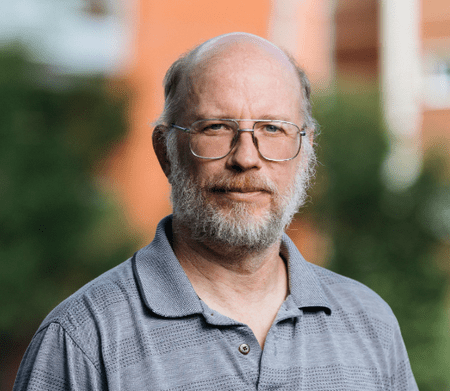
David Wishart earned his PhD in Molecular Biophysics from Yale University in 1991 and joined the University of Alberta as an assistant professor in 1995, becoming a full professor in 2003. He is currently a Distinguished University Professor in the Departments of Biological Sciences and Computing Science, with adjunct appointments in the Faculty of Pharmacy and Pharmaceutical Sciences and the Department of Laboratory Medicine and Pathology. He holds a Tier 1 Canada Research Chair in Metabolomics and Precision Medicine. Wishart’s multidisciplinary research spans metabolomics, exposomics, precision medicine, precision nutrition, bioinformatics, cheminformatics, structural biology, artificial intelligence, robotics and analytical chemistry. His work has enabled the identification and quantification of metabolites in complex biological samples, the discovery of biomarkers for cancer, cardiovascular disease, neurological disorders, infectious disease, organ dysfunction and environmental exposure, and the development of computational tools for predicting molecular structures, properties, spectra, metabolic pathways and biological activities. After pioneering computational approaches for interpreting NMR spectra of biofluids in 1999, Wishart helped establish metabolomics as a major scientific discipline. In 2005, he launched the Human Metabolome Project and subsequently created the Human Metabolome Database. His laboratory has developed more than 100 freely accessible databases and software tools, including HMDB, DrugBank, FooDB, MetaboAnalyst, CFM-ID, BioTransformer, PathBank and NP-MRD, which are used by millions of researchers worldwide. In 2011, he co-founded The Metabolomics Innovation Centre (TMIC), Canada’s national metabolomics laboratory, which now includes eight research nodes, employs more than 30 scientists and houses over $35 million in equipment. He has also helped launch more than a dozen biotechnology companies, including BioTools, Chenomx and Molecular You. Wishart has authored or co-authored nearly 700 publications, received more than 166,000 citations and attained an h-index of 155. His honours include election to the Royal Society of Canada in 2017, appointment as Distinguished University Professor in 2018, the J. Gordin Kaplan Award in 2023, the NSERC Brockhouse Prize in 2024, the University Cup and NSERC Herzberg Gold Medal in 2025, and a Governor General’s Innovation Award in 2026.
Host: Jonathan Martin jon.martin@aces.su.se
 Google Calendar
  iCalendar