Super-Resolution Imaging of Mitochondria
June 9, 2026 @ 15:15 – 16:15 CEST
Professor Stefan Jakobs, Georg-August-Universität Göttingen, Germany
Abstract
Mitochondria are essential for cellular function, yet their small size, dynamic behavior, and intricate architecture pose challenges for conventional light microscopy, which is limited by the diffraction barrier. Super-resolution methods such as Stimulated Emission Depletion (STED) microscopy overcome this limitation, enabling visualization of mitochondrial features which are blurred with conventional microscopy. In this talk, I will present how we use STED and complementary imaging approaches to investigate mitochondrial ultrastructure such as the folding of the mitochondrial inner membrane, mitochondrial proteins, mitochondrial DNA and mRNAs. Our work aims to uncover how the inner membrane develops and maintains its complex folds, and how this architecture relates to gene expression within the organelle. I will also discuss emerging automation strategies that streamline STED workflows, potentially opening the door to broader adoption in biomedical research and clinical diagnostics.
Super-Resolution Imaging of Mitochondria
Mitochondria are essential organelles whose small size, dynamic behavior, and intricate architecture challenge conventional light microscopy, which is fundamentally limited by diffraction. Super-resolution techniques such as Stimulated Emission Depletion (STED) microscopy overcome this barrier, enabling the visualization of mitochondrial structures that remain unresolved with standard imaging approaches.
In this talk, I will present our use of STED and complementary imaging approaches to examine mitochondrial ultrastructure, including inner membrane organization, mitochondrial proteins, mitochondrial DNA and mRNAs. Ultimately, our work seeks to understand how the highly folded inner membrane is established and maintained, and how its architecture influences gene expression within the organelle.
I will highlight recent advances in the automation of STED microscopy that enhance throughput, reproducibility, and ease of use, bringing STED super-resolution imaging closer to routine applications in biological research and clinical settings.
Biography
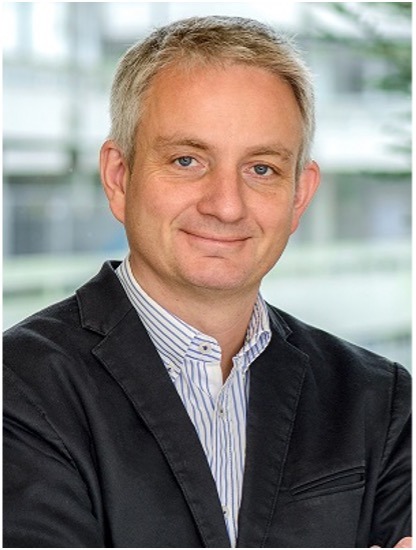
Professor Jakobs is a cell biologist working at the interface of biology and advanced imaging. His laboratory pioneered the use of diffraction-limited super-resolution microscopy for cell biology. More recently, they have automated these approaches to enable drug screening at unprecedented optical resolution and high throughput. He has published more than 130 manuscripts on this topic and has an h-index of 83 (according to Google Scholar). In addition to his affiliation with the University Medical Center Göttingen, he leads a research group at the
MPI for Multidisciplinary Sciences and is head of the Göttingen Fraunhofer Site – Translational Neuroinflammation and Automated Microscopy. He holds an ERC Advanced Grant focusing on the analysis of mitochondrial ultrastructure using super-resolution microscopy and is spokesperson of the DFG-funded Research Unit FOR2848, which focuses on the application
of advanced microscopic technologies to questions in cell biology.
Host: Ilaria Testa ilaria.testa@scilifelab.se
 Google Calendar
  iCalendar