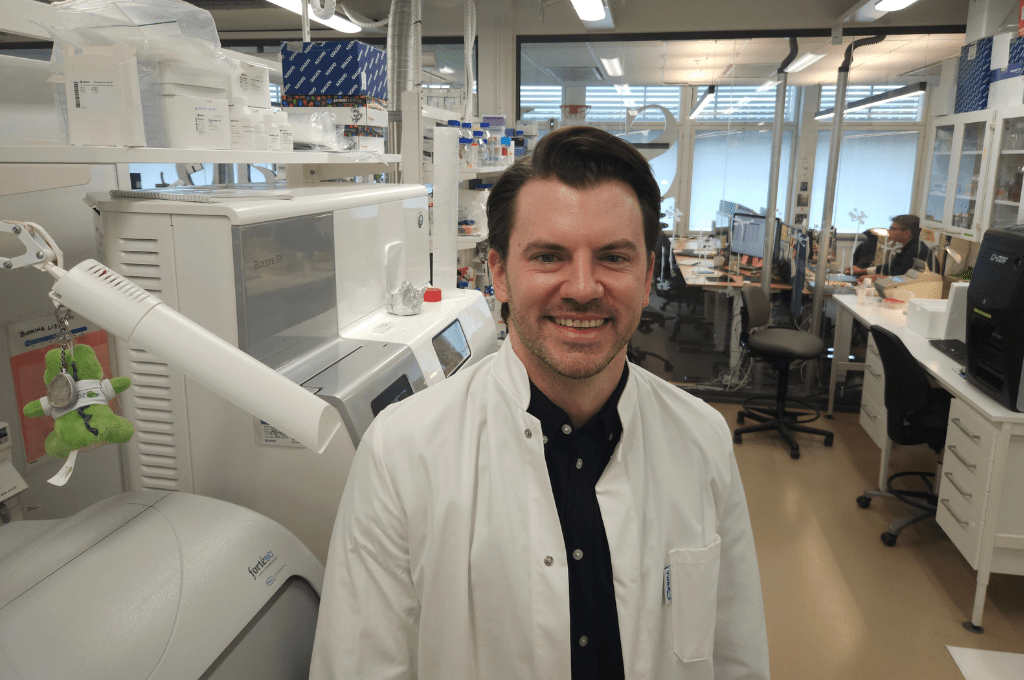

SciLifeLab Voices: Andreas Wisniewski
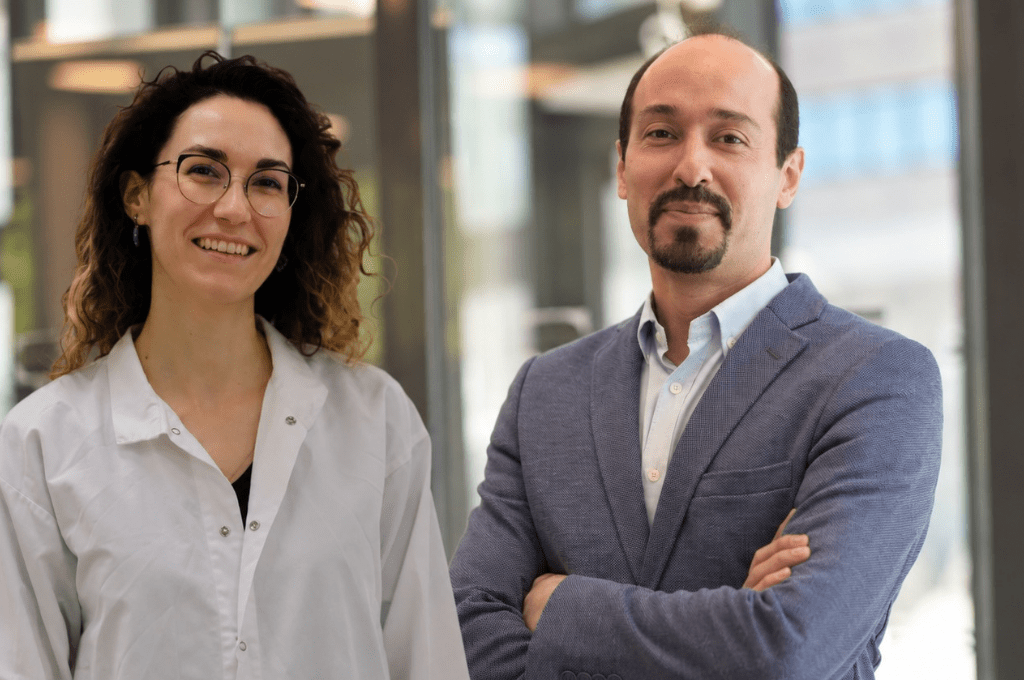
This time in our SciLifeLab Voices series, Anna Ridderstad Wollberg (Senior Project Leader at SciLifeLab DDD) had a chat with Andreas “Andy” Wisniewski (Staff Scientist at DDD). Andy quite recently joined the TPE infrastructure unit at the Drug Discovery and Development (DDD) Platform, a group of ~8 people based in SciLifeLab Solna. TPE stands for Therapeutic Protein Engineering, an area that Andy has been interested in for quite a while.
How did you end up at SciLifeLab?
Already early on, in Germany, I was fascinated about biology, and especially microbiology. After basic studies in Germany, Austria, and Poland, I moved to Sweden as a PhD student on a Marie Skłodowska-Curie fellowship at KTH with a focus on Biologics and Biotherapeutics. After finishing my PhD, I worked at Affibody for a year before starting at SciLifeLab one and a half years ago. After eight years in Sweden, I have learned that the Swedish life science field is maybe not the largest in the world, but well connected. You know someone who tells you about a lab and potentially a good opportunity to apply to an open position may arise. SciLifeLab, with its connections and collaborations, is really a facilitator for the vibrant life science ecosystem we have here.
Being a Staff Scientist, what do you do? How do you work with the PI team?
As an expert in protein engineering, I can develop a protein based on what our collaborator (PI, principal investigator, researcher, team) needs, usually based on antibody derivatives (single-chain fragments or Fab fragments, for example). We have a well-equipped lab, with everything from basic techniques and instrumentation like PCR and cloning to more advanced systems for phage display and assessing binding or structural characteristics. I mostly work on several different projects in parallel, interacting directly with the PI and the DDD project leader, while also participating and presenting in joint project meetings.
I think one of the best things in the group is the problem-solving atmosphere, and the speed with which we can experimentally address questions coming up and find ways forward. Instruments are easily accessible, and there is a good opportunity to learn new skills, like using the Octet® platform in a different kind of assay from what we would regularly do, for example.
I like to work with people and to get challenged by the PI team (in a good way), nurturing a training and learning experience for both parts. A DDD program is a long-term collaboration between the academic group and the DDD team; you get a good chance to know each other and to learn from each other. A “typical” DDD program is about four years, but depending on results and development stage, it can vary a lot. An exit from DDD can mean different things: from returning to academic research with new data and knowledge, to starting a company and perhaps commercial partnering and further development of a drug candidate.
My group works closely with the other nine units at the DDD platform, and perhaps most so with the DST (Display and Selection Technologies) unit based in Lund. Our two groups have regular meetings together, as the expertise and technologies in our units overlap and complement each other to support early Drug Discovery of different formats of antibody-based drugs.
With your experience from both Academic Research and Industrial Drug Discovery, what are your reflections on SciLifeLab DDD?
As a PhD student, you have a lot of freedom in your work and flexibility on how you work, as it should be. Whereas in industry it is the other way around: you follow SOPs (Standard Operating Procedures), you have to follow a strict Line. But I was lucky to also work on a lot of developmental projects. That’s what I liked. I could sometimes come up with new SOPs, change SOPs, rethink things.
DDD is really a mix of both worlds. We have SOPs, and follow procedures, but every project that we usually get in has its own different challenges. So, we need to adjust our workflows to that. For example, right now I’m working on a project which is completely different from all the other ones. So basically, every step of the workflow we have to rethink. And this I really enjoy.
Finally, can you tell us something we don’t know about Andy?
I talk so much, and I talk with a lot of people, so I tend to tell people everything about me before they even ask about it, Andy answers with a smile. I look at myself as a relatively young person with an old soul. I really enjoy what’s called grandma hobbies. I love gardening, enjoying the Stockholm archipelago, baking, reading books, and being out with my dog. When I listen to Andy, talking about nature, Stockholm, the forest, and the water, I hear a Swedish ambassador. “A German potato living the köttbulle life”, as he phrases it himself.
Link to the Therapeutic Protein Engineering unit: https://www.scilifelab.se/units/therapeutic-protein-engineering/
Interview by Anna Ridderstad Wollberg