
New research from SciLifeLab and Lund University sheds light on sex differences in Alzheimer’s
New research from SciLifeLab and Lund University suggests that brain cells that respond to Alzheimer’s disease pathology have very different expression patterns in men and women, echoing a broader shift toward sex differences in neurodegeneration.
At the recent scientific conference on Alzheimer’s, Parkinson’s and related brain diseases, AD/PD, one question kept surfacing in talks, hallway conversations and specialist sessions alike: why does Alzheimer’s affect so many women? Almost two-thirds of people living with Alzheimer’s are women, and researchers increasingly argue that the gap cannot be explained by longer female lifespan alone.
From single cells to coordinated networks
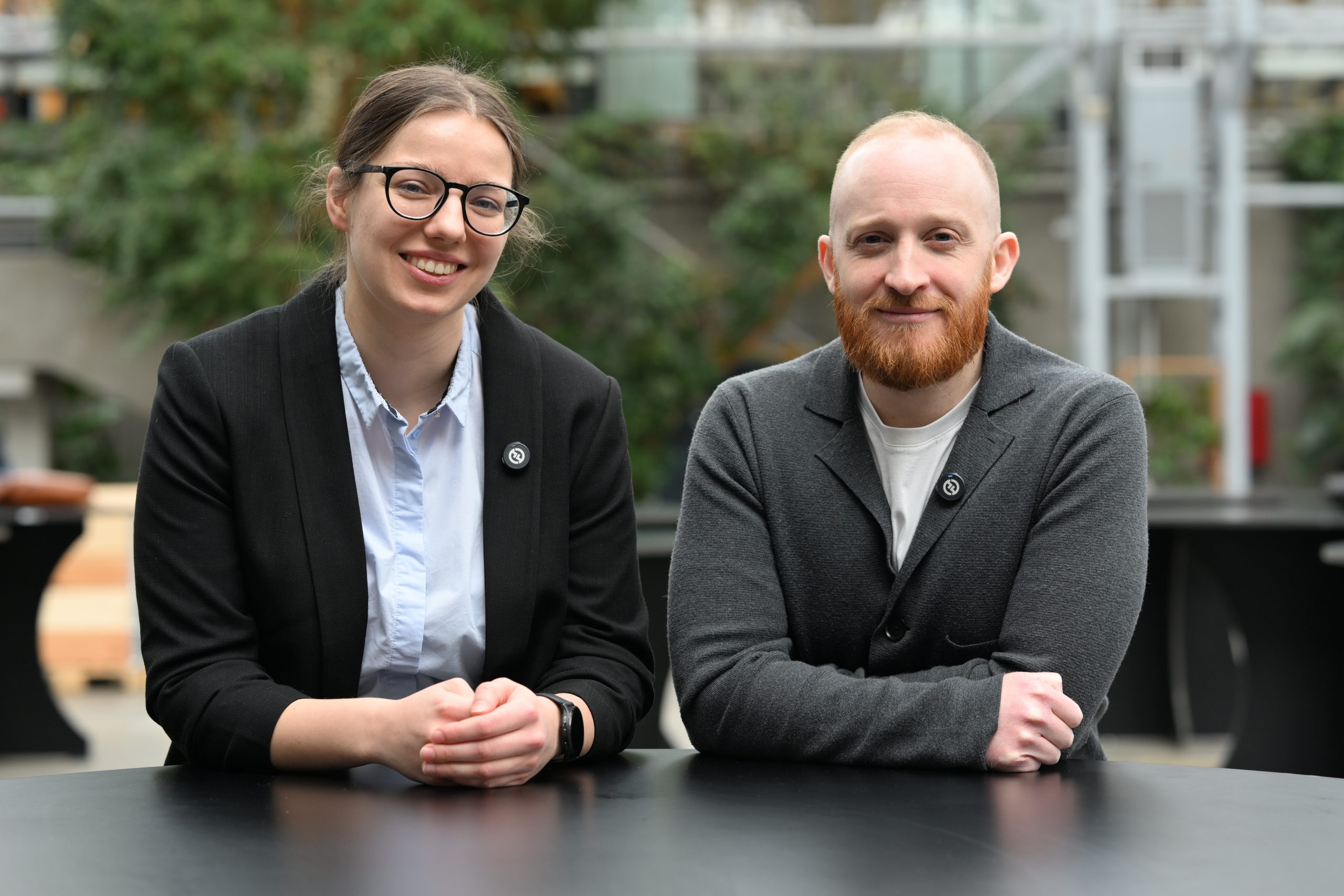
Into that conversation stepped Jacob Vogel and Gabriele Vilkaite. Vogel is a SciLifeLab-affiliated Data Driven Life Science (DDLS) Fellow at Lund University whose lab studies neurodegeneration using large human datasets. Vilkaite, a PhD student in Vogel’s lab, presented their abstract, Coordinated multi-cellular responses to AD pathology highlight innate sex differences, as part of a symposium titled Mechanistic Insights into Sex Differences in Neurodegeneration. The project is an example of what data-driven life science looks like in practice. Their research involved 2.3 million cells derived from 427 post-mortem donors, with each cell containing data on 33,538 genes — an analysis that relies on national computing power, supported through SciLifeLab.
Instead of looking at one brain cell type at a time, what happens if you ask how many cell types change together during Alzheimer’s disease? Using tissue from a part of the frontal brain called the dorsolateral prefrontal cortex, the team examined which genes were switched on across huge numbers of individual cells, then searched for groups of genes that rose and fell together across people. The abstract, and ongoing research, finds that brain cells that respond to AD have different patterns of gene expression in men and women.
Their work adds to that wider picture by focusing not just on individual cell types, but on how cells may be acting together. For years, single-cell studies have transformed Alzheimer’s research by showing what different cells are doing one by one. But Vilkaite argues that this still misses something fundamental, “cells don’t really just exist in their own little bubbles. They’re constantly sending signals out.” In a diseased brain, that matters enormously. A stressed neuron can signal distress. Nearby immune cells can react. Support cells can change their behavior in response. The disease may be shaped not only by individual cell damage, but by a whole chain of cell-to-cell communication.
This is where the study points to a next step for the field. Vogel argues that “we’re ready, to take the next step and say, what about the global cell network?” That may be the most important idea in the project. Alzheimer’s may not be best understood as one cell type failing in isolation. It may be better understood as a network problem, where many kinds of cells change together, respond to each other, and possibly do so differently in women and men.
Implications and open questions
What they saw fits into a much larger discussion in the field. “At a given level of cognitive status, women seem to have more pathology and seem to accumulate pathology faster,” Vogel said. However, the meaning of that pattern is still unsettled. Does it mean women are more vulnerable to the disease? Or does it mean they are, in some ways, more resilient, able to tolerate more brain damage before symptoms become obvious?
That uncertainty was reflected across the conference. “There’s a lot of people at this conference that are trying to get a beat on what those processes are that either make women more vulnerable in some ways or make them more resilient in others.” Vilkaite noted that menopause was a major focus in several discussions. She also pointed to a study done on mouse models and their specific changes to gut microbiota, suggesting that women may have more difficulty clearing amyloid beta, one of the proteins long tied to Alzheimer’s disease.
If disease biology differs by sex, then screening tools, drug trials and eventually therapies may need to take that more seriously. Vogel noted that some treatment studies have already raised questions about whether drug effects differ between women and men. Even if those findings remain preliminary, and more data will be available over the coming years, those data points will be hard to ignore.