
Multiple inflammatory processes shape chronic bowel disease
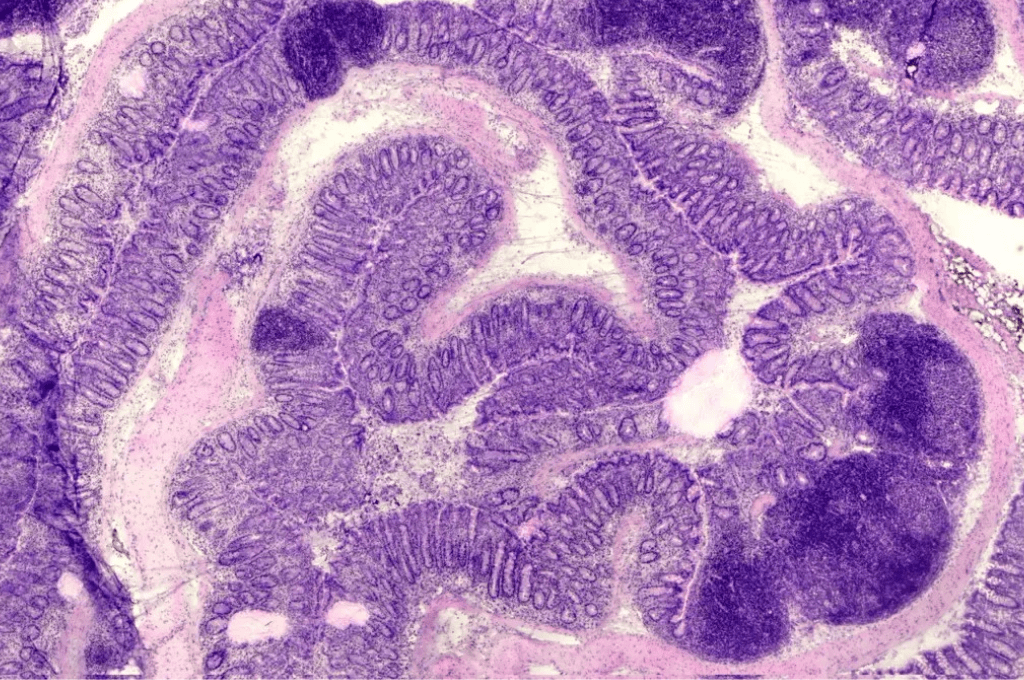
Chronic inflammatory bowel disease is not driven by a single process. A new mouse study from SciLifeLab and Karolinska Institutet (KI) shows that several distinct inflammatory processes can occur at the same time, in different parts of the intestine. The findings, published in Immunity, may help explain why patients respond differently to treatment.
“This work was enabled by early access to spatial transcriptomic technologies and computational tools developed at SciLifeLab, particularly through collaborations with Stefania Giacomello and Joakim Lundeberg, and by the excellent support provided by NBIS,” says SciLifeLab Group Leader Eduardo Villablanca.
Tracking inflammation across tissue
The researchers analyzed more than 450,000 cells from two mouse models of chronic colitis and followed how inflammation developed over time. Early in the process, immune cells such as CD4⁺ T cells and neutrophils increased, while intestinal epithelial cells activated genes involved in detecting and responding to harmful signals.
In the study, they identified at least three distinct inflammatory programs, each active in different regions of the colon. One was located near the small intestine, another further along the colon, and a third in areas where immune cells form small, localized clusters.
“We found that the intestine does not have just one type of inflammation, but several, occurring simultaneously in different parts of the tissue. This may be a missing piece in understanding why some patients respond well to a treatment while others do not,” Eduardo says.
Treatment effects across multiple pathways
When the mice were treated with an antibody that blocks the inflammatory molecule IL 12, activity decreased across all identified programs. This was followed by fewer immune cells and a more stable intestinal lining.
“This shows that the treatment does not extinguish all inflammation in the same way. It affects several programs at once, which may offer new clues for designing future therapies,” Eduardo Villablanca concludes.
They also compared their findings with data from patients with ulcerative colitis and Crohn’s disease. Several key inflammatory pathways were similar between mice and humans, suggesting that the results may be relevant to human disease.
The study is a collaboration between Karolinska Institutet, Roche, and SciLifeLab, and was funded by the Swedish Research Council, the Swedish Cancer Society, the Knut and Alice Wallenberg Foundation, and the European Research Council.
DOI: 10.1016/j.immuni.2026.04.005
This news article is based on a text received from KI press and communication officers Anna Björklund and Veronica Ebbersten Lindholm.
Photo: Villablanca lab.