
Curious to pursue a career in life science technology development and research infrastructure management?
SciLifeLab is proud to again be an active partner in EMBL’s ARISE2 postdoctoral program, supporting the next generation of experts in technology development and research infrastructure management. The second call is now open, and candidates have until September 30 to submit their applications.
ARISE2 is a fellowship program designed to train the next generation of research infrastructure experts through cutting-edge technology development, interdisciplinary collaboration, professional skills training, and career support.
ARISE2 is aimed toward technology and method development experts with backgrounds in science, technology, engineering, and mathematics who are interested in using their expertise to engage in an exchange of knowledge and best practices of research infrastructure management to further advance life science research.
Under the ARISE program, postdoc candidates can apply to perform short secondments for up to six months at a SciLifeLab unit. In addition in the “full collaboration” offer, SciLifeLab infrastructure unit heads have teamed up with EMBL PIs to co-supervise postdocs with a possibility of long secondment at SciLifeLab for up to 11 months.
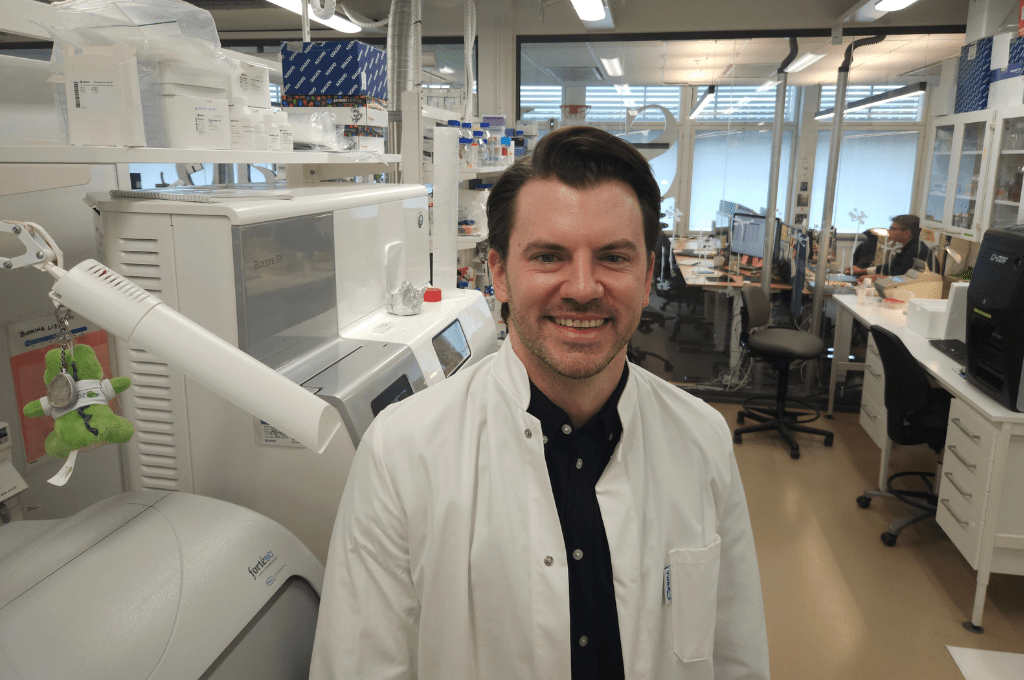
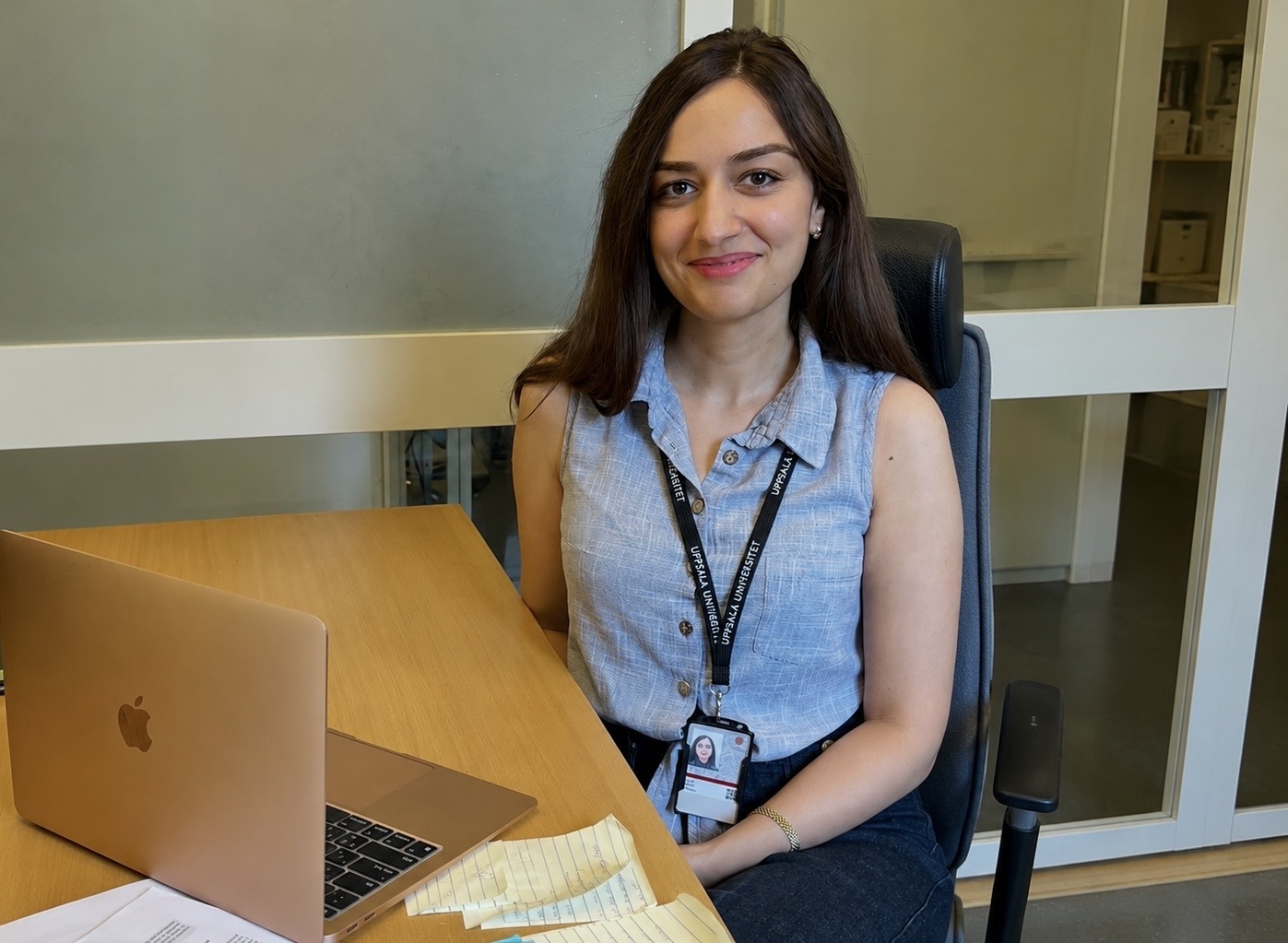
SciLifeLab’s researchers engaged in the full collaboration program:
Are you interested in proposing a potential project within these EMBL/SciLifeLab interfaces, start a dialogue by contacting the respective supervisors listed below. SciLifeLab infrastructure unit heads have teamed up with EMBL researchers and looking forward to project proposals from interested candidates. Read more about the program and find information about the application with deadline September 30, 2025 on the official ARISE2 site.
SciLifeLab Anja Mezger and Stefania Giacomello (Royal Institute of technology/KTH) teamed up with EMBL-EBI Julio Saez Rodriguez. Towards an MCP-Compliant Platform for Spatial Multi-Omics: Integrating Prior Knowledge and AI.

Anja Mezger, Head of Unit: National Genomics Infrastructure

Stefania Giacomello, Group Leader, KTH/SciLifeLab
SciLifeLab head of glycoproteomics and MS Proteomics unit Carina Sihlbom Wallem have teamed up with Sinem Saka (EMBL-Heidelberg). They welcome projects related to development of spatial multi-omics workflows that utilize the deep visual proteomics together with spatial transcriptomics.

Carina Sihlbom Wallem, Head of Glycoproteomics and MS Proteomics, SciLifeLab
SciLifeLab AI lead Ola Spjuth have teamed up with Fabio Petroni (EMBL). They welcome projects that explore building AI agents that actively support scientific discovery by navigating, synthesizing, and reasoning over complex biological data. The goal is to create collaborative systems that help researchers uncover insights and formulate new hypotheses across disciplines.

Ola Spjuth, SciLifeLab AI Lead
SciLifeLab Bernhard Schmierer, head of the CRISPR Functional Genomics infrastructure unit has teamed up with Neil Humphreys (EMBL). Neil and Bernhard welcome project proposals focused on developing novel viral and/or non-viral strategies for delivering gene-editing tools. They are particularly interested in approaches that enable efficient genetic modification within cultured cells and in vivo, using both established and emerging model organisms.

Bernhard Schmierer, CRISPR Functional Genomics infrastructure unit
Experiences from SciLifeLab EMBL collaboration within the ARISE program.
Read about Thomas Webers experience doing a secondment at SciLifeLab Data Center within a collaboration between SciLifeLab Johan Rung na EMBL Jan Korbel. June 16, 2025: Tech, teamwork, and growth: Thomas Weber shares his ARISE secondment experience at SciLifeLab
In the last call two co-supervisor pairs were formed between a SciLifeLab head of unit and an EMBL PI that attracted Julian Gurgo and Yonathan Goldtzvik to apply with projects. Currently Yonathan Goldtzvik is doing his postdoc on developing a pipeline for high-throughput prediction of human protein complex structures at Sameer Velankar lab in collaboration with Marta Carroni at the SciLifeLab Cryo-EM unit.
Julian Gurgo is in the lab of Alvaro Crevenna EMBL Rome, that collaborates with Hans Blom with a planned secondment at the Integrated Microscopy Technologies (IMT) in Stockholm, Sweden.

– The collaboration between SciLifeLab and EMBL via the ARISE2 program represents a valuable opportunity for the development of new technology. To better understand biological processes in 3D space, I’m currently working on the development of methods to combine spatial genomics and spatial transcriptomics, together with the corresponding 3D image processing tools. The end goal is to make this technology available to the broader scientific community via research infrastructure services, says Julian Gurgo.