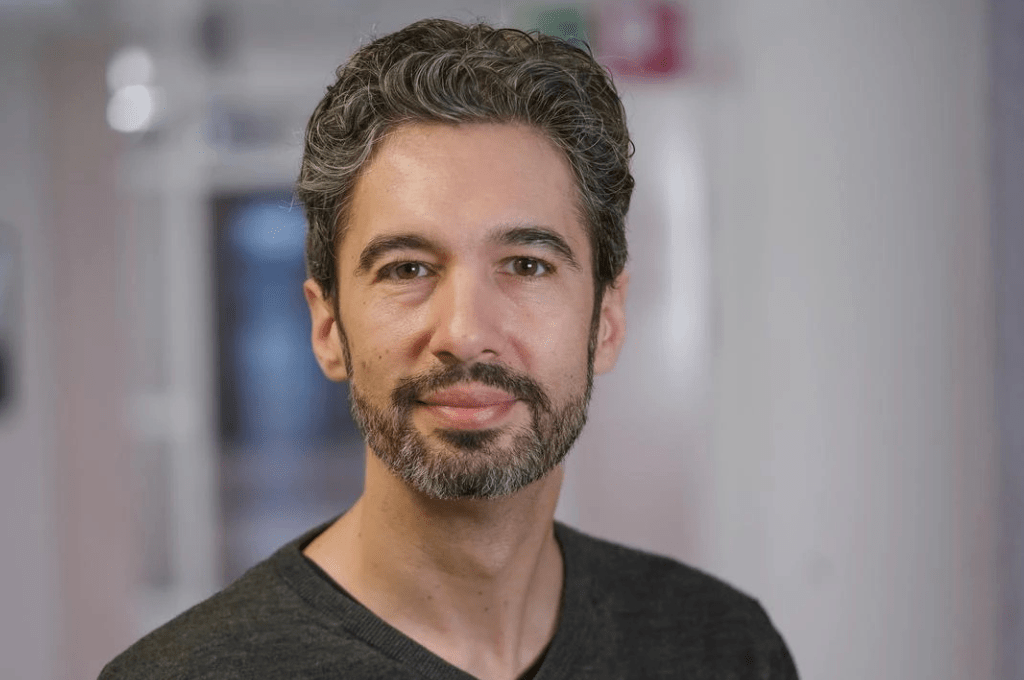
SciLifeLab Group Leader awarded prestigious NIH grant
Felipe Cava, a SciLifeLab Group Leader and professor at Umeå University, has been awarded a five-year NIH (National Institutes of Health) R01 grant, in collaboration with Tobias Dörr at Cornell University. The study will examine how beta-lactam antibiotics kill bacteria to identify new ways to combat antimicrobial resistance.
“It feels very rewarding; this grant builds on several years of work in my lab. Particularly, the development of technologies that allow us to study the bacterial cell wall in unprecedented detail. It also reflects a long and highly productive collaboration with Associate Professor Tobias Dörr at Cornell University, which has been central to the project’s development. We came close in a previous round, so we refined our ideas and strengthened the science. Seeing that persistence pay off is very satisfying,” says Felipe Cava.
Beta-lactam antibiotics, such as penicillin, are among the most widely used treatments for bacterial infections. They target the bacterial cell wall, which is essential for survival. While we know how these drugs block the enzymes that build the wall, it remains unclear how this ultimately leads to cell rupture. In this project, they want to understand what happens inside the cell once the cell wall is disrupted and how this process leads to cell death.
“By combining genetics, cell biology, and biochemistry, we will track how the cell wall is remodeled and destabilized during treatment. We aim to build a more complete picture of how these antibiotics work,” Cava says.
The R01 grant enables the team to tackle this challenge in ways they previously could not. A common limitation in the field has been the ability to observe how the cell wall breaks down during treatment.
A new way to map out bacterial responses to antibiotics
The R01 grant enables the team to tackle this challenge in ways they previously could not. A common limitation in the field has been the ability to observe how the cell wall breaks down during treatment.
“In my lab, we recently developed a high‑throughput approach that changes this. For the first time, we can analyze intact cell wall material as well as fragments released as the cell wall is dismantled. These fragments are highly informative, as they reflect the processes that ultimately lead to bacterial lysis and death,” Felipe says.
This approach will be applied at scale, in combination with genetic and systems-level analyses, to map bacterial responses to antibiotics across different conditions. Apart from furthering basic science, the study could reveal new vulnerabilities in bacterial pathogens and guide the development of improved antibiotics or compounds that enhance existing treatments. An urgent need as antimicrobial resistance continues to rise.
Felipe Cava’s collaboration with Tobias Dörr dates back to their postdoctoral days. Since then, their labs have co-authored numerous papers. Felipe Cava’s group focuses on the biochemical and genetic basis of cell wall structure. Tobias Dörr’s group specializes in antibiotic mechanisms and tolerance, together linking molecular detail with broader physiological responses.
“We were both at Harvard around the same time. Early on, we realized we were interested in similar questions but approached them from different angles, which made collaboration a natural next step. This project is the culmination of that collaboration, with shared experiments, regular discussions, including Tobias’s visit to Umeå and my visit to Cornell. Interestingly, this is our first joint grant, which makes it especially meaningful,” says Felipe Cava.
NIH R01 grants are among the most competitive funding schemes in biomedical research, with success rates typically around 10–15%. The grant is worth approximately USD 3 million and will be shared between the two research groups over five years.
Photo: Mattias Pettersson, Simon Ohman Jonsson, Inhousebyrån