
Exploring cell biology across scales
How do cells make decisions? What determines whether a cell is healthy or develops into disease? And can we predict cellular behavior using knowledge from cell biology, imaging, functional genomics, computational biology, and artificial intelligence combined?
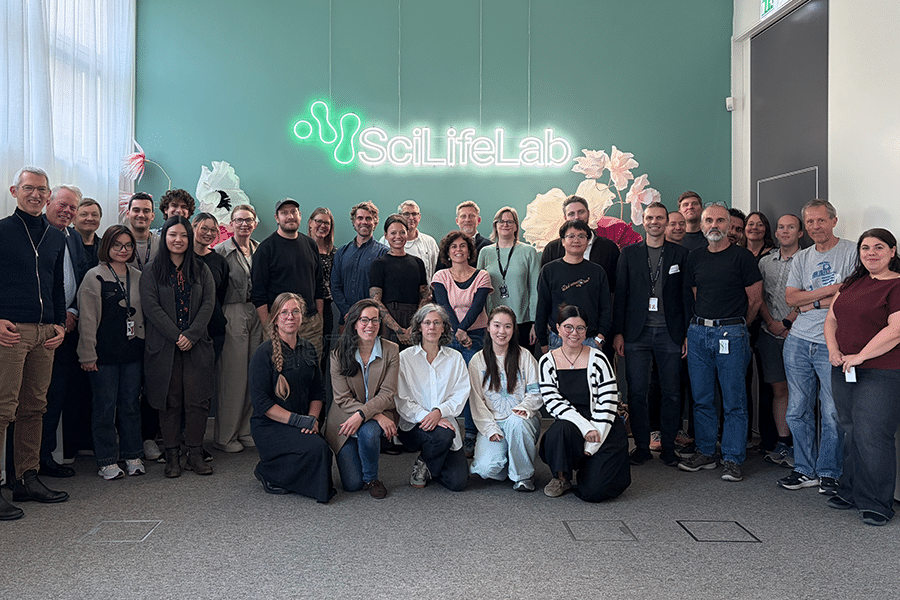
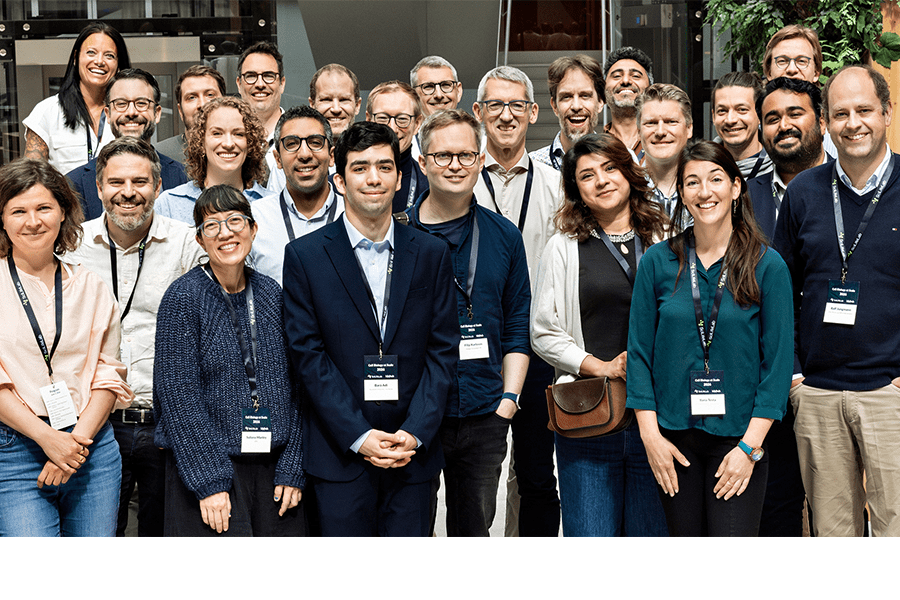
These questions brought researchers from across Europe and North America to Stockholm for Cell Biology at Scale 2026, a symposium jointly hosted by Biohub and SciLifeLab. This year’s conference was the first outside the United States, the meeting gathered experts in cell biology, imaging, genomics, data science, and artificial intelligence to share knowledge about our current understanding of the dynamic systems that cells comprise.
Manuel Leonetti, Director of Systems Biology at Biohub, started the Cell Biology at Scale conference four years ago.
“Cell biology stands at this very special moment of the field being transformed by new technologies, and we felt it was the time to create a community of people that was really interested in this intersection of cell biology – really understanding how cells work and their mechanisms — and at the same time, building the technologies and data and AI tools that we need to make sense of all of this,” Leonetti says.
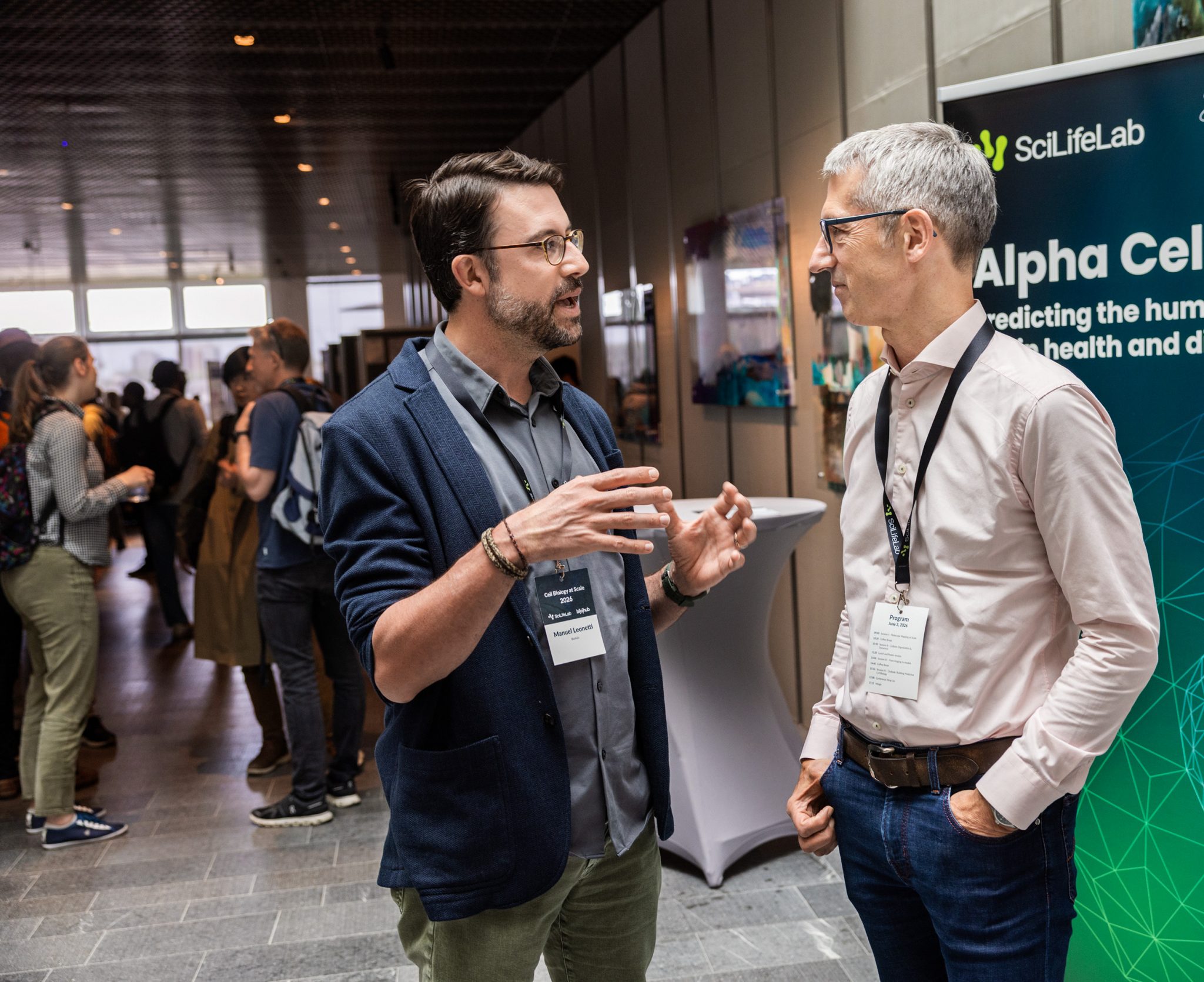
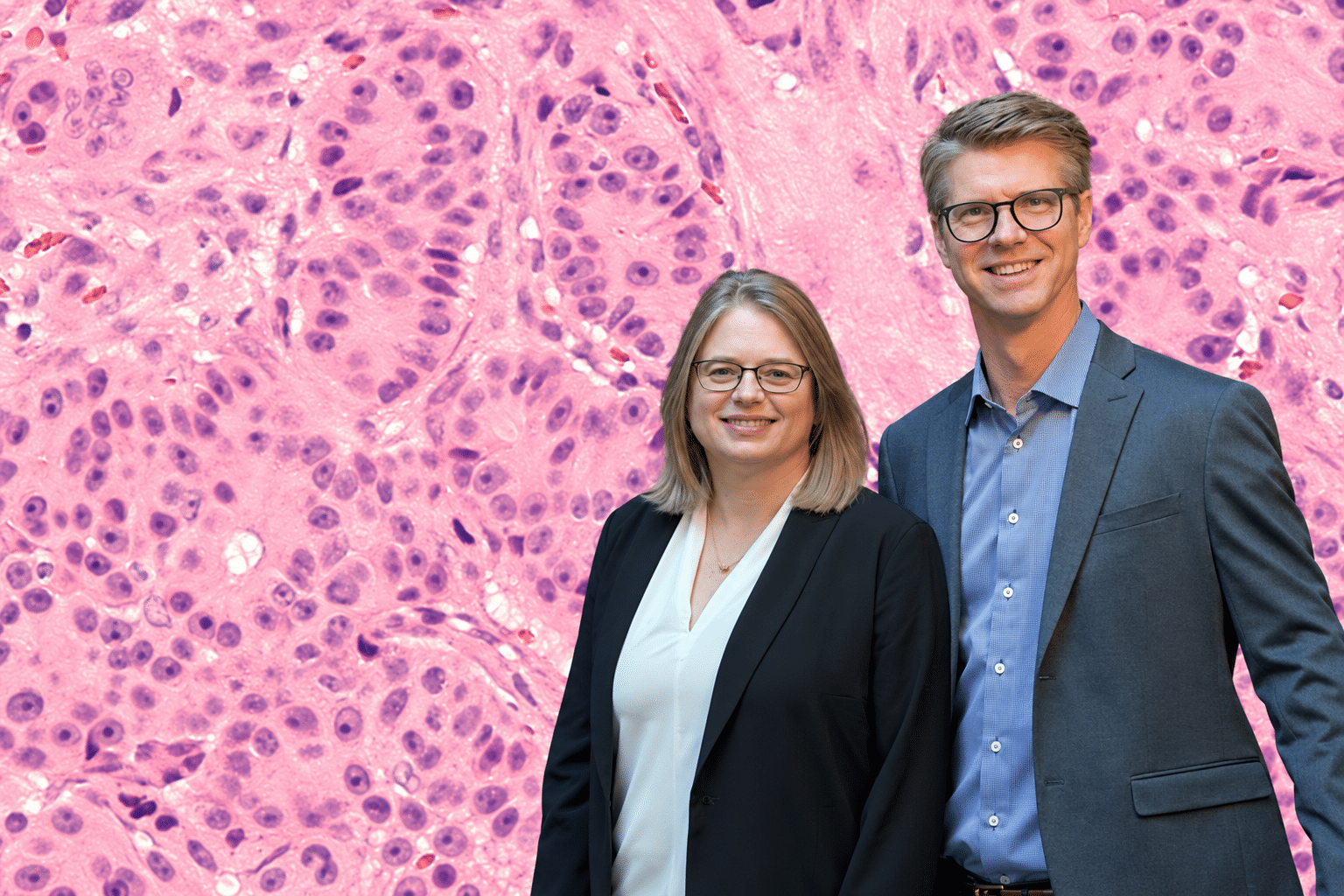
Manuel Leonetti Director of Systems Biology at Biohub (to the left) in discussions with Jan Ellenberg, SciLifeLab Director (to the right).
Aubrey Wiegel at the Howard Hughes Medical Institute’s Janelia Research Campus, creates open-access, high-resolution 3D maps of cells and tissues and gave a talk titled Mapping Cells at Scale: Sharing Data and Workflows for Tissue-Scale vEM.
“The CellMap Project is built on the idea that large-scale cellular mapping becomes far more powerful when data, tools, and workflows are shared openly. By combining standardized training, quality-control processes, and scalable analysis pipelines, we have expanded from annotating individual cell volumes to tissue-scale datasets across a wide range of organisms and sample types. Through resources such as OpenOrganelle and the CellMap Segmentation Challenge, we aim to provide the scientific community with high-quality datasets and benchmarks that accelerate discoveries in cell and tissue biology while supporting reproducible research at scale”, said Aubrey Wiegel.
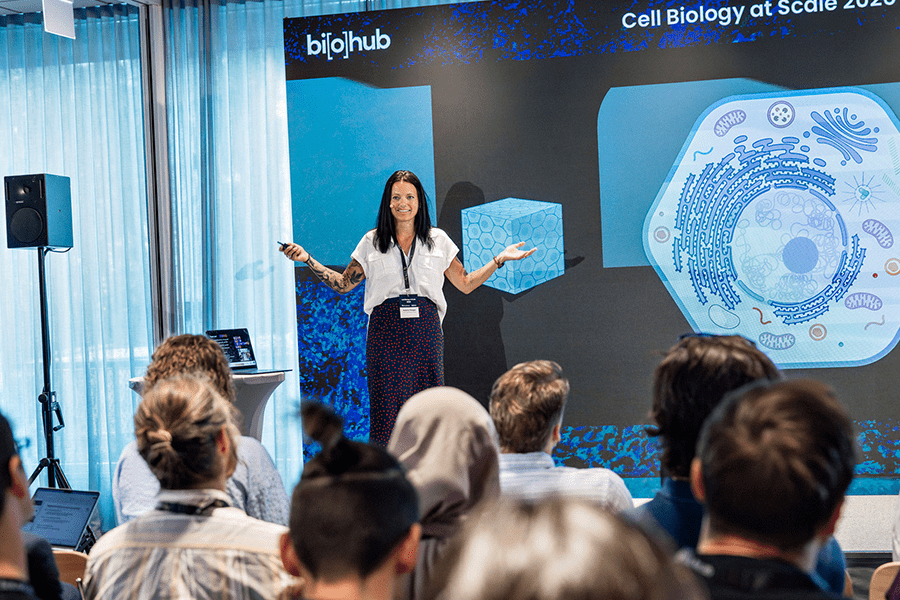
Aubrey Wiegel from Howard Hughes Medical Institute’s Janelia Research Campus gave a talk titled Mapping Cells at Scale: Sharing Data and Workflows for Tissue-Scale vEM.
The conference also included speakers from Howard Hughes Medical Institute (HHMI), Hubrecht Institute, Human Technopole, EPFL, UCSD, Utrecht University, SciLifeLab and Max Planck Institute of Biochemistry.
Over the past decade, advances in microscopy, spatial biology, sequencing technologies, and large-scale perturbation experiments have transformed the way scientists study cells. Researchers can now measure thousands of molecular features and interactions simultaneously, visualize cellular organization in tissues, and track biological processes across space and time.
At the same time, rapid progress in artificial intelligence and machine learning is opening new possibilities for integrating these diverse datasets and uncovering patterns that would otherwise remain hidden.
The result is a growing shift in the field: from describing cellular systems toward building predictive models of how they work.
During the conference, focus was on how multimodal data can be combined to reveal the molecular principles of cellular behavior. Presentations showcased new approaches to imaging, functional genomics, spatial profiling, and computational modeling, highlighting how increasingly sophisticated technologies are enabling researchers to connect molecular mechanisms with cellular function.
“What makes this time in life science research so exciting is the convergence of disciplines. Progress depends on bringing together the revolution in advanced molecular and imaging technologies, with computational methods and AI to make biological systems predictable. No single field or national research community can address these challenges alone. Therefore international collaborations and community meetings such as Cell Biology at Scale are so important” said Jan Ellenberg, SciLifeLab Director.